






Nirmal Purja, World-Record Climber Who Conquered 14 Highest Peaks, Dies in Pakistan Avalanche

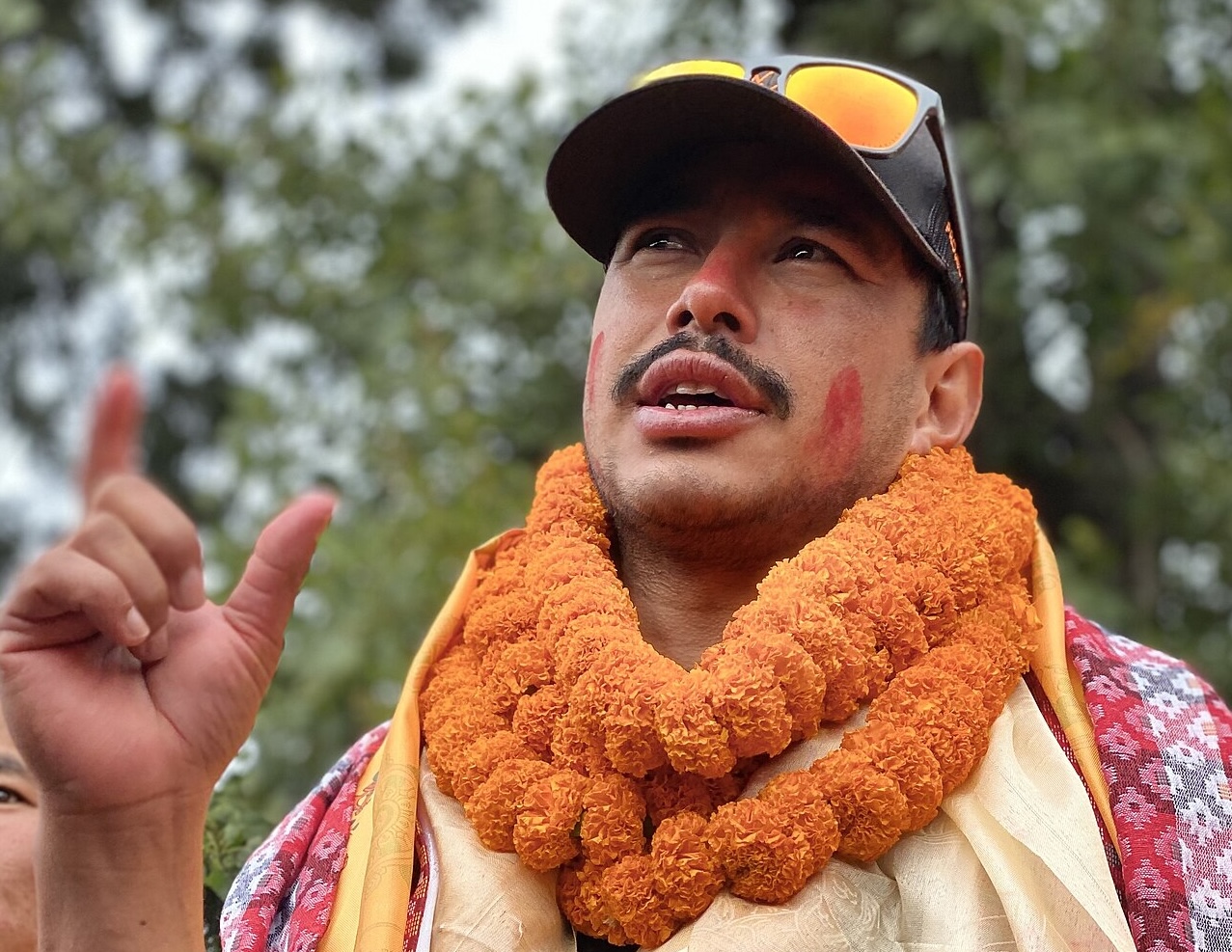
Nirmal “Nimsdai” Purja, who died in a Broad Peak avalanche on July 31, 2026. Photo By Gwrthanesh – Own work, CC BY-SA 4.0, Link
KATHMANDU, Nepal — World-renowned Nepali-British mountaineer Nirmal “Nimsdai” Purja died after being caught in an avalanche on Broad Peak in Pakistan, his company, Elite Exped, confirmed Saturday.
The 43-year-old climber, famous for summiting all 14 of the world’s 8,000-meter peaks in just over six months, was leading a 10-member team when the avalanche struck the 8,047-meter (26,400-foot) mountain in the Karakoram range Thursday.
Death confirmed after Broad Peak avalanche
Elite Exped said in a statement shared on social media that Purja “tragically lost his life following the avalanche on Broad Peak” and that other members of the expedition also did not survive. The Alpine Club of Pakistan reported that the team went missing after the slide hit at around 7,000 meters during their summit push.
Search and recovery operations involved experienced climbers, drones and Pakistan Army personnel amid difficult weather and terrain.
According to Nepali officials and expedition sources, six of the climbers on Purja’s team were Nepali. Several of them, including Pur Bahadur Gurung (“Yukta”) and Nima Sherpa, have been confirmed dead alongside Purja.
A life shaped by mountains — and service
Purja’s connection to the mountains was not limited to summiting peaks and setting records; he was also known as a reliable rescuer for climbers in trouble. Before mountaineering, however, his path began in the military.
Born in the Dhaulagiri region and raised in Chitwan, Purja initially dreamed of following his father and brothers into the British Army as a Gurkha soldier. He enlisted in 2003 at age 18 and served six years before making history in 2009 as the first Gurkha to join the U.K.’s elite Special Boat Service (SBS). Over a decade in the SBS, he worked on covert, high-risk operations, learning rapid decision-making, risk assessment and team safety — skills that later proved invaluable in high-altitude climbing.
First climb, new chapter
In December 2012, while on military leave, Purja trekked toward Everest Base Camp — a trip that changed his life. Inspired to climb rather than just visit base camp, he convinced his guide to teach him mountaineering and went on to successfully summit 6,119-meter Lobuche East, his first major peak.
He continued climbing while still in uniform, drawing on his experience operating in extreme cold and high-stress environments to stay calm and controlled in dangerous conditions. Early in his climbing career, he rescued a struggling climber in Everest’s “death zone” on his descent, risking his own life — an act that underscored his courage and humanity. After that incident, he began using supplemental oxygen at high camps not only to make his own climbs safer, but to remain capable of helping others in emergencies.
Five days, three 8,000-meter peaks
After Everest, Purja’s name rose quickly in the mountaineering world. He climbed Lhotse and Makalu immediately after Everest, summiting all three 8,000-meter peaks in just five days — an achievement that stunned the global climbing community. The feat highlighted his extraordinary ability to acclimatize and move faster at extreme altitude than most climbers.
‘Project Possible’: Making the impossible possible
In 2019, Purja left the British special forces to pursue an audacious goal: climb all 14 of the world’s 8,000-meter peaks in seven months, a task previously thought to take years. He named the mission “Project Possible”.
Overcoming logistical and weather challenges, he summited all 14 peaks in six months and six days, finishing on Shishapangma and declaring, “Mission accomplished!” The achievement redefined human limits in high-altitude mountaineering and earned him global recognition, including through the Netflix documentary “14 Peaks: Nothing Is Impossible”.
‘Always a little higher’
Purja’s personal mantra was “Always a little higher,” a philosophy that extended beyond physical altitude to constant self-improvement in every area of life. From a Chitwan boy dreaming of becoming a Gurkha to a British special forces operator and then a record-setting mountaineer, he continually pushed his own boundaries.
In 2020, he launched the “Nimsdai” brand and new initiatives to share his knowledge and elevate Nepali Sherpas and climbers on the world stage. His companies and foundations — including Elite Exped, the Nimsdai Foundation and related ventures — aimed to make high-altitude climbing more accessible while supporting mountain communities.
Tributes after Broad Peak tragedy
Prime Minister Balendra Shah of Nepal paid tribute to Purja and the other Nepali climbers who died in the avalanche, posting a message on Facebook.
He described mountaineering as “the highest expression of courage, discipline, sacrifice, and unbreakable confidence in challenging human limits,” adding that while the mountains sometimes embrace climbers forever, their bravery and contributions remain immortal in history.
“Nirmal Purja and all the departed climbers’ physical journeys have ended, but their courage, dedication, and contributions will remain inspiring and alive,” Shah wrote.
Purja’s physical journey ended in the Karakoram, but his records, rescue efforts and belief that “nothing is impossible” ensure his place in mountaineering history. The peaks he climbed and the inspiration he left behind will remain as enduring as the mountains themselves.