


On Second Day in New York, Nepal’s Foreign Minister Focuses on Flood Recovery and Global South Cooperation

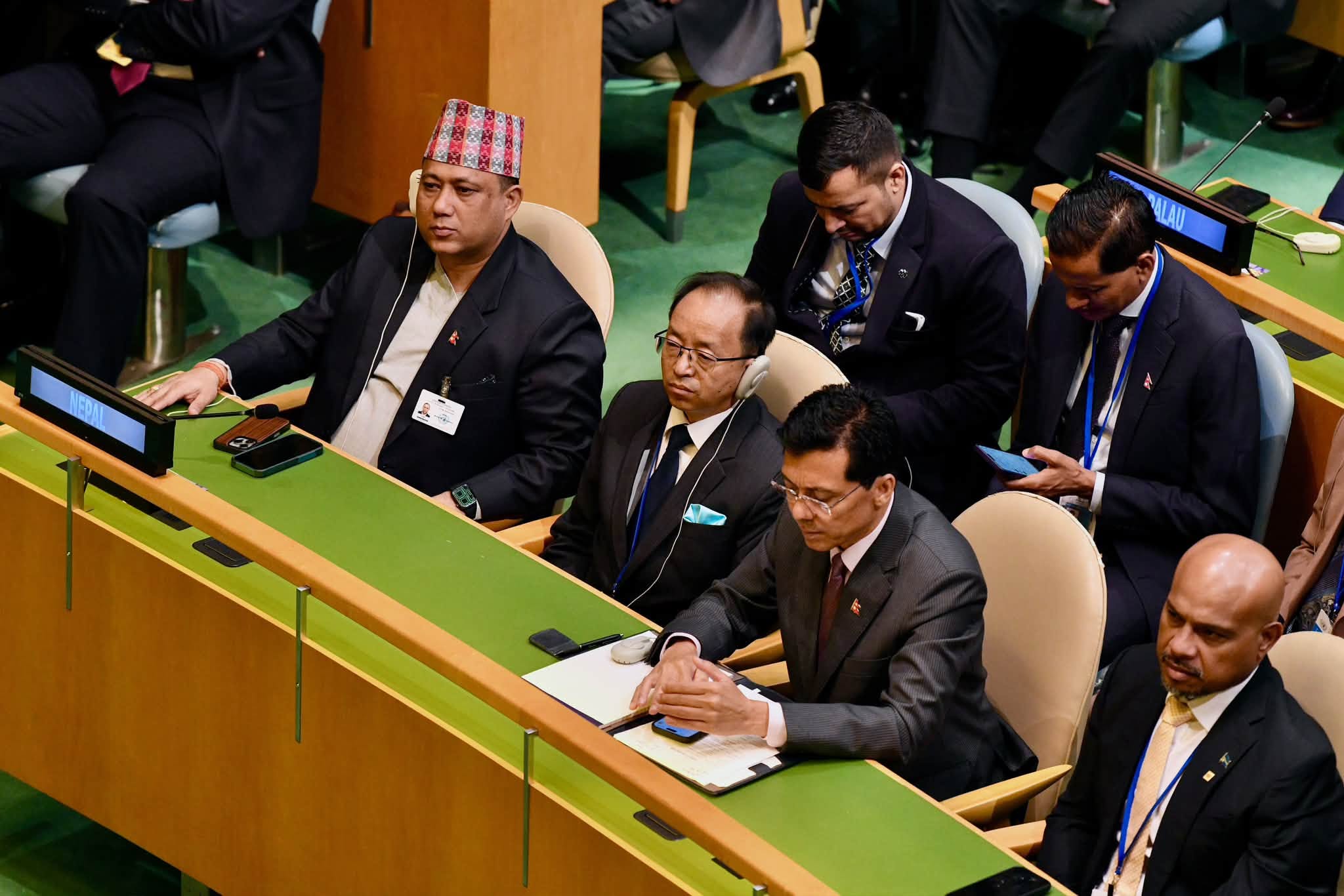
Nepal’s Foreign Minister Shishir Khanal attends the opening of the high-level general debate of the 81st United Nations General Assembly at U.N. headquarters in New York on Tuesday, Sept. 22, 2026. Photo by Rajan Kafle/NepYork.
NEW YORK — Nepal’s Foreign Minister Shishir Khanal spent his second day in New York on Tuesday in a series of high-level diplomatic, bilateral and multilateral engagements as the 81st United Nations General Assembly high-level week got underway.
Khanal attended the welcoming ceremony for U.N. Secretary-General António Guterres before joining the opening session of the General Assembly’s high-level general debate at U.N. headquarters.
The general debate opened under the theme “Restoring trust, managing transformation: A United Nations that delivers for all.”
Prime Minister Balendra Shah is scheduled to address the Assembly on Thursday, Sept. 24.
Khanal’s second day in New York included meetings with officials from Slovakia, the Maldives, the United States and India, as well as a meeting that formally established diplomatic relations between Nepal and Grenada.
Khanal held a bilateral meeting with Slovak Foreign and European Affairs Minister Juraj Blanár, expressing appreciation to the Slovak government and people for their sympathy and solidarity following Nepal’s recent devastating climate disaster.
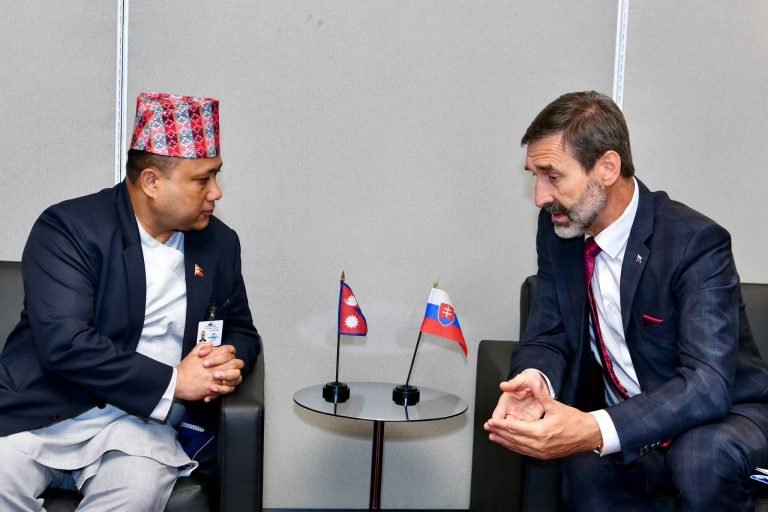
The two ministers discussed ways to strengthen bilateral and multilateral cooperation. Their talks covered renewable energy, hydropower, tourism, technology and services, as well as early warning systems and cybersecurity. They also reaffirmed their commitment to multilateralism and closer cooperation at the United Nations.
Khanal also met Maldivian Foreign Minister Iruthisham Adam. He expressed appreciation to the Maldivian government and people for their sympathy, solidarity and humanitarian assistance following Nepal’s recent devastating floods.
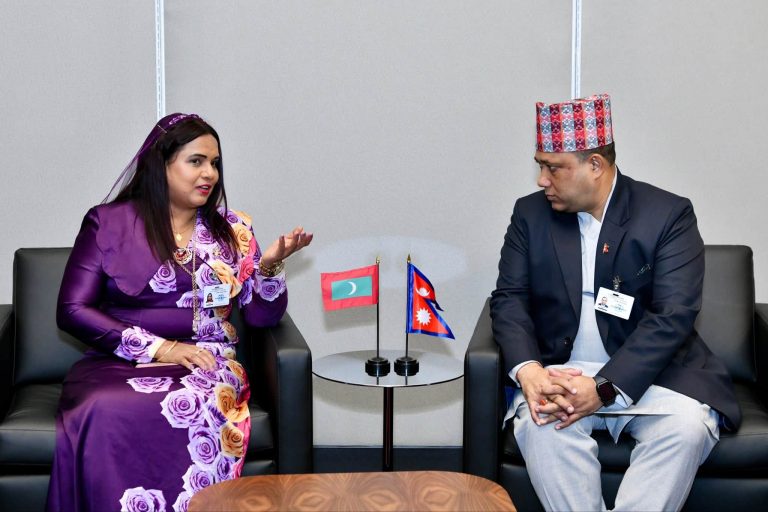
The two ministers discussed bilateral, regional and multilateral issues and ways to expand cooperation, including through exchanges of high-level visits and collaboration in tourism, employment and education. They also emphasized cooperation on climate change, development financing, sustainable development and other issues of common interest at the United Nations, the South Asian Association for Regional Cooperation and other multilateral forums.
A key focus of Khanal’s U.S. engagement was Nepal’s flood recovery.
Khanal met U.S. Under Secretary of State for Political Affairs Allison Hooker on the sidelines of the General Assembly. Hooker extended U.S. sympathies to those affected by the floods, including families of about 70 Americans who remained unaccounted for.
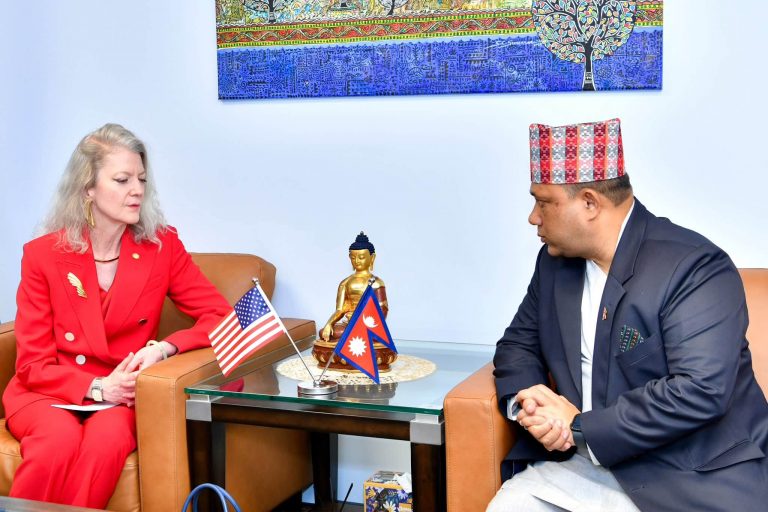
During the meeting, Hooker announced plans to work with Congress to provide $10 million for permanent, custom-built bridges to restore transportation infrastructure in affected areas and improve regional connectivity. The bridges are expected to be sourced from a U.S. company.
The United States also plans to provide $8 million in additional assistance for water, sanitation and hygiene, shelter, protection, livelihoods and winterization support for affected communities. The State Department also plans to provide $13 million in U.S.-made drones to support future disaster recovery efforts.
The additional commitments would bring U.S. assistance for Nepal’s flood response and recovery to more than $36 million, according to the State Department.
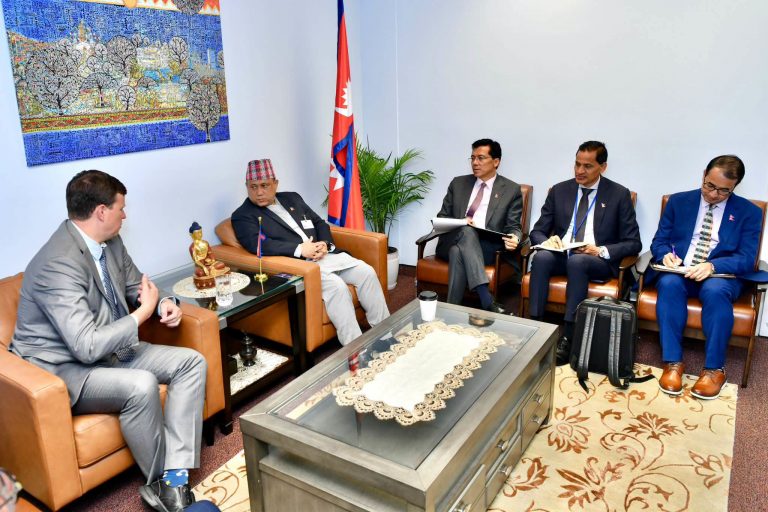
Dr. Joshua Walker, chief international affairs officer at the U.S. Chamber of Commerce, also paid a courtesy call on Khanal. Their discussions focused on investment opportunities, greater economic cooperation and strengthening business partnerships between Nepal and the United States. The official schedule had originally listed a meeting with Atul Keshap, the chamber’s senior vice president.
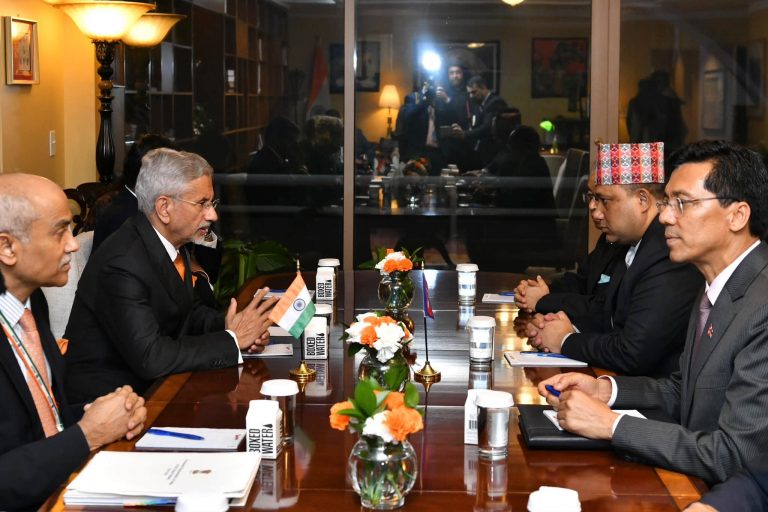
Khanal later met Indian External Affairs Minister S. Jaishankar on the sidelines of the General Assembly. Khanal expressed appreciation to the Indian government and people for their solidarity and immediate support following Nepal’s catastrophic floods.
The two ministers discussed issues of mutual interest and the need to further strengthen the longstanding ties between Nepal and India.
Khanal and Grenada’s Finance Minister Dennis Cornwall signed a joint communiqué formally establishing diplomatic relations between Nepal and Grenada during a ceremony at Nepal’s Permanent Mission to the U.N.
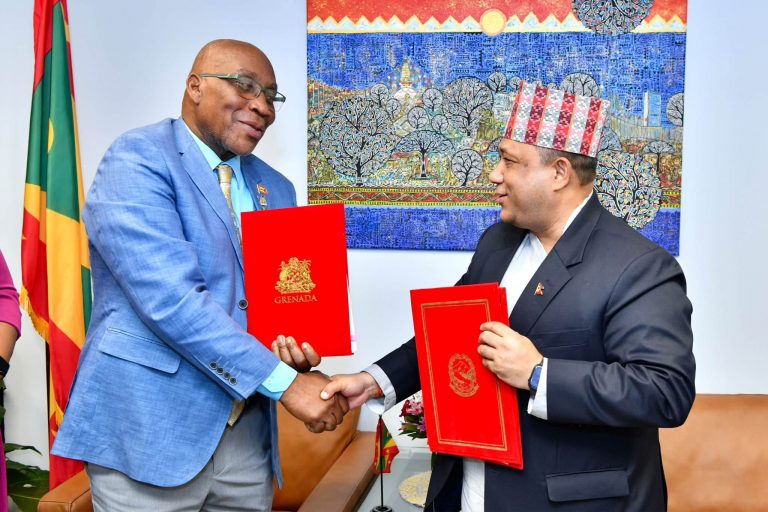
Before the signing, the two ministers discussed efforts to accelerate progress toward the Sustainable Development Goals and address the effects of climate change. They also discussed opportunities to exchange experiences and best practices in tourism, education and other areas.
The agreement brings to 186 the number of countries with which Nepal has established diplomatic relations.
Khanal also addressed a high-level ministerial meeting of like-minded Global South countries and their friends organized by the Indian government on the sidelines of the General Assembly.
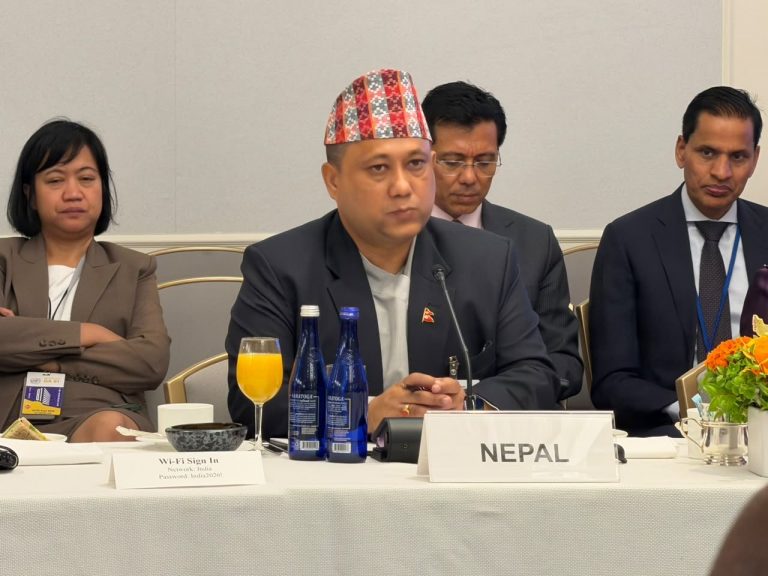
He highlighted the transformative potential of the Global South and the importance of giving developing countries a stronger voice in global decision-making. Khanal called for greater collective action, stronger South-South cooperation and a more equitable and representative global governance system.
“By empowering the Global South, we revitalize multilateralism itself,” Khanal said.
Foreign Secretary Amrit Bahadur Rai separately took part in a high-level discussion at U.N. headquarters titled “Beyond 2030: Renewing the Global Commitment to End Poverty in All its Dimensions,” organized by Bhutan’s Permanent Mission.
Rai said poverty is not only a lack of income but also a denial of basic capabilities, security and human agency. He called for a multidimensional approach to poverty eradication and highlighted Nepal’s progress as well as its continuing challenges.
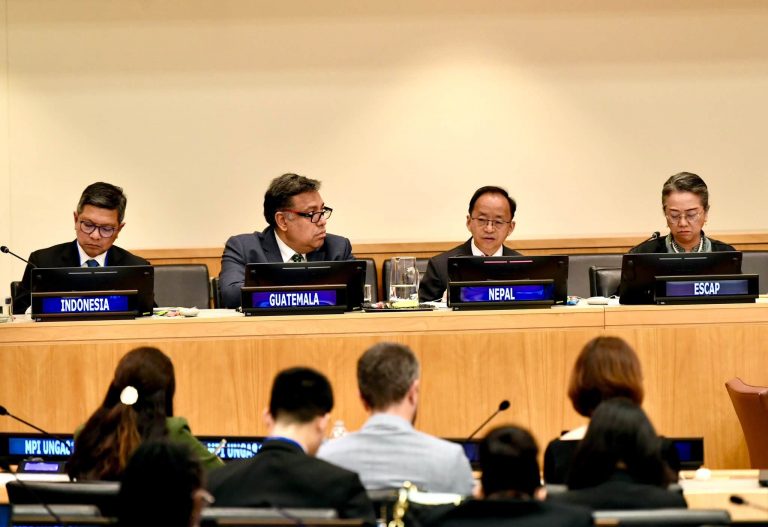
Rai also highlighted the disproportionate effects of the accelerating climate crisis, including the loss of lives and damage to critical infrastructure during Nepal’s recent climate disaster. He called for climate-resilient development, climate justice, greater access to financing and technology, and faster implementation of global development commitments, including the 2030 Agenda and the Pact for the Future.
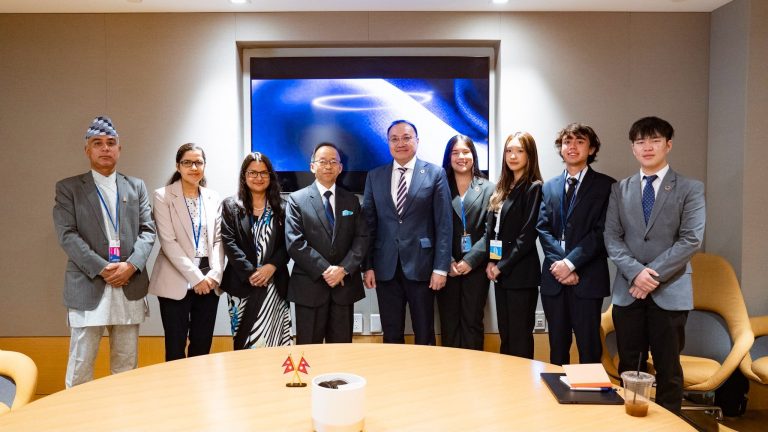
Rai separately met Dulguun Damdin-Od, executive director of the International Think Tank for Landlocked Developing Countries. Their discussions covered connectivity, aviation, climate issues, critical minerals, youth engagement and the Awaza Programme of Action.
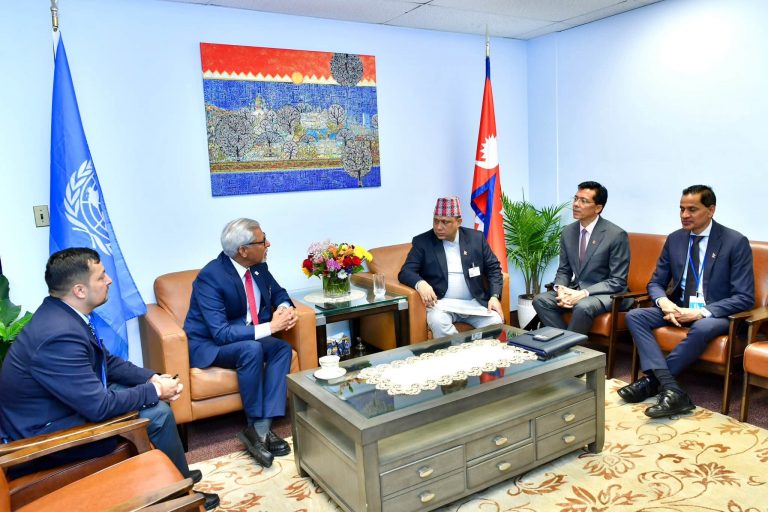
Khanal also met Jagan Chapagain, secretary general of the International Federation of Red Cross and Red Crescent Societies, at Nepal’s Permanent Mission, according to the official schedule.
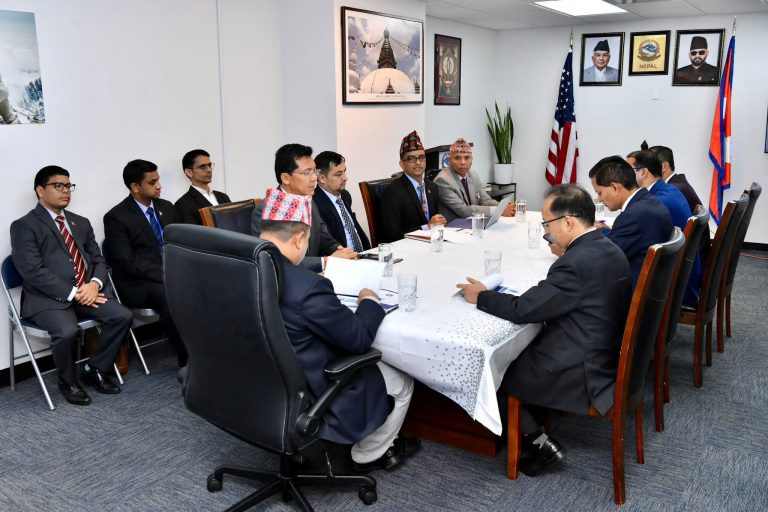
Khanal visited the Consulate General of Nepal in New York for a briefing and took part in an interview during the afternoon.
Khanal later attended a reception hosted by the president of the United States, concluding his second day of engagements in New York.