




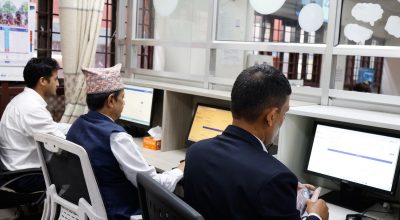

How China Controlled the Narrative of the Nepal–China Border Flood Disaster

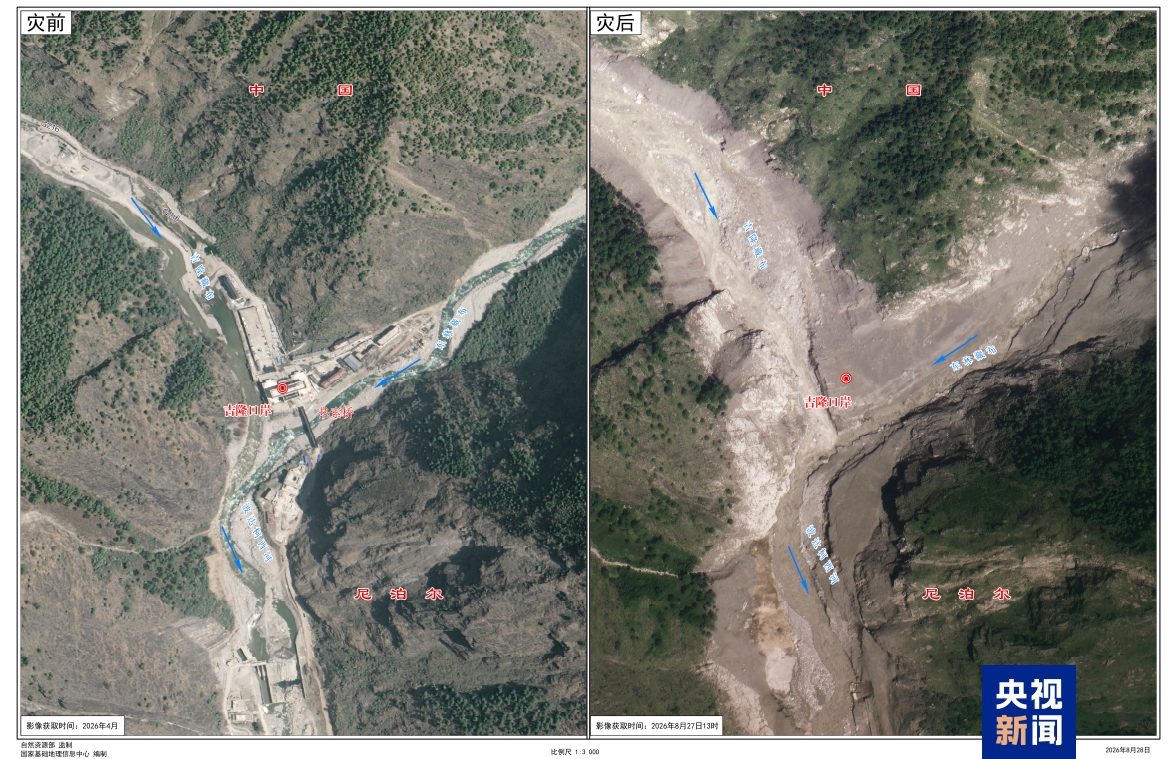
Before-and-after imagery comparison of the ice avalanche and mudslide disaster at Gyirong Port on the Chinese side of the China-Nepal border. /CMG
Chinese state media have delivered a tightly managed, science-heavy narrative of the Aug. 26 Himalayan mudslide that flattened the Gyirong Port on the Tibet-Nepal border. Their coverage has emphasized an ice avalanche collapse originating in Nepal, large-scale rescue operations, and climate change as the underlying cause.
At the same time, authorities have restricted raw footage, deleted local social media posts and penalized people for circulating unofficial casualty figures, creating a stark contrast with the graphic, on-the-ground reporting emerging from Nepal.
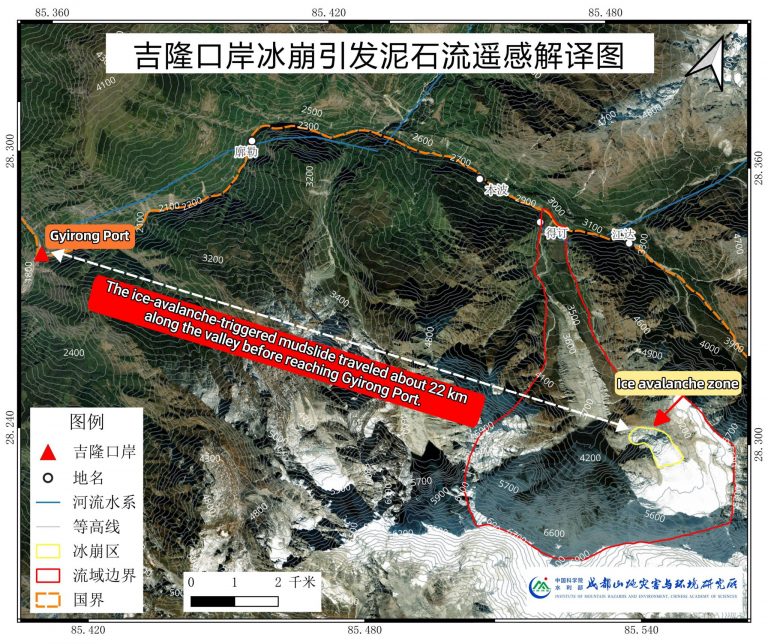
State outlets including Xinhua, CGTN, CCTV, China Daily and People’s Daily have published frequent updates since the disaster. They report that an ice-rock avalanche from a glacier on Nepal’s Mount Langtang Lirung, at an elevation of about 5,200 meters (17,060 feet), triggered a debris flow that traveled roughly 20 to 22 kilometers (12 to 14 miles) in six to seven minutes at speeds of about 50 meters per second before slamming into Gyirong Port.
Officials have attributed the collapse to long-term glacier instability linked to climate warming, describing it as a new type of cryosphere hazard on the Qinghai-Tibet Plateau.
The latest official figures from the Xizang regional government, cited across state media, put the Chinese-side toll at 16 confirmed dead and 546 missing as of Saturday evening. The missing include 261 foreign nationals from 23 countries, including 18 U.S. citizens.
Xinhua and CGTN published a detailed nationality breakdown of the missing foreign nationals and announced English-language hotlines for families. State media has also highlighted the evacuation of 499 residents and 555 tourists from Gyirong County, saying no foreign tourists remain stranded there.
Coverage has focused heavily on the response. Reports describe more than 2,100 rescuers from the People’s Liberation Army, armed police and state engineering firms working with drones, thermal-imaging equipment, helicopters and heavy machinery. Xinhua factboxes detail road-clearing progress on National Highway G216, the restoration of communications through new base stations and the draining of a barrier lake that formed upstream.
Premier Li Qiang visited the area, and state media repeatedly quoted President Xi Jinping’s instructions for “all-out” search-and-rescue efforts. Outlets also noted that China shared satellite and hydrological data with Nepal and sent aid supplies and tunnel experts.
What has been far less visible inside China is the raw destruction at the port itself. A widely circulated security-camera video showing a wall of mud and debris engulfing multistory buildings as people fled Gyirong Port spread globally within hours of the disaster.
Inside China, however, the full clip largely disappeared from social media platforms, including WeChat and Weibo. State television broadcast only still frames or heavily edited excerpts. Independent watchdog China Digital Times reported that sharing the footage was blocked even in private messages, citing reporting by Deutsche Welle and other outlets.
Local posts describing the scale of the damage were quickly removed. Tibetan authorities announced that at least 10 people had been penalized for spreading “false disaster information,” including claims of far higher death or missing-person totals. The official Tibet Daily reported that two people were detained for posting that more than 1,000 people had been swept away.
Advocacy group International Campaign for Tibet said sources inside the region reported that hundreds of homes had been destroyed in villages near the port and that the casualty count was higher than officially acknowledged. Those claims could not be independently verified, however, because foreign journalists are barred from Tibet except on tightly controlled tours.
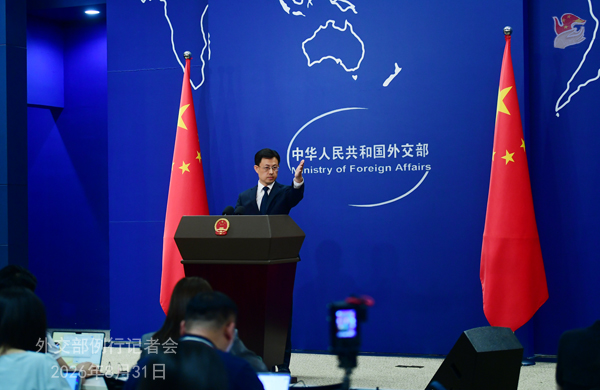
Chinese officials have rejected accusations of a cover-up. Foreign Ministry spokesperson Guo Jiakun said Monday that information had been released in an “open, transparent and timely” manner and accused critics of “malicious smearing.”
State media has not provided village-by-village breakdowns of affected Tibetan communities or first-person survivor accounts comparable to those emerging from Nepal, where the death toll has surpassed 950 and more than 4,500 people remain missing.