


Rep. Mike Carey Raises Nepal Flood Crisis on House Floor

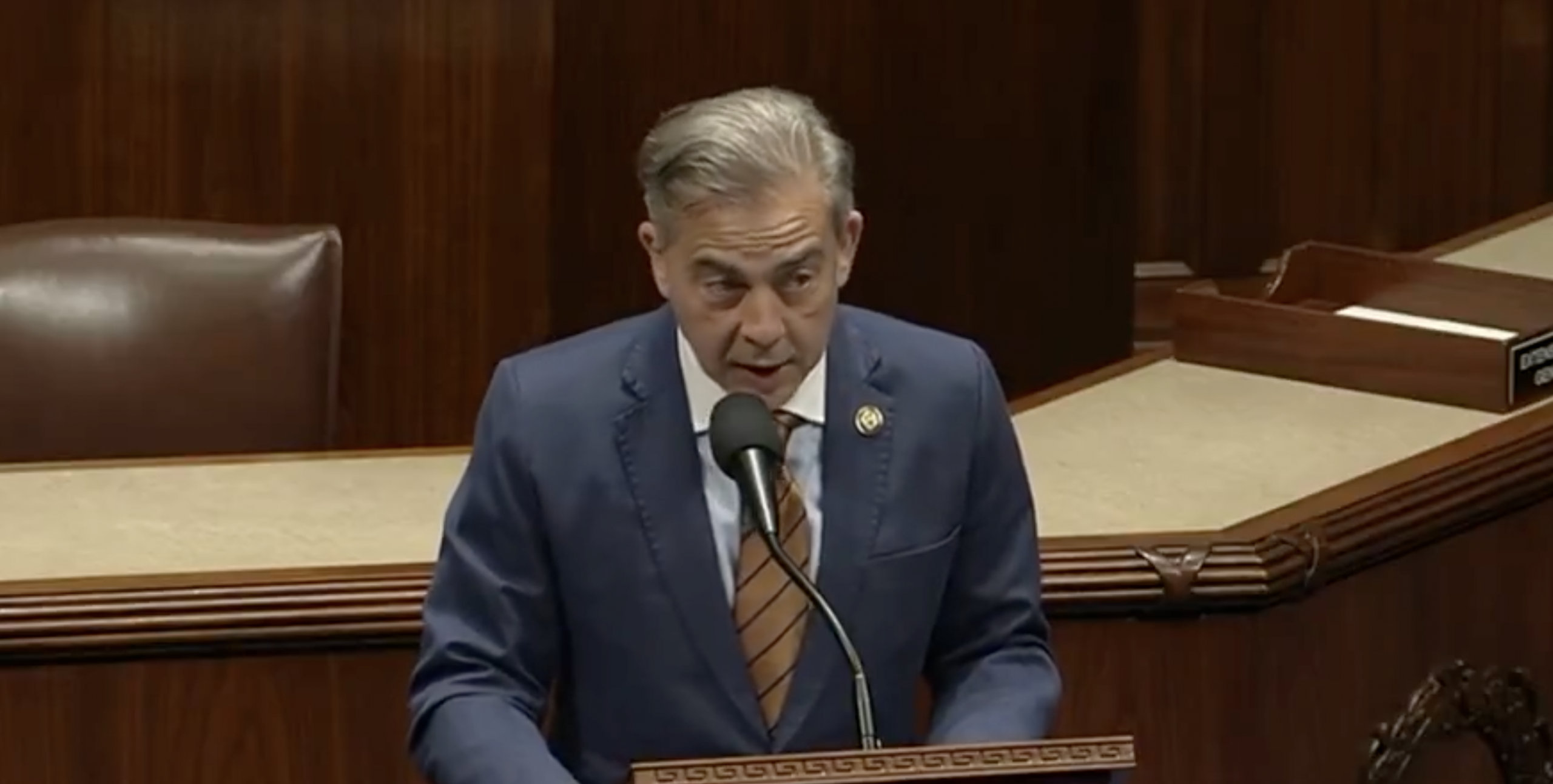
U.S. Rep. Mike Carey, R-Ohio, co-chair of the Congressional Nepal Caucus, speaks on the House floor about Americans reported missing after catastrophic flooding in Nepal. Photo: U.S. House of Representatives.
WASHINGTON — U.S. Rep. Mike Carey, R-Ohio, co-chair of the Congressional Nepal Caucus, said Thursday that he is prepared to assist the Trump administration’s efforts to locate and rescue Americans reported missing after catastrophic flooding in northern Nepal and to support the country’s recovery.
Speaking on the House floor, Carey said he stood “in solidarity with the families of missing Americans and the people of Nepal” following what he described as devastating flooding in northern Nepal.
I was proud to speak on the House floor in recognition of the American and Nepali people who remain missing in the wake of the deadly flooding in Nepal.
— Congressman Mike Carey (@RepMikeCarey) September 17, 2026
As co-chair of the Congressional Nepal Caucus, I remain ready to assist the administration in its efforts to rescue American… pic.twitter.com/rEXpoiYOUF
“The scale of the loss and the destruction is truly overwhelming, and my heart goes out to everyone during this tragedy,” Carey said.
Carey said he appreciated the administration’s commitment to recovery efforts and planned to send a letter to Secretary of State Marco Rubio offering the Nepal Caucus’ cooperation in providing aid and supporting rescue operations.
“I want to extend my deepest sympathies and express my sincere gratitude for the tireless rescue workers helping those in need,” Carey said before yielding the floor.
Carey also posted video and text of his House remarks on X, formerly known as Twitter, saying he remained ready to assist the administration’s efforts to rescue U.S. citizens and support Nepal’s recovery and rebuilding.
The remarks came as the U.S. government continued efforts to account for Americans affected by the Aug. 26 floods in Nepal’s northern border region.
Nearly three weeks after the disaster, about 70 Americans remained unaccounted for in the Nepal-China border region, a State Department spokesperson told NepYork on Tuesday. Eighteen Americans had made their way to safety, according to the department.
The State Department cautioned that the figures could change as officials continue efforts to locate, account for and assist U.S. citizens and their families.
“The safety of Americans in the affected area remains our highest priority,” the spokesperson said. “Despite the significant operational challenges, we are using every available means to locate, account for and assist U.S. citizens and their families.”
The U.S. government has expanded its response with forensic assistance, food and logistics support and equipment for search-and-rescue operations as authorities work to reach isolated areas.
Forensic Assistance to Identify Flood Victims
On Sept. 12, the United States approved an additional $1 million to support Nepal Police in identifying victims of the floods, bringing the total value of U.S. humanitarian, health and forensic assistance following the disaster to more than $5 million, according to the State Department.
The additional funding, provided through the State Department’s Bureau of International Narcotics and Law Enforcement Affairs, will support Nepal Police with forensic assistance, including DNA analysis kits and other supplies needed for disaster victim identification.
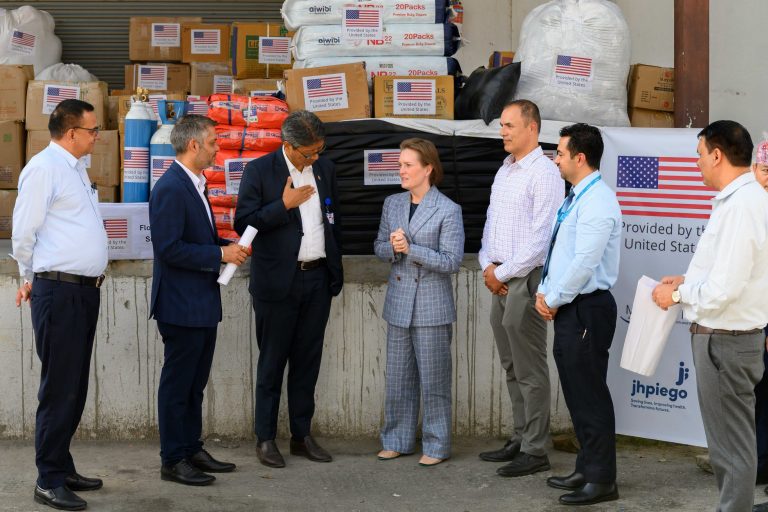
FBI forensic specialists are also working with Nepal Police to identify victims and provide specialized disaster victim identification assistance, according to the State Department.
“The conditions responders are operating in within Nepal are extraordinarily difficult,” the spokesperson said. “This disaster destroyed roads, bridges, entire villages, and, in some areas, completely altered the landscape — some previously inhabited places are covered by displaced soil and rocks several feet deep.”
The difficult terrain and damaged infrastructure have slowed search, rescue and relief operations in remote parts of Nepal, particularly near the Chinese border.
The U.S. State Department has warned Americans not to travel to the Rasuwagadhi-Timure-Syafrubesi area of Rasuwa district, including the Nepal-China border crossing, because of flood damage, disrupted transportation and communications, ongoing search-and-rescue and recovery operations, and the risk of additional flooding and landslides.
Broader U.S. Relief Effort
The new forensic funding is part of a broader U.S. response that includes $3 million in food and logistics assistance through the World Food Program. The funding is expected to provide up to three months of emergency food supplies to 10,000 flood-affected households and help overcome supply-chain barriers through air and ground transportation to isolated communities.
The United States has also provided $685,000 through Catholic Relief Services for food, shelter, water, sanitation, hygiene, protection and cash assistance. The aid includes food and shelter supplies, blankets, plastic sheeting, tents, solar lights and dignity kits. Catholic Relief Services is also operating child-friendly spaces for children affected by the floods, according to the State Department.
Another $365,000 has been allocated for health, nutrition, water, sanitation and hygiene programs through Jhpiego, FHI 360 and UNICEF.
The U.S. military has delivered 5,000 specialized disaster victim recovery supplies, 500 first-aid kits, stretchers and front-end loaders to support Nepal-led search, rescue and recovery operations. A four-member U.S. military civil affairs team is also in Nepal to help address humanitarian needs following the disaster.
U.S. Provides Cargo Drone for Remote Flood Zones
The U.S. Embassy in Nepal has also provided the Armed Police Force with a U.S.-made Freefly Alta X Gen2 commercial cargo drone to help deliver critical supplies to isolated communities affected by the floods.
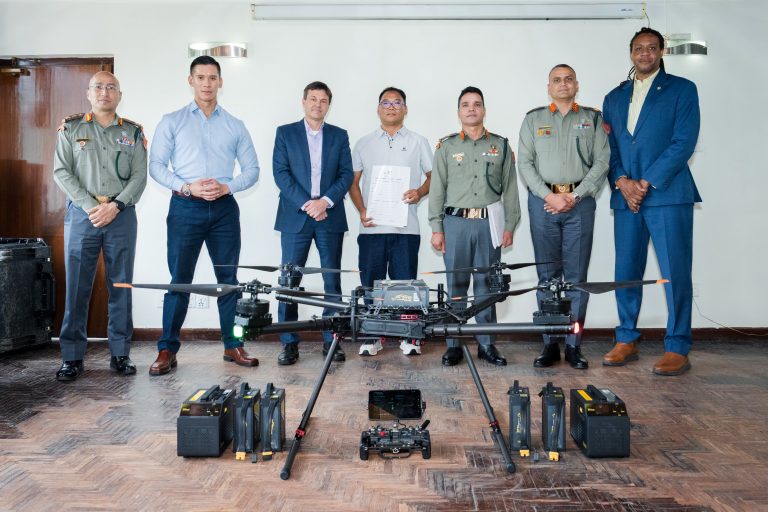
In a Monday social media post, the U.S. Embassy in Nepal said Deputy Chief of Mission Scott Urbom, Public Affairs Chief Mike Harker and Regional Security Officer Wil Vaughn joined the Armed Police Force of Nepal and Seven Summit Treks for the handover of the drone.
The embassy said the Armed Police Force will use the aircraft to deliver critical supplies to remote, flood-affected communities where difficult terrain limits access.
Seven Summit Treks had previously tested the drone on Ama Dablam as part of the embassy’s Ascent Summit, successfully carrying oxygen cylinders and mountaineering equipment between high camps under extreme conditions, according to the embassy. The high-altitude test in the Everest region demonstrated a potential use for the technology in some of Nepal’s most difficult terrain.
The drone handover is part of broader U.S. support for Nepal’s flood response, including humanitarian, logistical, forensic, consular and technical assistance.
“The United States continues to extend our deepest sympathy to all those affected by the flooding in Nepal and their families,” the State Department said.
The department said it would continue coordinating with the Nepal government and local partners as conditions evolve.
“However, this is a rapidly evolving operation, and we are working closely with our local partners on the ground to adapt to conditions as they change,” the spokesperson said.
The United States remains prepared to provide additional assistance based on Nepal’s needs, the State Department said.
The State Department has posted updates and resources for Americans affected by the floods and their families on its Nepal flash flood information page.