



‘Nepal Is Open’ Message Meets Flood’s Tourism Fallout

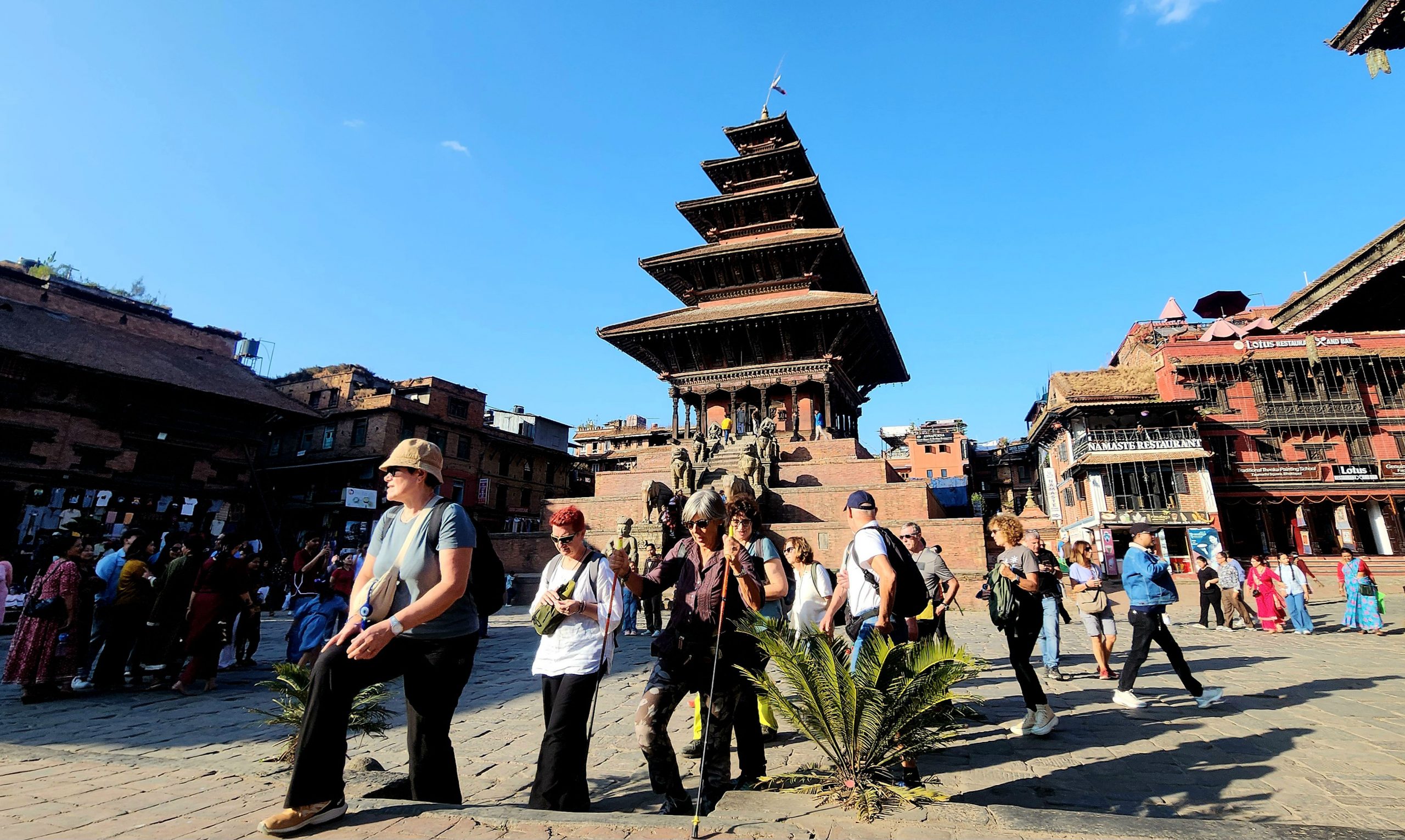
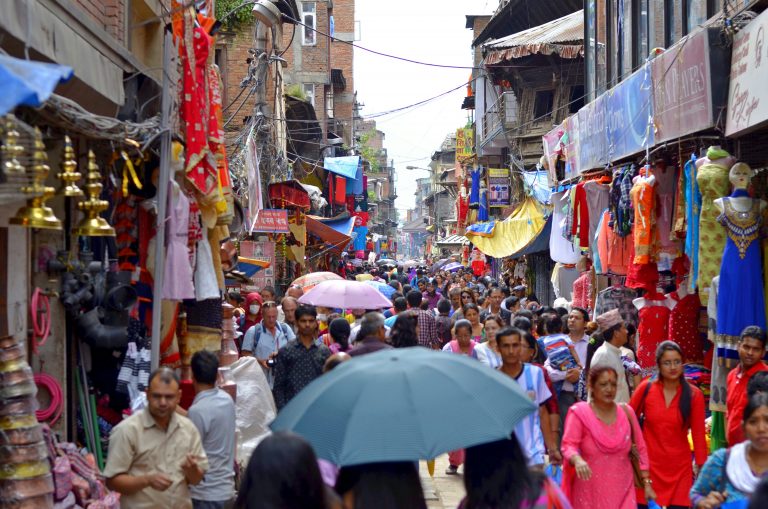
Tourists in Bhaktapur Durbar Square. Photo – RSS
KATHMANDU, Nepal — As Nepal’s main tourism season approaches, a devastating flood in the Bhote Koshi River basin in Rasuwa has damaged tourism infrastructure, disrupted trekking routes, and prompted cancellations by foreign visitors, raising concern across an industry trying to reassure the world that most of the country remains open.
The flood damaged hotels, restaurants, tourist vehicles, heritage sites, and trekking trails, according to preliminary assessments by Nepal’s Ministry of Culture, Tourism and Civil Aviation. It has also disrupted group travel, reduced hotel occupancy, and affected domestic tourism and corporate events, tourism industry representatives said.
The worst damage has been concentrated along parts of the Bhote Koshi and Trishuli river corridors. But business leaders say international news coverage and travel advisories have created an impression that Nepal as a whole is unsafe, affecting travel decisions even in destinations far from the disaster zone.
Tourism officials, diplomatic missions, overseas Nepali representatives, and private trekking companies have begun promoting a counter-message: Nepal is not closed.
Tourism Losses Exceed 50 Billion Rupees
The Ministry of Culture, Tourism and Civil Aviation’s preliminary assessment put tourism-sector losses from the flood at more than 50 billion Nepalese rupees.
The disaster damaged 142 hotels, 57 restaurants, 141 tourist vehicles, and 27 heritage sites, the ministry said. Trekking routes leading to Langtang and Gosainkunda were also affected.
Repair and reconstruction work is underway to restore damaged trails and tourism infrastructure. But uncertainty remains over how quickly tourism activity in affected areas can return to normal, particularly as the fall season begins.
The disaster has also drawn attention to the vulnerability of Nepal’s tourism workforce, including experienced guides, porters, and support staff who work in remote mountain areas.
Missing Tourists and Trekking Workers
The Department of Tourism said 775 people remained missing after the flood, including 587 foreign nationals and 188 Nepali citizens.
Among the missing foreign nationals were 256 men, 329 women, and two people whose gender had not been identified, the department said.
Indian citizens accounted for the largest number of missing foreigners, with 184 people unaccounted for. They were followed by 67 Americans, 55 Malaysians, 54 Ukrainians, 33 Australians, 33 Latvians, 32 Britons, and 30 Canadians.
The list also included 26 Chinese citizens, nine Singaporeans, eight Germans, eight Russians, six South Africans, five New Zealanders, five Japanese, and four French citizens, according to the department.
Authorities have rescued 307 people and restored contact with seven others, the department said.
Separately, the Trekking Agencies’ Association of Nepal, known as TAAN, said at least 495 people traveling through the Rasuwa route for trekking and the Kailash Mansarovar pilgrimage remained missing. Of that number, 118 were trekking guides or trail support staff directly employed in the tourism sector.
TAAN said the figure was preliminary and could change as information arrived from remote areas. Its route-based figures should not be treated as identical to the Department of Tourism’s broader national tally because the two sets of data come from different sources and cover different groups.
Sagar Pandey, TAAN’s president, said the immediate human cost could have long-term consequences for Nepal’s trekking industry.
“The loss of skilled trekking guides with decades of experience is irreparable for the tourism sector,” Pandey said. “It takes 15 to 20 years of effort and experience to develop a capable and highly skilled guide. This could create a serious shortage of trained tourism manpower in the coming years.”
Cancellations Hit Key Season
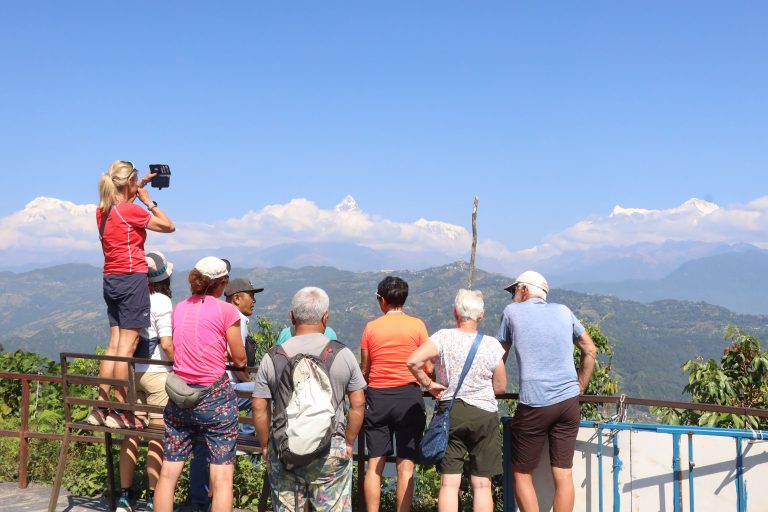
Tour operators say the flood came just as Nepal was preparing for one of its busiest tourism periods, with September bookings already being affected.
Pandey said cancellations had begun among travelers planning treks through the Rasuwa corridor and among visitors headed for the Kailash Mansarovar pilgrimage route. Exact figures for cancellations were not immediately available.
“There has been an immediate impact,” Pandey said. “For example, bookings for arrivals in September have been affected. If we can restore border crossings and roads as quickly as possible, that will send a positive message. Other trekking trails are still operating.”
Damage to roads and highways has also affected the supply of goods needed by hotels, restaurants, and tourism businesses, he said. Reports of disrupted supplies, including cooking gas, could further unsettle travelers who are already reconsidering their plans.
“The highway problems have disrupted the supply chain in Nepal,” Pandey said. “When negative reports spread, visitors may fear that hotels and restaurants do not have cooking gas or that food may not be available. If supplies are interrupted, it becomes difficult.”
He said reports of damaged roads had affected not only trekkers but also ordinary leisure travelers.
“That is why the impact has come during the main September season,” he said.
TAAN said the Langtang route was affected in the Betrawati and Syabrubesi areas, where roads and bridges need repair. The trekking route could resume after those links are restored, the association said.
The Annapurna and Everest regions, along with other major trekking destinations, remain safe and operational, according to TAAN. Still, tourism operators say fear and uncertainty remain among visitors and businesses because of how the disaster has been perceived abroad.
Pandey said rapid reconstruction of roads and other damaged infrastructure would be critical to rebuilding confidence.
“The government needs to begin reconstruction as soon as possible,” he said. “Once that happens, it will send a positive message internationally. The situation is moving toward recovery, and the message will become more positive as displaced people are resettled.”
Hotels and Domestic Travel Affected
The impact has not been limited to trekking operators or foreign visitor bookings. Hotel operators say the disaster has also reduced domestic travel and delayed or canceled corporate events.
Tek Bahadur Mahat, chief executive of the Hotel Association Nepal, said the flood had created an impression in foreign markets that all of Nepal might be unsafe.
“The message the world received was that two districts were hardest hit and other places were partially affected,” Mahat said. “But from the outside, there is a misconception that the whole of Nepal may not be safe.”
He said it was important to communicate that the crisis was confined to a specific river corridor and that major destinations, including Kathmandu, Pokhara, and Lumbini, remained accessible.
“This is a crisis in a specific river corridor or area,” Mahat said. “Kathmandu is open, Pokhara can be visited, and travel to Lumbini is possible. That is the message we are trying to deliver.”
Travel advisories issued by embassies and reports in international news outlets have also influenced travelers’ decisions, he said. Some visitors preparing trips to Nepal have begun reconsidering, postponing, or canceling their travel.
“People planning to come for tours, trekking, and other activities have started thinking, ‘Maybe we should not go now,’” Mahat said.
Relief and rescue work has also pulled companies and institutions away from regularly scheduled seminars, workshops, and residential programs, causing more cancellations at hotels, Mahat said.
Hotels in areas such as Godavari and Dhulikhel, near Kathmandu, often depend on two- or three-day residential events. Their cancellation has added to the pressure on occupancy rates.
Some hotels that would normally have occupancy rates of up to 70 percent have fallen to around 30 percent, Mahat said. In hotels that typically operate at 30 percent to 35 percent occupancy, rates have fallen into the single digits—in some cases to 5 percent to 8 percent.
“Even though all of the data is not yet available, places with 70% occupancy have fallen to 30%,” he said. “Places with 30% to 35% occupancy have been limited to 5% to 8%.”
Some hotels have had days without a single guest, he said.
Group Bookings Canceled
Pashupati Kandel, general secretary of the Thamel Tourism Development Council, said group bookings had been particularly affected since the flood.
“Many group cancellations are coming into the tourism business after the flood, and that has directly affected tourism overall,” Kandel said.
He said information circulating abroad about damage to roads and bridges, as well as uncertainty about overland travel to Pokhara, Chitwan, and other popular destinations, had shaped negative perceptions.
“More tourists in Nepal travel to Pokhara and Chitwan by road than by air,” he said. “When messages go out saying roads are closed, bridges are damaged, and routes have been washed away, it has an impact.”
Some visitors who had postponed trips from the previous year and rescheduled them for this season were now canceling again, Kandel said. Langtang trekking groups have been particularly affected.
“Guests who were ready to come last year had postponed their trips for this year,” he said. “Bookings were quite good this year, but after the flood, those bookings have also started to be canceled.”
Campaign to Reassure Travelers
Tourism entrepreneurs say their immediate task is to rebuild international confidence that Nepal remains open and that the disaster’s impact is geographically limited.
They say the government must provide clear, frequent, and credible updates about damaged areas, operational routes, and travel conditions. Without that information, they warn, travelers may associate the flood with the entire country and avoid destinations such as Kathmandu, Pokhara, Lumbini, and Chitwan.
Diplomatic missions in Nepal, Nepali representatives abroad, the Nepal Tourism Board, and private companies have joined efforts to communicate that message.
Shmulik Bass, Israel’s ambassador to Nepal, said Nepal remained open, welcoming, and ready to receive visitors.
“Tragedy in one area doesn’t mean the entire country is unsafe,” Bass said. “See Nepal with an informed and balanced perspective. Come, explore, and experience Nepal.”
The Nepal Tourism Board has also issued public messages emphasizing that the country is not closed to visitors.
“Nepal is not closed,” the board said in a social media post. “This is a time to stand with Nepal. This is a time to visit Nepal. Nepal is calling.”
The board said it had coordinated with the Tourist Police, government agencies, and tourism associations to establish help desks at its Bhrikutimandap office and at both terminals of Tribhuvan International Airport. The desks are intended to provide travelers with updated information and assistance.
In a Sept. 1 situation update, the board said hotels, tourism services, and major road networks were operating, while domestic and international flights were running normally. It said rapid-response teams were available through the Ministry of Culture, Tourism and Civil Aviation, the Nepal Tourism Board, and tourist information desks operated by the Department of Tourism.
The Consulate General of Nepal in New York has similarly urged the Nepali diaspora to communicate that most of Nepal remains operational and safe for tourism, business, and investment, apart from affected sections of the Bhote Koshi and Trishuli corridors.
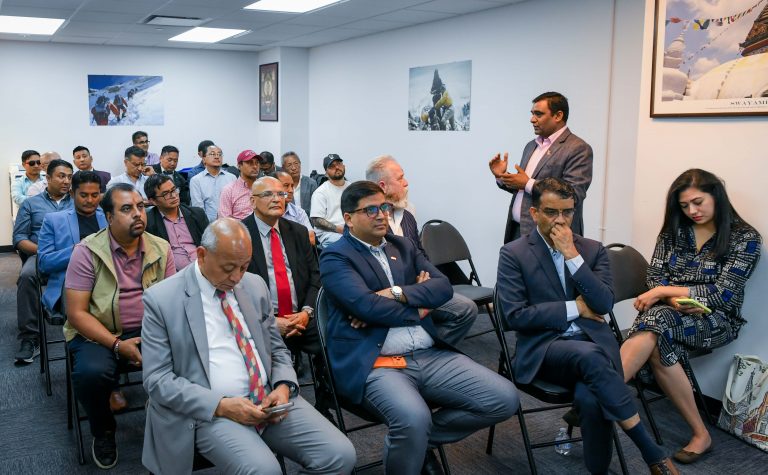
At a community discussion in New York, Consul General Dadhiram Bhandari said Nepal should not be portrayed only as a country facing disaster or seeking aid.
“Nepal is open for business, investment, and tourism,” Bhandari said.
He said Nepali communities abroad had a role in preventing incomplete or misleading information from causing wider damage to tourism, business, and the economy. He urged Nepalis in the United States to use their political, business, and social networks to share accurate information about the country’s needs and conditions with philanthropies, donors, businesses, and public figures.
Private trekking companies are also promoting alternative destinations that were not directly affected by the flood.
Yeti Hikes said Nepal remained open, welcoming, and ready for visitors seeking adventure travel. The company encouraged travelers to visit safely, explore the Himalayas, and continue trekking in Nepal.
In an informational post, the company said the Annapurna Base Camp, Everest Base Camp, Annapurna Circuit, Upper Mustang, and Poon Hill routes had not been directly affected by the Rasuwa flood. It said those trekking areas remained operational, while urging travelers to monitor local road and transportation conditions. The statements reflect the company’s own public assessment and are not an independent government safety certification.
Kandel said private-sector messaging alone would not be enough to restore confidence.
“It is only a business message when the private sector sits here and writes emails saying, ‘We are safe,’” he said. “The state must take responsibility and send an international message that Nepal is safe and that only a limited area has been affected.”
He said reopening roads, bridges, and other infrastructure in affected areas as quickly as possible would help send a positive signal to the tourism market.
TAAN and related agencies are conducting a detailed assessment of the human, physical, and economic losses from the disaster. The association said it planned to submit its findings to the Ministry of Culture, Tourism and Civil Aviation.
Tourism entrepreneurs say Nepal’s ability to recover will depend on the speed of reconstruction, the restoration of damaged roads and trekking trails, credible information about visitor safety, and coordinated international outreach.
August Arrivals Decline
Nepal received 85,444 foreign visitors in August 2026, according to the Nepal Tourism Board—3,236 fewer than the 88,680 arrivals recorded in August 2025.
India was the largest source market with 26,373 visitors, or 30.87 percent of all arrivals.
China ranked second with 10,304 visitors, followed by Sri Lanka with 8,710, the United States with 6,293, Bangladesh with 4,487, and the United Kingdom with 3,476.
By region, Nepal received 41,422 visitors from South Asia, 18,275 from other Asian countries, 10,875 from Europe, 7,473 from the Americas, 2,529 from Oceania, 1,010 from the Middle East, and 338 from Africa in August.
This coverage was made possible by a grant from URL Collective, a nonprofit supporting local, diverse media.