



“I Still Hear the Flood”: Nepal Faces Mental Health Crisis After Devastating Floods

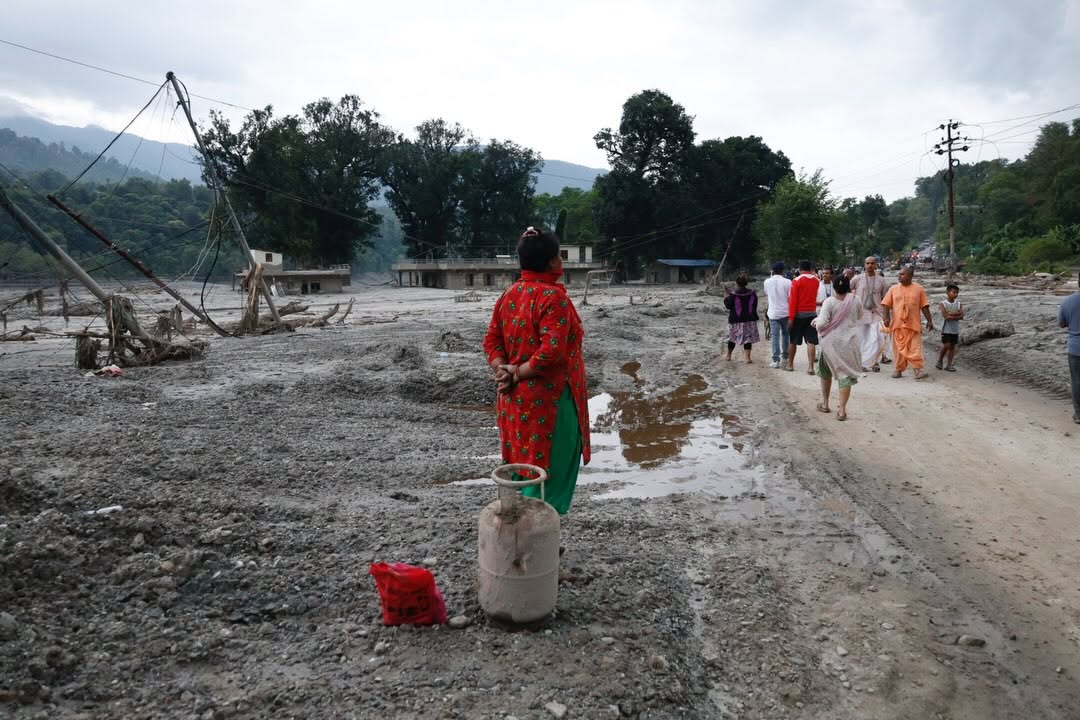
A woman looks over her settlement, damaged by the Aug. 26 floods. Photo: Dipendra Dhungana.
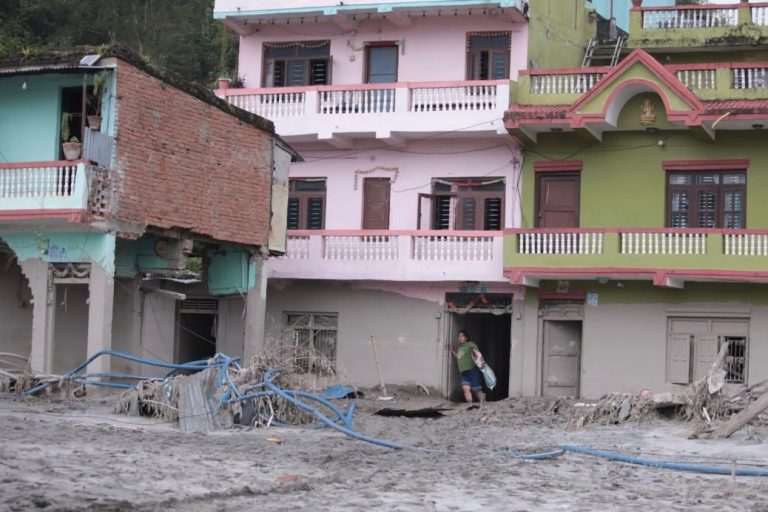
KATHMANDU, Nepal — “Suman,” whose name has been changed to protect his identity, has struggled to sleep since losing family members in the Aug. 26 floods in Nepal’s Bhotekoshi River system, where more than 1,300 bodies have been recovered and about 5,000 people remain missing.
Each time he closes his eyes, he hears the roar of the floodwaters. Images of rushing water, people screaming and a life transformed within moments replay in his mind. During the day, he prefers to be alone. At times, he startles suddenly. Since the deaths of his relatives, one question has haunted him: Who is left for him to live for?
“Everything ended in an instant,” he said. “Even thinking about home scares me now.”
His experience reflects the emotional state of many people who survived the floods along the Trishuli River. In the first days of rescue and relief operations, families focused on basic needs such as food, water, shelter and safety. They are now gradually entering another phase of the disaster: confronting its emotional and psychological toll.
The floods and subsequent landslides destroyed homes, roads, bridges and livelihoods. But another crisis is deepening in affected communities: mental health.
Survivors are coping with the deaths of relatives, missing family members, destroyed homes and uncertainty about the future. Health workers and mental health specialists working in flood-affected areas of Nuwakot, Rasuwa and Kathmandu say they are seeing insomnia, exaggerated startle responses, recurring memories of the disaster, social withdrawal, reluctance to speak with others and intense anxiety about the future.
Children are also showing fear, unusual behavior and withdrawal from play, according to health workers and specialists.
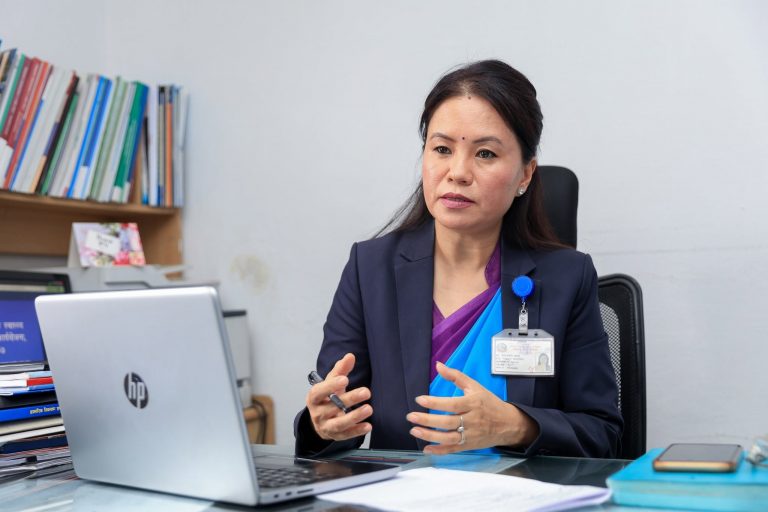
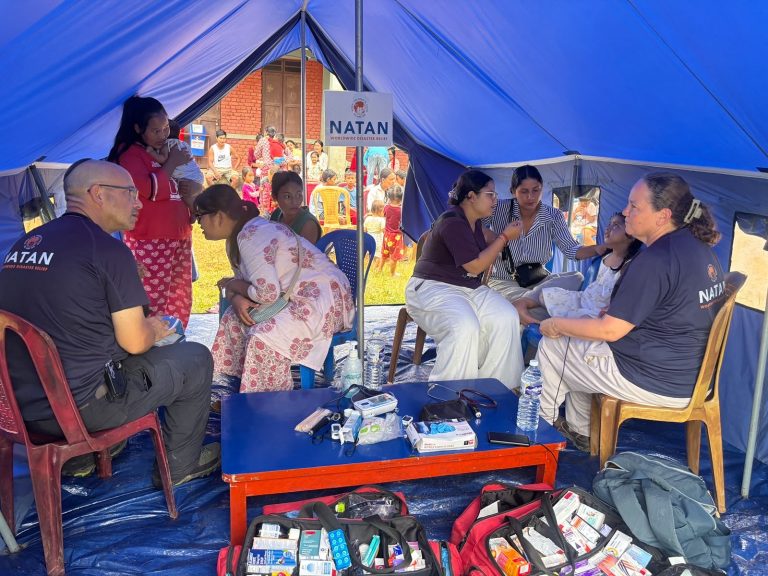
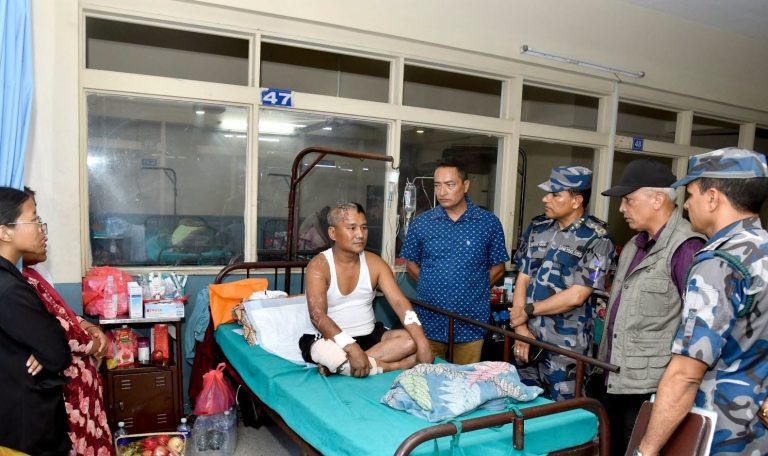
Dr. Pomawati Thapa, senior consultant physician and the chief of the Non-Communicable Diseases and Mental Health Section at Nepal’s Epidemiology and Disease Control Division, said the government has included mental health in its emergency response alongside rescue and relief efforts. More than 25 holding centers — 19 in Nuwakot, four in Rasuwa and two in Kathmandu — are providing mental health counseling and psychosocial support, she said. About 155 psychosocial counselors and health workers have been deployed to affected areas.
But specialists say their greatest concern is not only the immediate distress visible now, but also its possible long-term effects.
From Grief to Uncertainty
In the initial days after the disaster, many people hoped that missing relatives would return alive. As search-and-rescue operations have progressed and the reality of the losses has become clearer, some families have been forced to accept that their loved ones are gone.
Thapa said people in the early stages of a disaster are often focused on meeting immediate survival needs. Severe symptoms of mental distress may not be apparent right away.
She described survivors’ experience as a difficult journey from denial to acceptance. Many initially held on to hope that missing relatives would return. As they begin to accept the extent of their losses, psychological pain is increasingly surfacing, she said.
Some families lost five to eight relatives within minutes, according to health workers. For people who lost a large part of their family and support network, questions about the meaning of life have begun to emerge. Some survivors have reported experiencing suicidal thoughts.
Others whose family members survived are facing a different set of pressures. They have lost homes, farmland, businesses and sources of income. Their questions are immediate: Where will they live? How will they repay loans? How will they support their families? When and how will they rebuild their homes?
Experts say those questions may become more acute once families leave relief and holding centers.
‘I Still Hear the Flood’
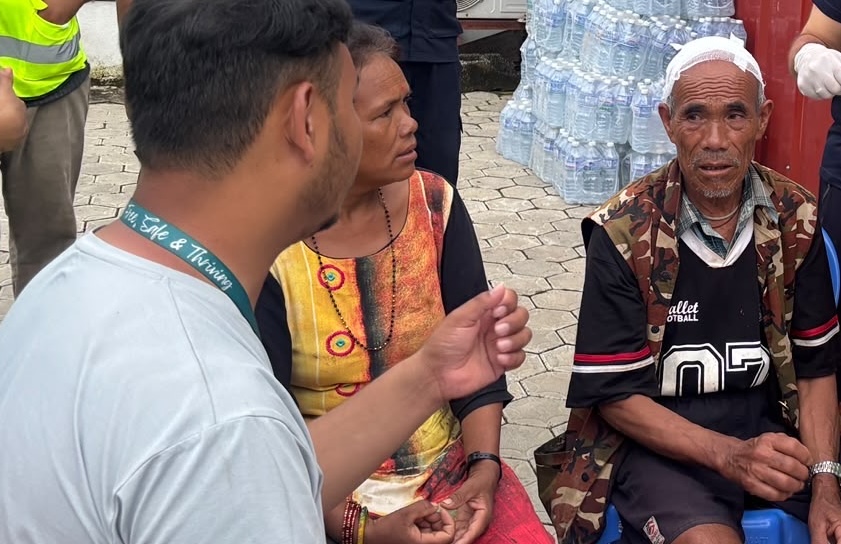
Dr. Ghanshyam Rai, who is working directly in areas affected by flooding in the Bhotekoshi River system, said many survivors are experiencing acute stress reactions.
“People hear the terrifying sound of the flood when they try to sleep at night,” Rai said. “They see the rush of water vividly in front of their eyes, wake up frightened in their beds, and repeatedly relive memories of the disaster.”
Such reactions are not unusual after a disaster, he said. But if symptoms continue for a prolonged period, they can lead to more serious mental health conditions.
“Within the next one to four months, people may develop post-traumatic stress disorder, major depression, anxiety disorders and adjustment disorders,” Rai said. In severe cases, he said, some people may experience significant disturbances in their mental well-being.
Experts see the period when holding centers close and initial relief and outside support begin to decline as particularly sensitive. Survivors may then have to confront rebuilding, employment, debt, housing and their families’ futures largely on their own.
Rebuilding Lives, Not Just Homes
Dr. Rakesh Ghimire, a physician, clinical pharmacologist and researcher, said natural disasters damage not only physical infrastructure but also people’s mental health.
“Natural disasters can have effects that go beyond physical losses,” Ghimire said. “They can also injure our mental health. Recovery is not only about rebuilding homes, roads and infrastructure. Mental health must be an integral part of disaster response and recovery.”
Fear, trauma, confusion, grief, anger, anxiety and sleep problems can occur after floods, landslides and earthquakes, he said. But those early reactions do not necessarily mean a person has a mental illness.
“These reactions are normal and do not always mean someone has a mental disorder,” he said.
Ghimire said post-disaster mental health recovery should be understood in four stages: the impact of the disaster, rescue, recovery and long-term reconstruction.
“At first, people focus on survival and searching for loved ones,” he said. “Once conditions become somewhat safer, the pain of losing a home, property, employment or family members begins to set in.”
During that stage, some people may develop depression, anxiety or PTSD, and those conditions can last for months, he said. Mental health support should begin during the emergency and continue throughout the recovery period.
“The first step is to ensure that people have safety, food, water, shelter, medicine and reliable information,” he said. “Staying connected with family, friends and the community can also provide significant support.”
For initial support, he recommended the “look, listen and link” approach.
“We need to identify people who need help, listen calmly and without judgment, and connect them with family, community support or health services,” he said.
He said survivors should also be supported as they gradually return to regular routines. Consistent sleep and meals, a gradual return to school or work, and physical activity can aid recovery.
He advised against using alcohol or other substances to cope with stress.
“If sadness, fear, anxiety, nightmares or other problems continue and begin affecting daily life, people should seek professional help,” he said. “Any thoughts of suicide or self-harm must be taken seriously and require immediate support.”
Three-Phase Mental Health Plan
The government and mental health specialists are planning to expand services in three phases: immediate, medium-term and long-term.
In the immediate phase, holding centers are providing psychosocial counseling, psychological first aid and emotional support. A 24-hour telephone helpline is also planned to provide assistance as needed.
In the second phase, after displaced families return to villages, communities or temporary housing, authorities plan to launch community-based mental health programs. Teams of five to six people — including psychiatrists, clinical psychologists, psychosocial counselors, psychiatric nurses and social workers — are expected to work in affected areas for three to six months.
The third phase focuses on strengthening local health systems.
For at least one year, plans call for training local health-post staff in mental health, orienting schoolteachers on how to recognize and respond to signs of distress among students, and ensuring a regular supply of essential mental health medications at local hospitals.
Officials also plan to strengthen referrals for severe cases to specialized institutions, including Patan Mental Hospital, Kanti Children’s Hospital and Tribhuvan University Teaching Hospital.
Community and Diaspora Roles
Ghimire said government health services alone will not be enough to support mental health recovery after the disaster.
“The community and the Nepali diaspora also have an important role,” he said.
Neighbors, community leaders, teachers, health workers, volunteers and local organizations should maintain regular contact with affected families, he said. Children, older adults, people with disabilities and families who lost relatives need particular attention.
Nepalis living abroad can help beyond sending relief funds, Ghimire said. They can contribute professional expertise, mental health awareness, training, telehealth support and partnerships with trusted local organizations.
“Nepalis abroad can provide more than financial support,” he said. “They can help through professional knowledge, mental health awareness, training, telehealth assistance and collaboration with credible local organizations.”
Regular phone calls offering emotional support can also be meaningful, he said.
The emotional impact of the disaster is not limited to Nepal. Nepalis abroad may feel anxious, helpless or distressed about the safety of their families and communities.
“Nepalis living abroad also need to take care of their own mental health,” he said.
Uneven Access to Care
Geography remains a major challenge in expanding mental health services.
Health workers and counselors have better access to comparatively accessible areas such as Bidur Municipality. But sufficient services have not yet reached areas across the Trishuli River, Betrawati and remote rural communities because of difficult terrain.
Uncertainty is another major problem for affected communities.
Health workers say stress is increasing because families lack clear information about where and when resettlement will take place, how permanent housing will be provided and how livelihoods will be restored.
The disaster has also disrupted treatment for people with chronic illnesses and preexisting mental health conditions. Some have been unable to obtain regular medication, increasing the risk that their conditions could worsen.
Making Mental Health Part of Reconstruction
After the floods, mental health is no longer an issue confined to hospitals or counseling centers. It is linked to housing, employment, education, social protection and reconstruction.
Experts say counseling alone is unlikely to resolve the crisis if survivors do not have secure housing, stable income and credible information about their futures. Mental health services and physical reconstruction therefore should not be treated as separate programs, but as part of a single recovery plan.
“Post-disaster reconstruction means rebuilding both homes and lives,” Ghimire said.
Mental health, he said, should be incorporated at every stage: disaster preparedness, rescue, relief, recovery and long-term reconstruction.
If Nepal’s federal, provincial and local governments do not connect emergency support with longer-term recovery, survivors could face another, less visible crisis after the floodwaters recede.
Roads and bridges destroyed by the floods can be rebuilt. Homes can be constructed again. But the wounds left in people’s minds take time to heal.
The real measure of reconstruction, therefore, will not simply be whether rescue operations end or infrastructure is restored. It will be whether those who survived the disaster can return to lives that are safe, self-reliant and mentally healthy.
This coverage was made possible by a grant from URL Collective, a nonprofit supporting local, diverse media.