


New York Nepalis Urge Climate Justice After Deadly Bhote Koshi Flood in Nepal


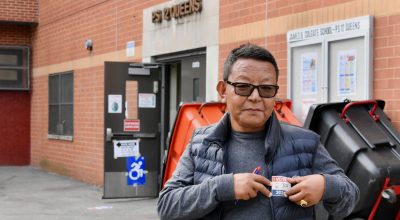
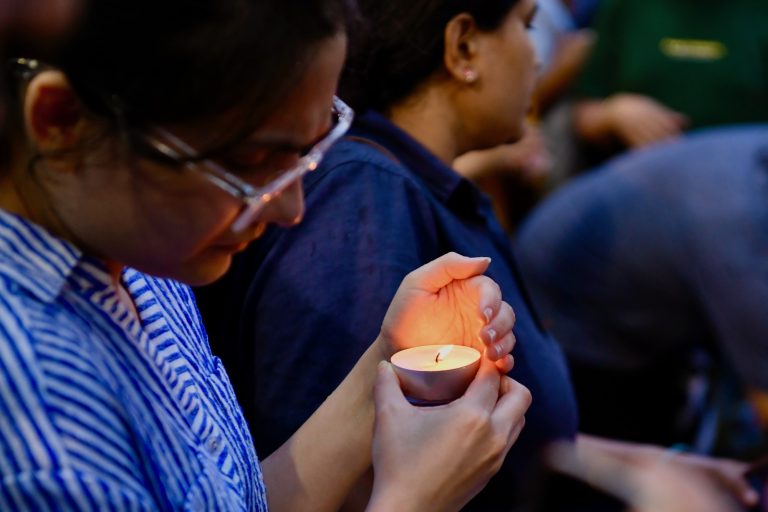
Participants attend a community discussion organized by the Consulate General of Nepal in New York. During the program, Consul General Dadhiram Bhandari urged the Nepali American community to share accurate information internationally that, apart from affected sections of the Bhote Koshi and Trishuli river corridors, most of Nepal remains open and operational for tourism, business and investment. Photo: Rajan Kafle/NepYork
NEW YORK — Members of the Nepali American community called on Nepal to press its case for climate justice on the world stage while emphasizing that most of the country remains open and safe for tourism, investment and business following a devastating flood in the Bhote Koshi River basin.
The appeal came during a community discussion Tuesday hosted by the Consulate General of Nepal in New York.
The disaster caused a major humanitarian and infrastructure crisis. Search, rescue and relief efforts were continuing more than a week later, with Nepal requesting technical support and assistance from foreign governments and international organizations. The Embassy of Nepal’s appeal for financial assistance urged donations to the Prime Minister’s Disaster Relief Fund.
Nepali community members urged Nepal to use the disaster to strengthen its demand for international climate finance, accountability and support for loss and damage. They said Nepal, despite contributing relatively little to global greenhouse gas emissions, faces increasing risks from melting glaciers, glacial lakes, floods, landslides and other climate-related hazards across its Himalayan regions.
Initial accounts have linked the Bhote Koshi disaster to a massive flow of ice, rock, water, mud and debris. The flash flood swept down the Bhote Koshi River from the Tibetan side into Rasuwa before moving downstream into the Trishuli River.
Nepal has formally requested emergency financial assistance from the Fund for Responding to Loss and Damage. In a letter dated Aug. 31, Finance Minister Dr. Swarnim Wagle and Agriculture, Forest and Environment Minister Gita Chaudhary told the fund’s co-chairs that the scale of the damage exceeded Nepal’s immediate response capacity.

Preliminary estimates suggest reconstruction and recovery could require between $4 billion and $5 billion, although a detailed damage and loss assessment is still underway.
Nepal contributes only about 0.1% of global greenhouse gas emissions, according to the World Bank’s Nepal Country Climate and Development Report. By contrast, G20 members accounted for about 77% of global greenhouse gas emissions in 2023, according to the U.N. Environment Programme’s Emissions Gap Report 2024.
Nagma Shrestha, a United Nations representative for the International Association of Youth and Students for Peace, said Nepal should use the upcoming U.N. General Assembly to seek concrete climate action rather than simply recounting the disaster.
“Countries around the world have made commitments on climate action and climate finance,” Shrestha said. “Countries such as Nepal, which contribute very little to global emissions, are facing disproportionately high climate risks.”
She said Nepal should ask what has become of international commitments, what results have been achieved and whether those commitments are improving the resilience of vulnerable communities.

Keep Nepal’s Message Clear
Consul General Dadhiram Bhandari urged the Nepali community to communicate clearly that, aside from affected sections of the Bhote Koshi and Trishuli corridors, the rest of Nepal remains operational and safe for visitors, businesses and investors.
He said diaspora organizations have an important role not only in raising relief funds but also in preventing incomplete or misleading information from causing wider damage to Nepal’s tourism industry, businesses and economy.

“Nepal is open for business, investment and tourism,” Bhandari said, emphasizing that Nepal should not be seen only as a country in disaster or one seeking aid. He said the Nepal Business and Investment Summit, scheduled for September in New York, could provide a forum to discuss investment in post-disaster resilience, reconstruction and long-term economic sustainability.
Bhandari asked Nepalis in the United States to use their political, business and social networks to reach philanthropic groups, major donors, businesses and public figures with accurate information about Nepal’s needs.
The consulate has also contacted elected officials in its consular jurisdiction and has received messages of sympathy and solidarity from governors and other representatives, Bhandari said.
Relief Efforts and Fundraising
Bhandari said technical search-and-rescue operations should be left to trained government and specialist teams, while diaspora communities focus on fundraising and other forms of practical support.
He said Nepal needs items and expertise including freezers, DNA-testing materials, forensic support, tunnel specialists and personnel trained to work in difficult terrain. Nepal has been communicating with neighboring countries as well as the United States, South Korea and Singapore about equipment and technical assistance, he said.
The consul general encouraged donors to use Nepal’s official Prime Minister’s Disaster Relief Fund under the government’s one-door system.
New York-based news outlets Khasokhas and NepYork have also launched a campaign encouraging contributors to deposit donations directly into the Prime Minister’s Disaster Relief Fund. Organizers said the effort has expanded from New York to New Jersey and Pennsylvania.

Basu Lamichhane, president of the Non-Resident Nepali Association’s New York chapter, said collective fundraising through community, district or regional organizations can generate broader participation than asking individuals to make separate donations. The broader NRNA has established a relief fund of $330,000, of which about $66,000 has already been handed over to the Prime Minister’s Disaster Relief Fund.
New York attorney Keshab Raj Seadie said an online fundraising campaign he began through family, friends and clients had collected about $58,000 by Thurusday. He said the money was being prepared for transfer to Nepal. Seadie said support must continue after the immediate emergency, particularly for children who lose parents and families that lose homes, income and access to food, housing and medical care. He proposed a shared coordination mechanism for individuals and organizations running aid campaigns to exchange information and avoid duplication.
Payment Concerns Remain
Participants also raised concerns about the practical difficulties of sending money from the United States to Nepal.
Attorney Khagendra GC said that when several bank account details circulate at once, donors can struggle to determine which accounts are official. He urged organizers to provide consistent, verified donation instructions and warned of the risk of fraud during disaster fundraising.
Bhandari said the consulate had relayed concerns about foreign transfers to relevant authorities. He said an international payment system may have been developed to allow donations through foreign credit and debit cards, and he asked community members to report any failed transactions or uncertainty to the consulate.
Lamichhane said technical problems remain. He described trying four or five times to send his organization’s contribution from the United States without completing the transfer, underscoring the need for a more reliable international payment system.
Social activist Amit Pratap Shah said donors also need clear information about whether contributions sent directly to Nepal’s government fund qualify for U.S. tax-related benefits. Donations made through U.S.-registered nonprofit organizations may be eligible for tax deductions, he said, but uncertainty about direct transfers can make it harder to attract larger donors.
Shah also urged organizers to explore corporate matching-fund programs offered by U.S. employers and to expand outreach beyond Nepali Americans to Indian and other diaspora communities, local businesses, philanthropies and non-Nepali donors.