


U.S. Federal Trade Commission Warns Nepal Flood Relief Donors to Watch for Charity Scams


The Apex Building, home to the Federal Trade Commission (FTC) headquarters in Washington, D.C. Photo: Harrison Keely/Wikimedia Commons (CC BY 4.0).
NEW YORK — The U.S. Federal Trade Commission is warning people who want to donate to relief efforts following devastating flooding in Nepal to take steps to ensure their money reaches people in need rather than scammers posing as charities.
The FTC, an independent agency of the U.S. government, said scammers often exploit people’s generosity following major weather emergencies and natural disasters. They may create fake charities that appear legitimate or impersonate well-known charitable organizations to solicit donations.
The warning comes as relief efforts continue following severe flooding in northern Nepal, including areas along the country’s border with China.
According to the FTC, scammers may create websites, social media accounts or fundraising campaigns that appear to be raising money for disaster victims. They may also use the names and identities of legitimate charities to make their appeals appear credible.
If donors send money to these fake organizations, the funds may never reach flood victims or relief efforts, the agency said.
Research Before You Donate
The FTC recommends researching an organization before making a donation, particularly when the request comes through social media, text messages or other unsolicited communications.
Donors should not assume a fundraising appeal is legitimate simply because it was shared by a friend or someone they know on social media. Instead, the agency recommends independently researching the organization and confirming that it is established and has a legitimate way to provide assistance.
People can also check organizations through charity watchdogs such as CharityWatch and Give.org. Donors should look into how long an organization has been operating and how much of their contribution goes toward the programs and people the charity says it supports.
The FTC advises people who receive a text message asking for donations to verify the request before sending money.
Rather than using a phone number or donation link provided in the message, donors should independently visit the charity’s official website and confirm its contact information and donation instructions.
The same precaution applies to donation requests received through social media, email or other online platforms. The FTC also warns against donating to anyone who insists that contributions must be made through cash, gift cards, wire transfers or cryptocurrency.
The FTC provides additional information on how to donate safely through its consumer resources. The agency also encourages people who encounter charity fraud, fake charities or someone impersonating a legitimate charitable organization to file a complaint with the FTC.
Khasokhas, NepYork Promote Direct Donations in Jackson Heights
Amid the fundraising effort for Nepal flood victims, Nepali community media outlets Khasokhas and NepYork have taken their campaign to the streets of Jackson Heights, Queens, urging members of the Nepali diaspora to donate directly to the Government of Nepal’s official Prime Minister’s Disaster Relief Fund.
The initiative was launched amid concerns that unauthorized actors, intermediaries and unverified accounts could emerge during the crisis and potentially misdirect donations.
“We live in New York. The disaster is in Nepal. Give directly,” the campaign message states.

Khasokhas and NepYork distributed and displayed posters featuring the official QR code for the Prime Minister’s Disaster Relief Fund at businesses and other community locations in Jackson Heights. The campaign encourages donors to bypass intermediaries and use the government’s designated donation channel.
According to organizers, more than two dozen Queens businesses have agreed to display the QR code in their storefronts, helping direct community members to the official donation channel.
The campaign is intended to promote transparency and help ensure donations reach the government’s designated disaster-relief fund without being routed through unverified individuals or organizations.
Printable versions of the campaign posters have also been made available for community members, businesses and organizations to display in storefronts, offices, community centers and other public spaces. The materials can also be shared through social media and messaging platforms to help donors identify the official donation channel.
The campaign’s central message is simple: Donate directly to Nepal’s official disaster-relief fund and avoid unverified accounts and unnecessary intermediaries.
“We are with you, Nepal,” the initiative states.
Nepal Embassy Urges Diaspora to Use Official Relief Channels
The Embassy of Nepal in Washington, D.C., has also appealed to Nepalis in the United States and other supporters of Nepal to contribute to official government relief funds for victims of the Bhote Koshi floods.
In an appeal issued Aug. 28, the embassy expressed condolences over the loss of lives and property caused by the Aug. 26 flooding in Rasuwa. It said the disaster had severely affected communities in Rasuwa, Nuwakot, Dhading, Gorkha and other areas.
The embassy said the Government of Nepal has prioritized search-and-rescue operations, relief, safe evacuation, rehabilitation and emergency response efforts. It urged Nepalis living in the United States, Nepali diaspora organizations, businesses, philanthropists, American and international organizations, and friends of Nepal to contribute according to their capacity.
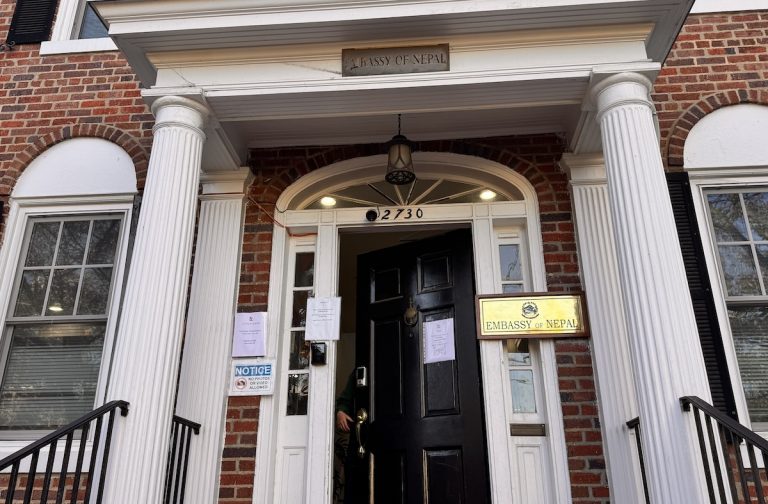
The embassy identified two official online donation channels: the Prime Minister’s Disaster Relief Fund and the Prime Minister’s Relief Fund.
The embassy specifically urged donors to use only official relief funds, bank accounts, QR codes and other verified channels designated by the Government of Nepal.
It also advised donors to verify the authenticity of bank accounts and QR codes before making contributions and to confirm the account-holder name against information published through official government sources.
Among the account names donors were advised to verify are “PRIME MINISTER DISASTER RELIEF FUND” and “DISASTER RELIEF FUND.”
“Every contribution, large or small, is meaningful,” the embassy said.