



Rubio Pledges U.S. Aid After Deadly Nepal Floods Kill at Least 147, Leave at Least 47 Americans Missing


Secretary Marco Rubio . (Official State Department photo by Freddie Everett)
U.S. Secretary of State Marco Rubio pledged American assistance to Nepal following catastrophic flash floods along the Bhotekoshi and Trishuli river systems that have killed at least 147 people and left hundreds of travelers unaccounted for, including 47 Americans.
Rubio expressed condolences and promised federal assistance for the region.
“We express our solidarity and are united in prayer for the Nepali people following the devastating floods,” Rubio said. He added that the U.S. Department of State “stands ready to support the Government of Nepal with needed humanitarian assistance.”
The announcement follows emergency advisories issued by the U.S. Embassy in Kathmandu detailing severe damage across Nepal’s Rasuwa District and downstream communities. Embassy officials confirmed that they are actively working to locate American citizens in affected areas, including Nuwakot, Dhading, Gorkha, Chitwan, and Tanahun.
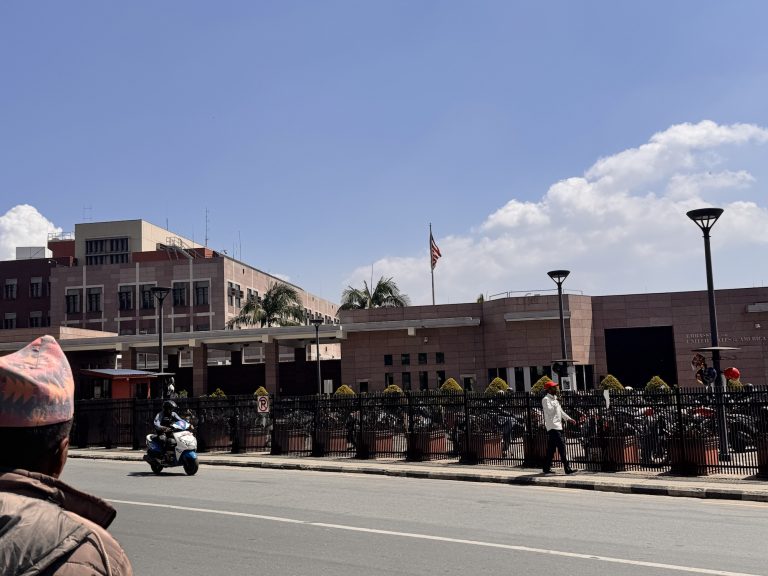
“We are deeply saddened by the tragic loss of life and devastation caused by the Bhote Koshi flood,” the U.S. Embassy said in a statement. “We extend our sincere condolences to the families and loved ones of those who lost their lives, and our thoughts are with all those affected by this disaster.”
Catastrophic Impact and Missing Tourists
Police reported that floodwaters tore through communities from the Chinese border in Rasuwa to areas near Mugling, killing 147 people and crippling local infrastructure. Nepali authorities cautioned that casualty and displacement figures could rise as rescue teams reach isolated communities cut off by damaged roads, collapsed bridges, and power outages.
The Nepal Tourism Board reported that 403 people remain out of contact, including 341 foreign nationals and 62 Nepali citizens. The missing travelers include citizens of dozens of countries, with the largest groups from India (133), the United States (47), Australia (34), the United Kingdom (33), Canada (24), and Malaysia (19).
The flood entered Nepal through the Rasuwagadhi border crossing at approximately 9 a.m., after racing through Timure, Syabrubesi, and other settlements in Rasuwa before surging along the Trishuli River corridor. While the precise cause remains under investigation, Nepal’s foreign minister said that an earthquake-triggered landslide in China may have dammed the Bhotekoshi River before releasing water downstream. Early alternative assessments suggest that an ice-and-rock avalanche near a glacier may have temporarily blocked a tributary before the blockage failed.
Rescue Operations and Infrastructure Damage
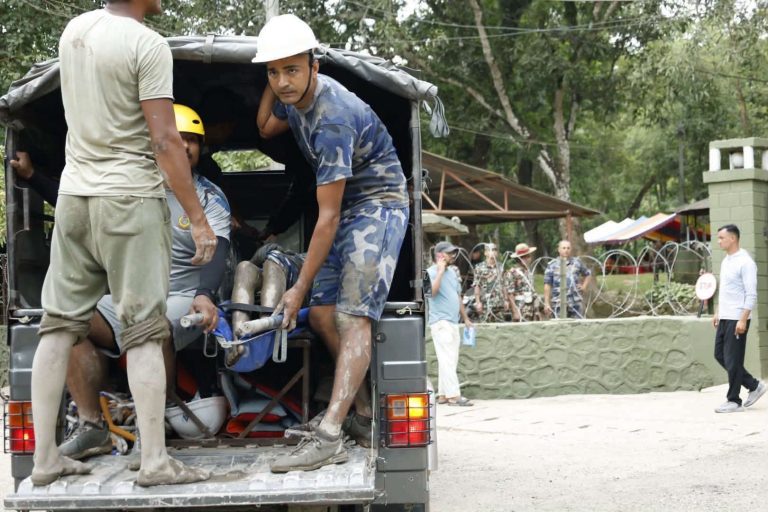
Nepal Army troops, Nepal Police, Armed Police Force officers, tourist police, and local residents are conducting search, evacuation, and recovery operations. Helicopters have faced severe difficulties landing in high-altitude mountain communities because of continuing hazardous flood conditions.
The destruction has severely affected trade and logistics. At the Rasuwagadhi customs yard—a key commercial gateway with China—floodwaters destroyed homes, hotels, tourist buses, and commercial facilities. Business representatives estimate that more than 200 cargo trucks and between 500 and 700 imported electric vehicles were swept away. More than 20 bridges were destroyed between the Rasuwa border and Galchhi, cutting off critical district roadways.
Rescue and communication efforts remain severely hindered by widespread blackouts. Nepal’s Energy Ministry reported that 13 to 15 hydropower projects—including Chilime, Rasuwagadhi, and Trishuli-3A—were affected, disrupting 430 megawatts of electricity supply. The loss represents more than 12% of the country’s installed hydropower capacity, leaving much of Rasuwa and Nuwakot without electricity, internet access, or phone service.
Due to the infrastructure outages, embassy officials urged U.S. citizens in the region to seek higher ground, stay away from riverbanks, and contact family members or tour operators via text messages or messaging apps when telephone networks fail. Travelers requiring emergency assistance have been instructed to call embassy officials directly or contact Nepal’s national disaster hotline.