

Nepal’s Flood Devastation: A Journalist’s Account From the Front Lines


Floodwaters damaged homes and businesses in Trishuli Bazaar, Nuwakot, after a destructive surge from the Bhote Koshi River in Rasuwa. Photo: Dipendra Dhungana/Nepyork.
At 9:25 a.m. Wednesday, I was at my regular desk in Kathmandu, sipping tea and scrolling through my phone when a video appeared on social media: “A major flood has hit Rasuwa.”
The footage was terrifying. The Bhote Koshi River was raging with such force that spray, mud and mist rose over the hillsides, making the landscape look covered by clouds. A violent, debris-filled current surged forward, sweeping away houses, roads and vehicles within moments.
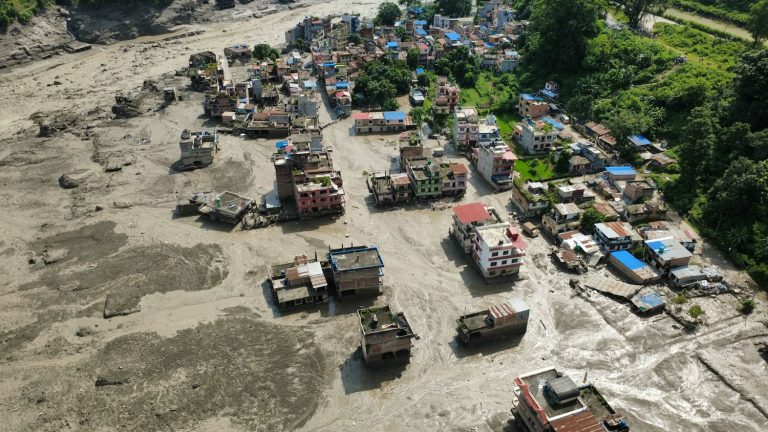
My heart sank. The Rasuwa customs area, still recovering from severe flooding about two years earlier, appeared to have been devastated again. Reports suggested the sudden flood had come from Tibet and may have been linked to an earthquake or a glacial lake outburst. Timure, Rasuwagadhi and Syafrubesi were reportedly inundated.
Within minutes, tragic updates began arriving from downstream communities along the Trishuli River, including Betrawati, Trishuli Bazaar and Devighat. Reports of missing tourists, security personnel and local residents made the scale of the disaster feel even more unbearable.

I tried to stay focused on my work, but the responsibility of being a journalist would not let me sit still.
A Risky Journey
As information continued to pour in, there was only one thought in my mind: I had to go there, report from the ground and document what had happened.
But getting there was uncertain. Warnings had already suggested that the Prithvi Highway and the Pasang Lhamu Highway could be blocked. After calling several contacts for updates, I received unconfirmed information that the road to Trishuli and Devighat was still open.
By 11 a.m., I decided to take the risk and leave by motorcycle.
The journey from Kathmandu through Jhor took about two difficult hours. Rain fell throughout the trip, making the road slick and dangerous. At several points, local people stopped us and warned: “The flood is still rising. Please be careful.”
By the time I reached Trishuli, reports said the flood had damaged more than 40 kilometers of road, swept away dozens of bridges and affected hydropower facilities. I kept wondering whether I would be able to face what I was about to see.
A Town Turned Into Riverbed
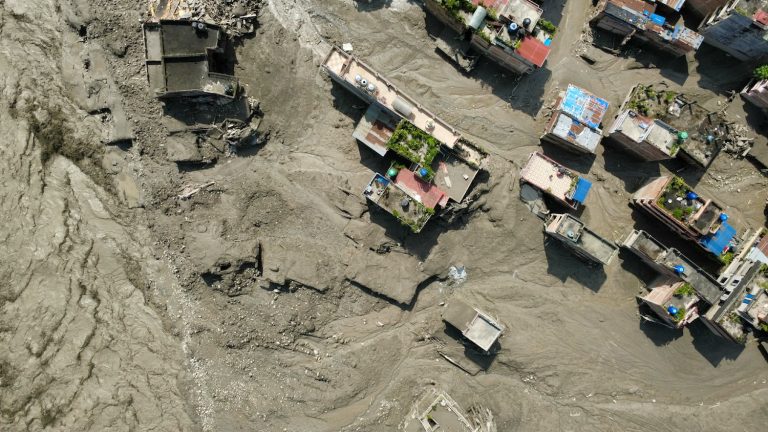
As soon as I arrived in Trishuli, other journalists and I began taking photos and videos. Trishuli Bazaar had been transformed into a riverbed. Hundreds of homes were submerged in water and mud. Shops had been washed away, and vehicles had disappeared into the river.
I launched my drone to document the scale of the destruction from above.
When local residents saw it in the air, some approached with hopeful eyes.
“Brother, could you please check what happened to our house?” they asked.

The images on the drone screen were heartbreaking. Settlements from Timure to Syafrubesi appeared almost erased. The customs office, police posts and hydropower structures were buried in mud and debris. The flood surge was estimated to have reached 8 to 10 meters.
Many residents said they had lost everything — homes, fields and livelihoods. Some said family members were missing. As I brought the drone back, my eyes filled with tears.
Rescue Amid Restrictions
The Nepali Army was carrying out rescue operations with great effort. Helicopters circled overhead, but high water levels made landing difficult. Soldiers were taking major risks to rescue people.
At the same time, they repeatedly tried to prevent journalists from photographing and filming the rescue work. Although the restrictions may have been motivated by safety concerns, it was painful to be prevented from documenting such a major disaster.

Still, from behind an outer fence, I managed to capture important images: homes buried in mud, vehicles washed away and soldiers working through the destruction.
After hours of work, hunger caught up with me. At a small snack shop nearby, I quickly sent some photos to the office. The shop owner, in tears, told us that his own business had been flooded.
Then we headed toward Devighat.
Grief at Devighat
After about 35 minutes of travel from Trishuli through constant rain, we reached Devighat. Along the way, we heard warnings that the water level had crossed the danger mark and that areas as far as Muglin were at risk.
The situation at Devighat was even more painful.

A team was recovering the body of a person from the water. When we tried to document the scene, local residents angrily confronted us. They shouted, cursed and demanded to know what journalists would gain by taking photos.
“What will you do with pictures?” they yelled. “Our people are missing. Our homes are gone.”
At first, I was shaken. But I tried to understand. These were people who had lost loved ones, homes and everything they owned. The missing had not been found, and rescue operations were still incomplete. In that confusion and grief, anger was natural.

Reports said hundreds of people — including Indian and American tourists, security personnel and hydropower workers — were missing. I remained quiet, took only a few necessary photographs and began the return journey to Kathmandu.
Even while believing that I had a professional duty to report, I carried a deep feeling of guilt.
Returning With Heavy News
Rain continued throughout the ride back, leaving me soaked. Near Jhor, as I stopped briefly to rest, I received another devastating message: a friend’s younger brother was missing.
After witnessing the destruction around Trishuli, that news broke me even further. By night, bodies had begun to be recovered, some reportedly carried as far as Chitwan.

I returned to my room carrying an unbearable weight.
Even now, when I remember that place and the faces of the people there, I struggle to breathe. I keep thinking: How will they recover? What will they do now?
I witnessed that day, but I also feel that something must be done to prevent such disasters from happening again.
May no one ever have to live through a day like this.
All photos by Dipendra Dhungana.