






Nepal Counts 95 Dead After Flood Tears Through Rasuwa and Trishuli

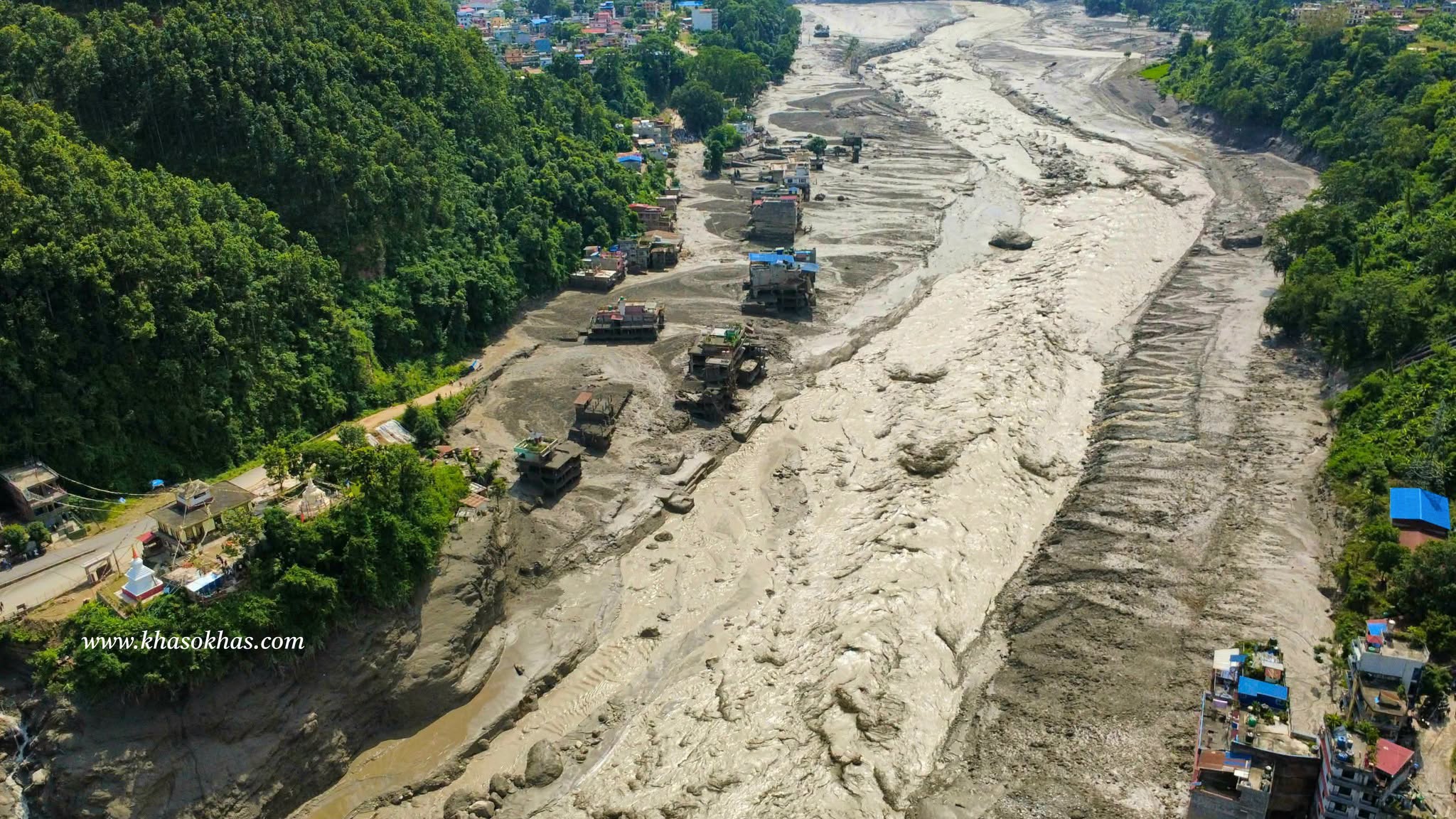
Trishuli in Nuwakot after flooding in the Bhotekoshi River in Rasuwa, Nepal. Photo: Dipendra Dhungana/NepYork
KATHMANDU, Nepal — Nepali officials said Wednesday that catastrophic flooding along the Bhotekoshi and Trishuli river systems had killed 95 people, while 403 tourists and travelers remained out of contact after floodwaters tore through communities from the China border in Rasuwa to downstream areas near Mugling.
Across the border in China, three people were reported dead and more than 250 missing after a mudslide struck Gyirong port in Tibet, state media reported. Chinese President Xi Jinping ordered an “all-out” search for missing people and called for stronger monitoring and early-warning measures to prevent additional disasters.
Nepali authorities cautioned that the number of people killed, missing, and displaced could change as rescuers reach isolated communities. Communications, roads, bridges, and power systems were heavily damaged, limiting access to the hardest-hit areas.
Possible Flood Trigger
Nepal’s foreign minister said an earthquake triggered a major landslide that blocked the Bhotekoshi River in China before water was released downstream toward Nepal.
The flood entered Nepal through the Rasuwagadhi border area at about 9 a.m. and raced through Timure, Syabrubesi, and other settlements in Rasuwa before surging into Nuwakot, Dhading, Gorkha, and Chitwan along the Trishuli River corridor.
The precise cause remained under investigation. Other early assessments have suggested an ice-and-rock avalanche near a glacier may have blocked a tributary, creating a temporary dam that later failed and sent a sudden torrent downstream.
Hundreds Unreachable
The Nepal Tourism Board said 403 people were out of contact, including 341 foreign nationals and 62 Nepali citizens. The group includes 203 men and 200 women.
Those listed as unreachable included 133 Indians, 47 Americans, 34 Australians, 33 British citizens, 24 Canadians, and 19 Malaysians. Citizens of Ukraine, Singapore, South Africa, Japan, New Zealand, Germany, France, Ireland, the Netherlands, Spain, Belarus, Finland, Hungary, Israel, Lithuania, Portugal, and the Philippines were also included.
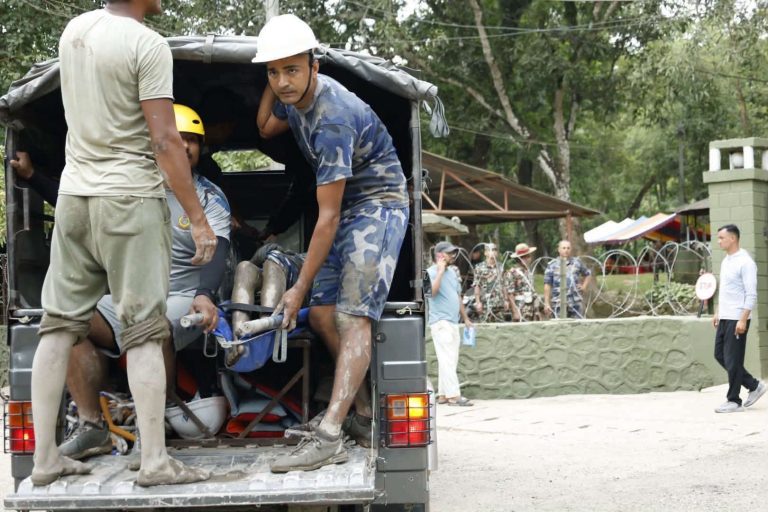
Nepal Army troops, Nepal Police, Armed Police Force officers, tourist police, and local residents were carrying out searches, evacuations, and recovery work. Helicopters were dispatched but could not land in some of the most severely affected mountain communities because of flood conditions.
Towns and Infrastructure Destroyed
The most severe initial damage was reported at Rasuwagadhi, Timure, and Syabrubesi near Nepal’s border with China.
Floodwaters swept away homes, hotels, shops, police facilities, tourist buses, cargo vehicles, and commercial goods. The Rasuwagadhi customs yard — a major trade gateway for imports from China — was devastated. Business representatives said more than 200 cargo trucks and an estimated 500 to 700 imported electric vehicles may have been swept away.
The flood also hit Chilime, Mailung, Betrawati, Trishuli Bazaar, Devighat, Galchhi, Gajuri, and Malekhu. More than 20 bridges were reportedly washed away between the Rasuwa border and Galchhi, cutting road connections across the river in several districts.
Authorities ordered residents along the Bhotekoshi, Trishuli, and Narayani rivers to avoid riverbanks and move to safer ground when told to do so.
Blackouts Complicate Rescue
An estimated 13 to 15 hydropower projects and related electricity facilities were affected, including the Chilime, Rasuwagadhi, and Trishuli-3A projects, as well as the Trishuli-3B substation.
Nepal’s Energy Ministry said 430 megawatts of electricity supply was affected, largely from hydropower projects — more than 12% of Nepal’s 3.2-gigawatt installed hydropower capacity, according to a Reuters calculation.
The loss of electricity, telephone, and internet service left much of Rasuwa and Nuwakot in darkness and made it difficult for authorities to confirm casualties or for families and employers to contact people in the disaster area.
Officials said rescue operations and a full damage assessment would continue as floodwaters recede and access to the affected districts improves.