





CPA Urges U.S. Nonprofits and Individuals to Follow IRS Rules When Raising Flood Relief Funds for Nepal

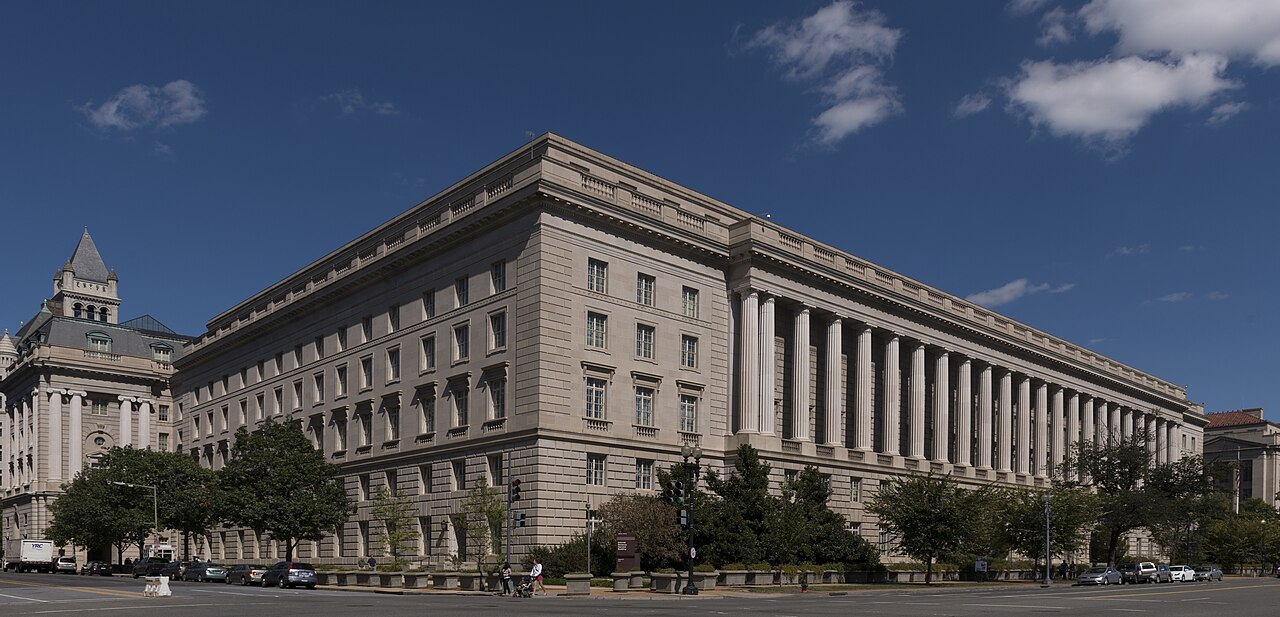
The Internal Revenue Service Building, Washington, D.C. Photo by Carol M. Highsmith, courtesy of the Library of Congress (LC-DIG-highsm-18509). Available in the Public Domain via Wikimedia Commons.
NEW YORK — U.S.-based nonprofit organizations raising money for flood relief in Nepal must ensure that their charitable purposes, governing documents and operations comply with Internal Revenue Service requirements, according to New York-based certified public accountant Raj Biraj Rijal, a licensed CPA and CGMA with offices in Jackson Heights and Midtown Manhattan.
Rijal is a CPA, CGMA, MBA and MSA and is associated with CPA’s Firm of Stewart and Rijal, PLLC, which has offices in Queens and Manhattan.
Rijal said nonprofits may raise funds for disaster response and relief when those activities fall within the organization’s stated charitable purpose. That purpose is generally outlined in the organization’s articles of incorporation, bylaws and application for federal tax-exempt status.

“If the organization’s purpose includes rescue and relief programs during disasters anywhere in the world, it can raise funds for that purpose,” Rijal said in an interview. “But the organization has to work within the purpose it has declared.”
The comments came as Nepali community organizations and other groups in the United States were raising money through GoFundMe and other online platforms following catastrophic flash floods that began on Aug. 26, 2026, when an ice avalanche collapsed near the Nepal-Tibet border, sending ice, rock, and mud through Himalayan river valleys.
By Sept. 3, Nepali authorities had reported more than 1,200 deaths and thousands of people still missing, making the disaster one of the country’s deadliest since the 2015 earthquake.
Nonprofits Must Follow Their Stated Purpose
Rijal said an organization planning to support disaster victims overseas should clearly describe its international relief activities in its organizational documents and application for tax-exempt status, generally filed with the IRS using Form 1023 or Form 1023-EZ, when applicable.
The organization’s governing documents and IRS filings should explain the types of disaster-relief and rescue activities it will conduct, whether it will operate directly in another country or work through a foreign partner organization, how projects will be selected, monitored and documented, and how funds will be distributed and accounted for.
A U.S. charity can support disaster-relief work in another country, but it must retain control and discretion over how its funds are used. The IRS provides specific guidance on international disaster relief in Publication 3833, Disaster Relief: Providing Assistance Through Charitable Organizations and its current disaster-relief resources for charities and contributors.
The IRS says contributions to a qualified U.S. charity may be deductible even when the charity assists people in a foreign country, provided the U.S. organization has full control and discretion over the use of the funds. Contributions earmarked for a particular individual or family are not deductible, and contributions made directly to foreign organizations generally are not deductible for U.S. federal income-tax purposes.
The IRS notes that limited exceptions may apply under tax treaties with Canada, Mexico and Israel.

Rijal said a nonprofit should either carry out the project through its own team or work with a qualified local partner in Nepal. The partner should have the capacity to perform the work, while the U.S. organization should maintain supervision and control over the project.
“That control has to continue when the project is selected, when funds are transferred and when the money is distributed,” he said.
A nonprofit should prepare a proposal before beginning a relief project and keep records as the work progresses, Rijal said. Funds should be transferred in phases based on project milestones, with documentation showing how the money was used.
Records may include project proposals, agreements with local partners, budgets, receipts, progress reports, photographs, beneficiary information and final reports.
The IRS says charities should maintain records showing the amounts paid, the purpose of the payments, the criteria used to select recipients and evidence that distributions served charitable purposes and addressed victims’ needs. Documentation should also address relationships between recipients and the organization’s officers, directors, key employees or substantial contributors.
For short-term emergency assistance, such as meals, blankets or temporary shelter, charities generally may document the date, location and estimated number of people assisted rather than recording the name and address of every recipient, according to IRS guidance.
Direct Transfers Can Create Problems
Rijal said a U.S. nonprofit that raises charitable funds generally cannot simply collect money and send it directly to a foreign government fund, a particular individual or another organization without ensuring that the transfer furthers the nonprofit’s own charitable purpose and remains under its control.
He said an organization primarily established to raise and distribute grants may be able to do so if its structure and tax-exempt purpose authorize that activity. But an operating charity that raises money for its own relief program should not function merely as a pass-through for funds directed by donors to a foreign entity.
The IRS generally does not allow a U.S. taxpayer to claim a charitable deduction for a contribution made directly to a foreign organization. It also says a contribution cannot be deducted when it is earmarked for a particular individual or family or otherwise fails to meet the requirements for a deductible charitable contribution.
However, a donation to a qualified U.S. charity that independently decides to use its funds for an overseas disaster-relief project may qualify for a deduction, assuming the donor meets other federal tax requirements and the charity retains full control and discretion over the funds.
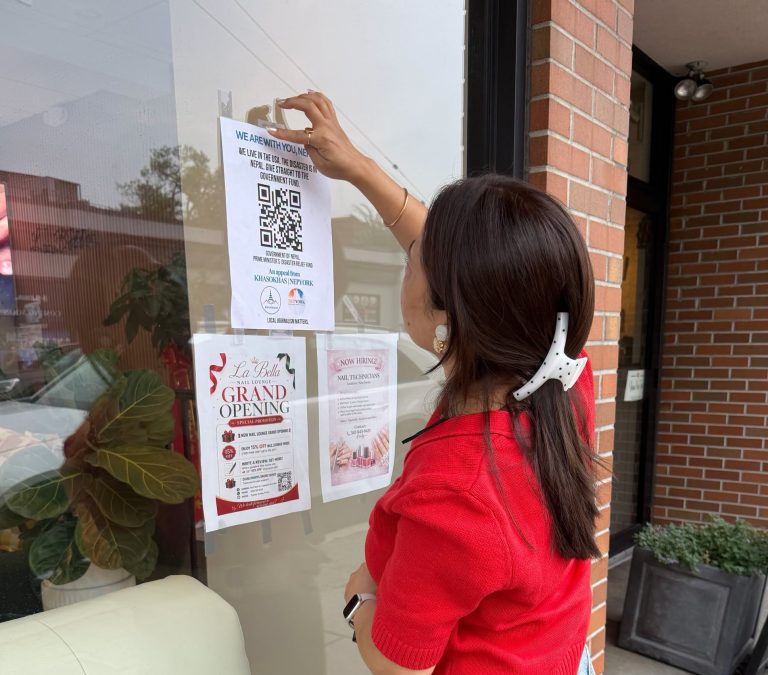
That distinction is important when a U.S. charity works with a foreign partner. The U.S. organization should independently review and approve the project, maintain discretion over the use of the funds and document how the activity furthers its own exempt purpose.
If the U.S. organization functions only as a conduit for money that a donor has directed to a foreign government fund, a named individual or a foreign charity, the arrangement can create tax and compliance concerns.
Organizations May Need to Review Their Documents
If an organization’s articles of incorporation, bylaws or IRS application do not include international disaster relief, Rijal said it should review its documents before undertaking the activity, particularly when the work is urgent.
That may require amending the organization’s corporate registration with the state, updating its bylaws and determining whether any filing or disclosure with the IRS is necessary.
“If the purpose does not cover the activity, the organization needs to rectify that,” Rijal said. “It should amend the documents and update the state and IRS records before continuing the work.”
Rijal said conducting activities outside an organization’s approved purpose can create compliance problems. Depending on the facts, the organization could face additional taxes, penalties or scrutiny of its tax-exempt status.
Federal law does not automatically dissolve every nonprofit that engages in an improper activity. However, organizations can face sanctions or other tax consequences depending on the nature and circumstances of the activity. In serious cases, an organization can risk losing its tax-exempt status.
Rijal recommended that organizations consult a nonprofit attorney or tax professional before transferring disaster-relief funds overseas.
A public charity may be able to add charitable programs that are consistent with its exempt purpose without filing a new Form 1023. However, significant changes in an organization’s purpose or operations may create additional disclosure or compliance obligations.
State corporate law is a separate issue. If an organization’s articles of incorporation narrowly define its purpose, a state amendment may be required before the group expands into international relief.
Tax Treatment of Unrelated Activities
Rijal also discussed the tax consequences when a nonprofit conducts activities unrelated to its exempt purpose.
He referred to the potential application of unrelated business income tax, commonly known as UBIT. Under IRS rules, income from a trade or business that is regularly carried on and not substantially related to an organization’s exempt purpose may be taxable, even when earned by a tax-exempt organization.
The IRS provides additional guidance in Publication 598, Tax on Unrelated Business Income of Exempt Organizations.
That does not mean every activity outside an organization’s primary program automatically becomes taxable unrelated business income. The tax treatment depends on the nature of the activity, how regularly it is conducted and whether it substantially furthers the organization’s exempt purpose.
If unrelated business income tax applies, the organization generally must report it to the IRS and pay tax on the applicable income.
An exempt organization with $1,000 or more in gross income from a regularly conducted unrelated trade or business generally must file Form 990-T.
Ordinary fundraising for disaster relief that furthers a charity’s exempt purpose generally is not treated as unrelated business income merely because money is being raised. UBIT generally becomes an issue when an organization regularly conducts a trade or business that is unrelated to its exempt purpose.

Personal GoFundMe Campaigns Are Different
Individuals may raise money through a personal GoFundMe campaign and send it to flood victims, a government relief fund or another recipient, Rijal said. In that case, the payment is generally treated differently from a charitable contribution made through a qualified nonprofit.
The individual may give the money as a personal gift, but the donor generally cannot claim a federal charitable deduction for the contribution because gifts to individuals are not deductible charitable contributions.
The IRS says crowdfunding proceeds may be treated as gifts when contributors act out of detached and disinterested generosity and do not receive or expect anything in return.
GoFundMe’s tax guidance says donations to personal fundraisers generally are personal gifts and are not tax-deductible for donors.
The tax treatment can depend on the facts. Crowdfunding money may be taxable if it is received in exchange for goods or services, used for business purposes or otherwise does not qualify as a gift.
The IRS has also warned organizers and beneficiaries to maintain records and understand possible reporting requirements. Its guidance on online crowdfunding contributions and distributions says crowdfunding distributions may be includible in the recipient’s gross income depending on the facts and circumstances. A crowdfunding platform or payment processor may also be required to report certain distributions to the IRS.
Rijal cautioned that people who collect money in their own names should not assume that every contribution will automatically be considered a tax-free gift. If the IRS determines that the money is income rather than a gift, the recipient could owe tax even if the funds have already been spent on disaster relief.
“If the money is collected in an individual’s name, it is better to carry out the work through a charitable organization,” Rijal said.
GoFundMe’s current donor guidance distinguishes personal fundraisers from certified nonprofit fundraisers. Donations to personal campaigns generally are not charitable contributions for federal income-tax purposes, while eligible donations to qualified nonprofit organizations may be deductible subject to applicable tax rules.
Corporate Donations
Businesses and corporations also may contribute to disaster relief, but companies seeking a tax deduction generally should donate through a qualified U.S. charitable organization, Rijal said.
A direct payment to a foreign organization, government fund or individual generally does not receive the same treatment as a donation to a qualified domestic charity.
The IRS specifically states that when a corporation makes a contribution for use in a foreign country, the contribution is not deductible unless the domestic charity receiving the contribution is itself organized as a corporation for federal tax purposes.
Rijal urged nonprofits, businesses and individuals to keep clear records showing who raised the money, where it was sent, who controlled the funds and how the relief work was completed.
“Organizations should remain compliant from the beginning,” he said. “They need to follow their stated purpose, maintain control of the funds and document every stage of the project.”
The IRS provides additional information on charitable contribution deductions, including rules governing contributions to domestic and foreign organizations.
This article is for general information and is not a substitute for advice from a qualified tax professional or attorney. Tax rules may vary according to an organization’s structure and the specific facts of a fundraising campaign.