





“Check Your I-94 Before Domestic Flights,” Immigration Lawyers Warn Visa Holders


Visa holders traveling within the United States are facing increased immigration-related risks at airports, including the possibility of being detained by U.S. Immigration and Customs Enforcement based on passenger information, according to guidance updated by the American Immigration Lawyers Association.
AILA, a national bar association representing more than 17,000 immigration attorneys in all 50 states and around the world, updated its guidance to warn visa holders about potential risks associated with domestic travel and steps they can take to protect themselves.
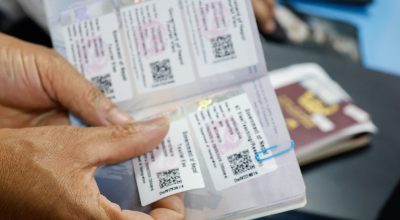
The guidance says travelers should carry their passport, a printed copy of their Form I-94 and any applicable Form I-797 approval notice when traveling by air within the United States.
A valid foreign passport can be used as identification for Transportation Security Administration screening even if it does not contain a currently valid visa stamp, according to the guidance. A green card, employment authorization document, state-issued REAL ID, enhanced identification card and other identification documents issued by the Department of Homeland Security also may be accepted for TSA identification purposes.
An I-94 or I-797 approval notice, however, cannot be used as a TSA identification document.
AILA also recommends that travelers keep digital and physical copies of important immigration documents in case original documents are lost, confiscated or otherwise become unavailable.
A standard state driver’s license marked “Federal Limits Apply” and the CBP One application are not valid identification for domestic air travel, according to the guidance.
Under U.S. law, visa holders age 18 and older are generally required to carry evidence of their immigration status. A printed copy of an I-94 generally can satisfy that requirement. F-1 students should also carry their Form I-20, while J-1 exchange visitors should carry their Form DS-2019.
I-94 expiration is a key concern
One of the most important issues for visa holders planning domestic travel is the expiration of their I-94, immigration attorneys say.
The visa stamp in a passport does not determine how long a person is authorized to remain in the United States. That period is generally determined by the I-94 record issued by U.S. Customs and Border Protection.
Travelers should check their I-94 before making travel plans through the CBP website at https://i94.cbp.dhs.gov.
If an I-94 has expired, AILA advises travelers to consult an immigration attorney before traveling.
Some people may fall out of lawful immigration status without realizing it. Examples include changing employers without an approved H-1B transfer petition, failing to maintain full-time enrollment as an F-1 student, working without proper authorization or outside the terms of an approved employment authorization, or remaining in the United States after the expiration date listed on the I-94 even though the visa stamp in the passport remains valid.
Questions also can arise when a person remains in the United States after an I-94 expires while an application for a change of status, extension of stay, adjustment of status or asylum is pending.
For travelers whose I-94 is marked “D/S,” or “Duration of Status,” the authorized period generally continues as long as they comply with the requirements of their immigration category. But engaging in activities that violate the terms of the status can still result in the loss of lawful status, according to the guidance.
Criminal charges can create additional risks
Immigration status is not the only factor that can create problems for travelers.
Certain criminal charges, including driving under the influence and some drug-related offenses, can expose a noncitizen to immigration consequences or removal proceedings even when the person has a valid visa and I-94, according to AILA.
Anyone with a criminal case or conviction should consult an immigration attorney before traveling, particularly because the immigration consequences of criminal charges can vary depending on the offense and the person’s immigration history.
The guidance also highlights states including Alabama, Texas and Florida as places where travelers with immigration-related concerns may face additional risks because of stricter state laws and enforcement practices.
AILA advises people who have concerns about their immigration status to consult an attorney before traveling to such states.
Passenger information and ICE enforcement
AILA’s guidance also warns that passenger information collected during domestic air travel may be available to immigration authorities.
According to the guidance, TSA passenger information can be shared with ICE, which may compare traveler information with immigration records, including records involving final removal orders. ICE agents may then be sent to airports to take enforcement action against individuals identified through those records.
The guidance says ICE is already active at numerous U.S. airports.
People who are out of status, whose period of authorized stay has expired or who have a final removal order should consult an immigration attorney before taking a domestic flight, AILA advises.
Facial recognition technology
The use of facial recognition technology at airports is another concern addressed by AILA.
The Department of Homeland Security is working to integrate biometric systems and databases used by agencies including TSA, ICE, CBP and U.S. Citizenship and Immigration Services, according to the guidance. Facial recognition is part of that broader biometric technology.
AILA says TSA expanded facial recognition technology to 65 airports at the beginning of 2026.
For domestic flights, travelers have the option to request that facial recognition not be used and instead ask for manual identification verification, according to the guidance.
A traveler who wants to opt out can tell a TSA employee: “I am opting out of facial recognition. I would like manual ID verification.”
If an employee refuses the request, the traveler can ask to speak with a supervisor.
AILA also notes that opting out of facial recognition during a later domestic trip does not necessarily remove facial biometric information previously collected during lawful entry into the United States or other government processes. Previously collected biometric information may remain in government systems.
What to do if stopped or questioned
If immigration or other law enforcement officers stop, question or detain a traveler at an airport, AILA advises remaining calm.
Travelers should not run, physically resist officers or escalate the encounter by arguing.
If an officer requests identification, a traveler may present a passport. Travelers generally do not need to volunteer unnecessary information about the specific visa category under which they entered the United States.
People who do not want to undergo facial recognition can state that they are opting out and want manual identification verification.
Travelers also may exercise their right to remain silent and tell officers, “I am exercising my right to remain silent.”
If the encounter involves immigration questioning or enforcement action, travelers should ask to speak with an attorney by saying, “I want to speak to an attorney.” A person may repeat the request if necessary.
AILA also advises travelers not to sign immigration documents without first consulting an attorney. Anyone presented with an immigration form or other legal document should make sure they understand what they are signing and, when possible, speak with an immigration lawyer before signing.
For visa holders planning domestic travel, immigration attorneys recommend checking the validity of the I-94, reviewing compliance with the conditions of their visa category and determining whether there are any pending immigration or removal proceedings or final removal orders.
People whose I-94 has expired, who may have violated the terms of their immigration status, who have criminal charges or convictions, or who have a removal order should seek individualized legal advice before traveling.
This information is provided for general informational purposes and is not legal advice. Immigration cases are highly fact-specific, and travelers should consult a licensed immigration attorney before making decisions based on this information. AILA’s attorney directory is available at www.ailalawyer.com.