






Thousands of Nepali Americans Cast Ballots as Community Seeks Greater Political Voice

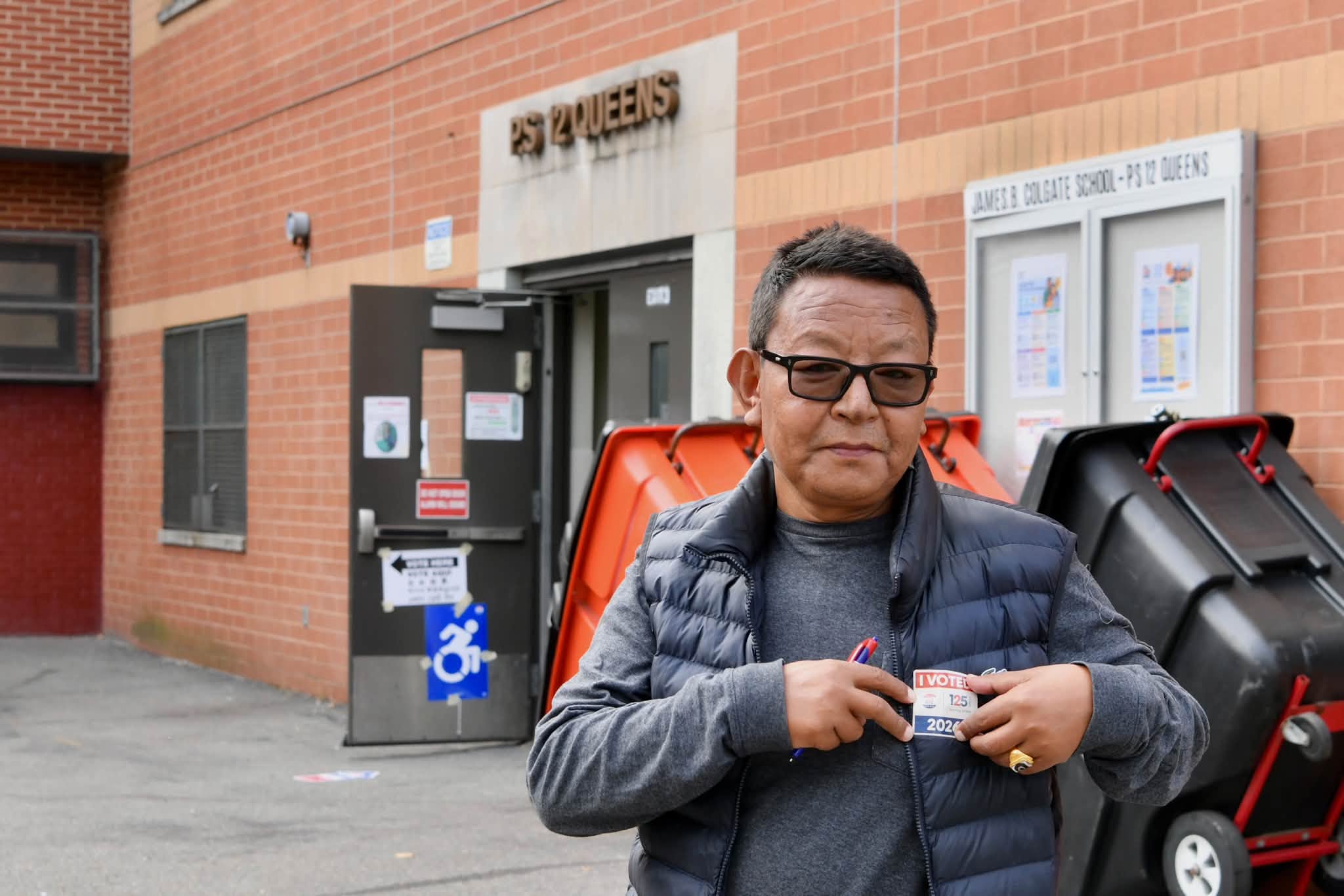
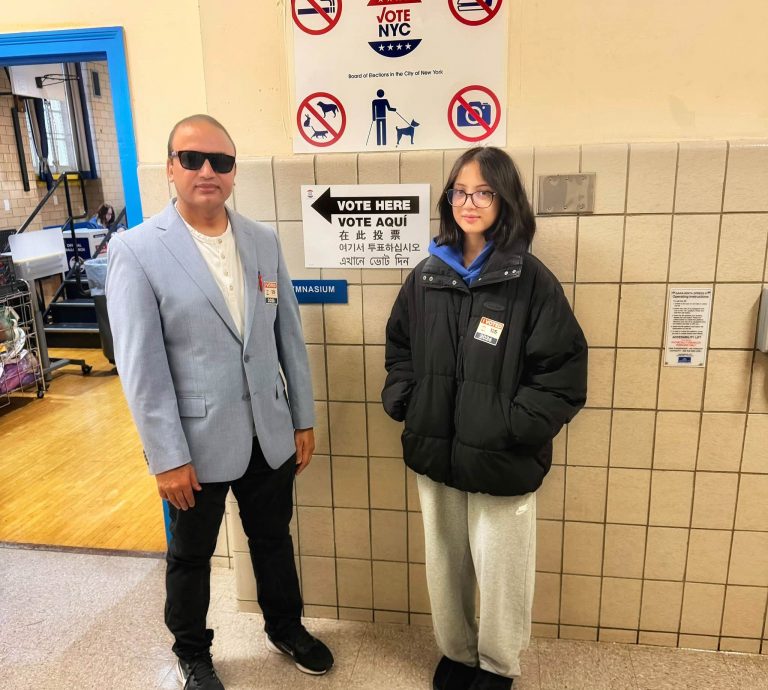
A Nepali American voter poses for a photograph after casting a ballot in Tuesday’s U.S. elections in Queens, New York. Photo by Rajan Kafle for NepYork.
NEW YORK — Thousands of Nepali Americans cast ballots on Tuesday as a community that has more than doubled in size over the past decade sought to translate its rapid demographic growth into greater political representation.
More than 125,000 people of Nepali origin are estimated to be eligible to vote in the United States, based on figures compiled from U.S. citizenship and population data. The estimate includes more than 100,000 naturalized Nepali immigrants, as well as second-generation Nepali Americans born in the United States.
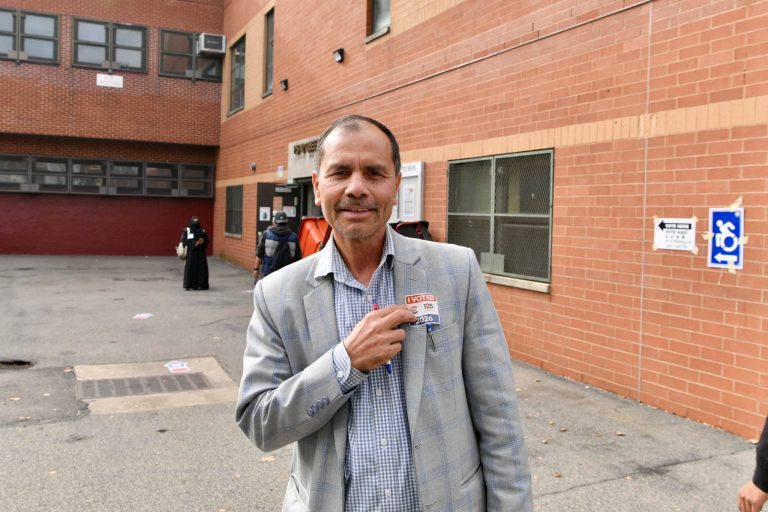
The community’s potential electorate has expanded rapidly. The Asian American Research Center estimated the Nepali American voting-age population at 91,909 in 2024, including 24,561 people in the Northeast, 16,645 in the Midwest, 31,953 in the South and 18,750 in the West.
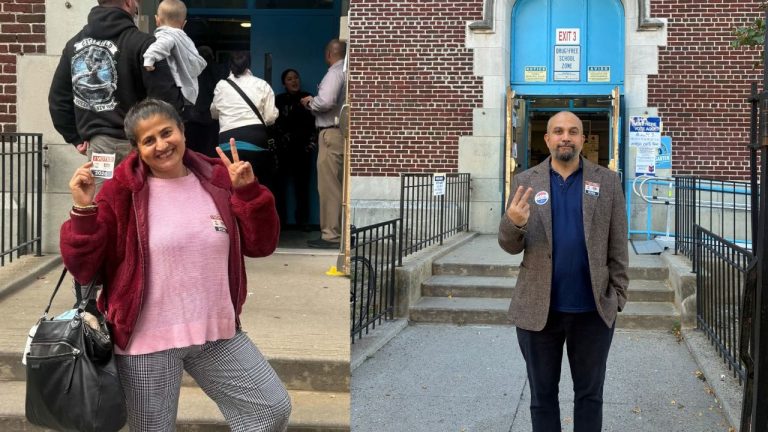
A Community in Ascendance
The growth reflects both immigration and naturalization. By 2014, more than 20,000 Nepalis had acquired U.S. citizenship. Between 2015 and 2023, another 56,000 or more became citizens. Including naturalizations from 2024 through 2026, the cumulative total approaches 100,000.
The Department of Homeland Security recorded 9,300 Nepali naturalizations in fiscal year 2023 and 8,910 in 2024. In fiscal 2022, 9,410 Nepalis became citizens, compared with 7,230 in 2021.
The U.S. Census Bureau estimated that about 225,000 people identified as Nepali in the United States in 2023. The Pew Research Center found that 46 percent had lived in the country for more than a decade and that 47 percent were U.S. citizens — a figure that translates to roughly 105,000 citizens.
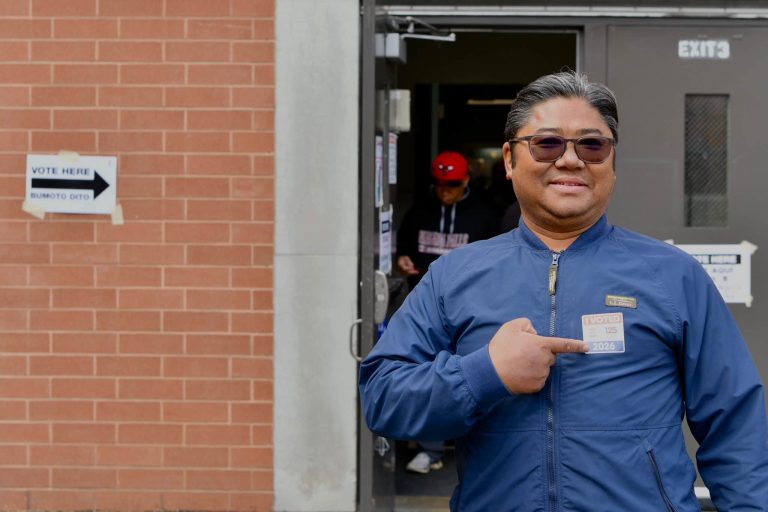
The 2020 Census found that the Nepali population had grown by 269 percent over the previous decade, making it one of the fastest-growing Asian American communities with at least 50,000 members.
‘Your Voice Matters’
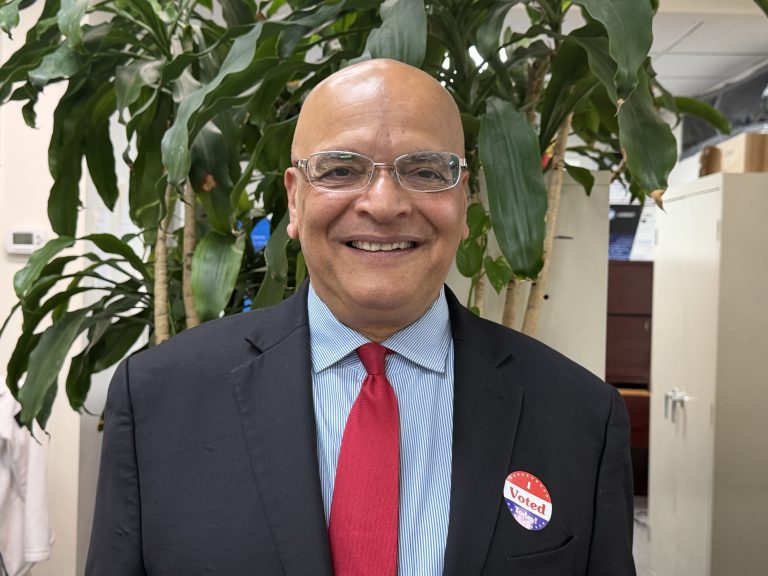
For Keshab Raj Sedie, a Nepali American and longtime New Jersey resident, voting is both a right and a responsibility that comes with U.S. citizenship. He cast his ballot in Tuesday’s election, emphasizing the significance of participating in a democratic system, particularly for those who became citizens after immigrating from countries with different political traditions.
“For those who became U.S. citizens after leaving the countries of their birth, the vote is more than a civic duty. It is among the most precious gifts citizenship brings,” Mr. Sedie said.
He said many naturalized citizens come from countries where leaders were not freely elected, elections were limited or nonexistent, or speaking out carried significant risks.
“In America, generations have marched, organized, and even given their lives so that ordinary people could have a voice in how they are governed, and as a naturalized citizen you now hold that same power,” he said.
He said voting affects decisions at every level of government, from local school boards to state laws and federal policies on the economy, health care and immigration.
“When newer citizens stay home, others decide these matters for them; when they show up, they add their experience and values to the nation’s future and honor those who made this right possible,” he said.
“You worked, waited, and took an oath to earn this privilege, and using it is the fullest way to say that you belong and that your voice matters.”
Candidates Seek Statehouse Seats
Several Nepali American candidates emerged from Democratic primaries in Maryland and New Hampshire, setting up Tuesday’s contests that could expand the community’s representation in state legislatures.
In Maryland, Del. Harry Bhandari is seeking another term in the House of Delegates, while Satish Chapagain, a Baltimore County Democratic Central Committee member and business owner, is running for his first term. In New Hampshire, Manchester resident Bishwa Bahadur Shah won a Democratic nomination for the state House.
In New York, Assemblymember Sarahana Shrestha is seeking re-election in the 103rd District, which includes parts of Dutchess and Ulster counties. She ran unopposed in the June 23 Democratic primary. Republican Santos Lopez is also on the ballot.
Bhandari’s Bid Tests a Decade of Groundwork
Mr. Bhandari, the first Nepali American elected to a state legislature in the United States, advanced from the Democratic primary in House District 8 after receiving 6,374 votes.
“This district was highly competitive,” Mr. Bhandari said. “Over the past 12 years, I have worked hard to flip it and build strong connections with voters. I am grateful to voters, volunteers, my family and the Nepali American community for their support. However, I will wait for the final count before making any formal declaration.”
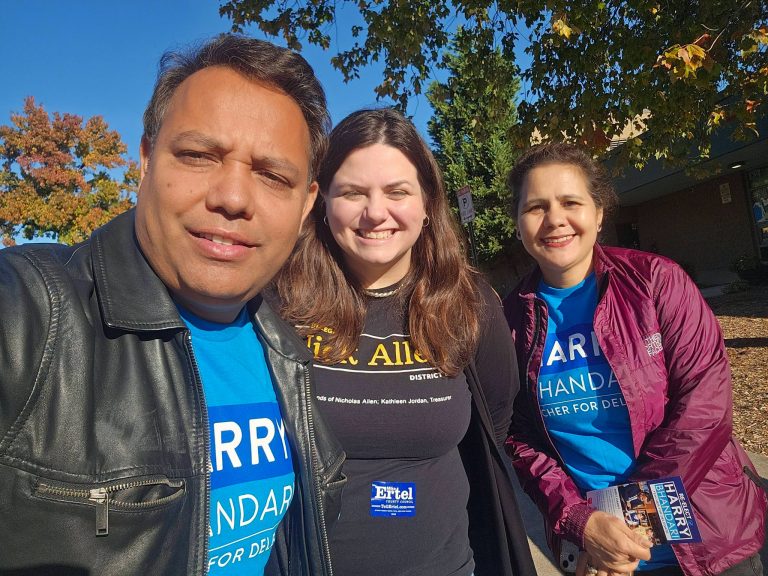
Born in Nepal’s Parbat district, Mr. Bhandari moved to the United States in 2005, became a citizen in 2011 and won his first election in 2018. After serving for seven years on the House Health and Government Operations Committee, he was appointed late last year to chair the Land Use and Zoning Subcommittee of the House Economic Matters Committee.
In that role, he was involved in the House’s consideration of the Maryland Transit and Housing Opportunity Act, which passed both chambers and was signed by Gov. Wes Moore on May 26. His record also includes work on accessibility, public safety, health care and education, including legislation requiring open captioning in movie theaters.
A Newcomer in Maryland
In District 7A, Mr. Chapagain won one of two Democratic nominations with 2,718 votes, or 26.13 percent, finishing behind Ly Xinzhen Brown, who received 2,945 votes, or 28.31 percent. The two will face Republicans Ryan Nawrocki and Kathy Szeliga in November.
A member of the Baltimore County Democratic Central Committee and a business owner, Mr. Chapagain has centered his campaign on household affordability, education, economic growth, small businesses and community development.
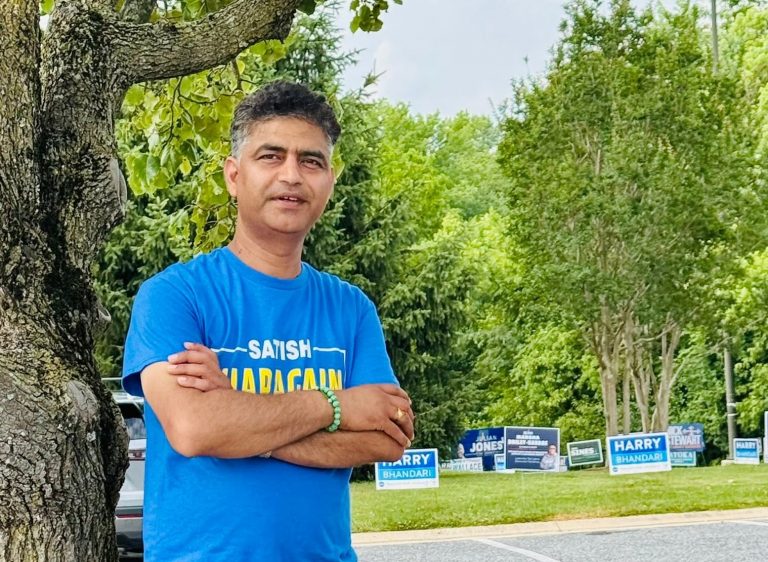
“Families across Maryland are currently thinking about the basic issues that directly affect their daily lives,” he said, citing food, fuel, schooling and the future. “These are the main concerns shaping our community, and they require real attention from those in public service.”
If elected, he would become another Nepali American member of the Maryland General Assembly.
New Hampshire Adds a Contender
In New Hampshire, Mr. Shah won a Democratic nomination in Hillsborough District 41, a three-member district in the 400-seat state House. He received 23 percent of the Democratic vote, finishing behind incumbent Lily M. Foss, who received 31 percent, and Tom Stewart, who received 24 percent. All three advanced to the general election.
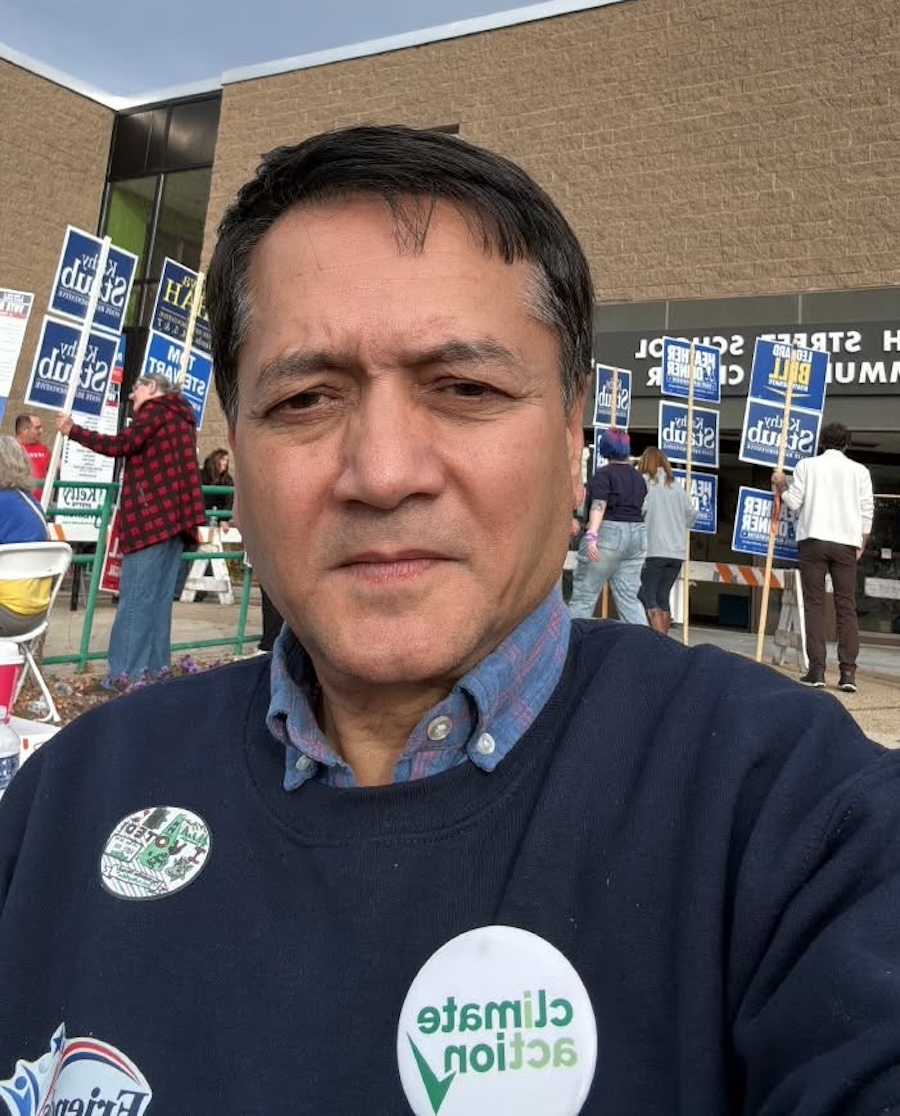
Mr. Shah, a Manchester resident and naturalized citizen, has campaigned on affordability, economic fairness, public education, health care, child care and support for older residents. He has also emphasized tax relief for working families and expanded opportunities for young adults.
“Too many young adults leave our city after graduating,” he said. “I want to change that.”
Political Voice Grows With Population
The candidates’ campaigns come as the Nepali American population continues to expand. Pew estimates that about 225,000 people identified as Nepali alone in 2023, up from about 180,000 in 2019. The U.S.-born population within that group grew from about 30,000 to 50,000 over the same period.
Pew also found that 47 percent of Nepali immigrants were naturalized U.S. citizens in 2023 and that 85 percent of Nepali Americans age 5 and older reported speaking Nepali at home.
For community advocates, the demographic shift has implications beyond voter turnout. A larger eligible electorate gives Nepali Americans greater capacity to organize around language access, immigration services, affordable housing, schools, small-business support, health care, disaster relief and voting access.
“We are not just guests in this country,” Mr. Bhandari said. “We are taxpayers, parents, workers, educators, entrepreneurs and public servants.”