





Opinion: Nepal Could Take International Leadership on Himalayan Early Warning Systems

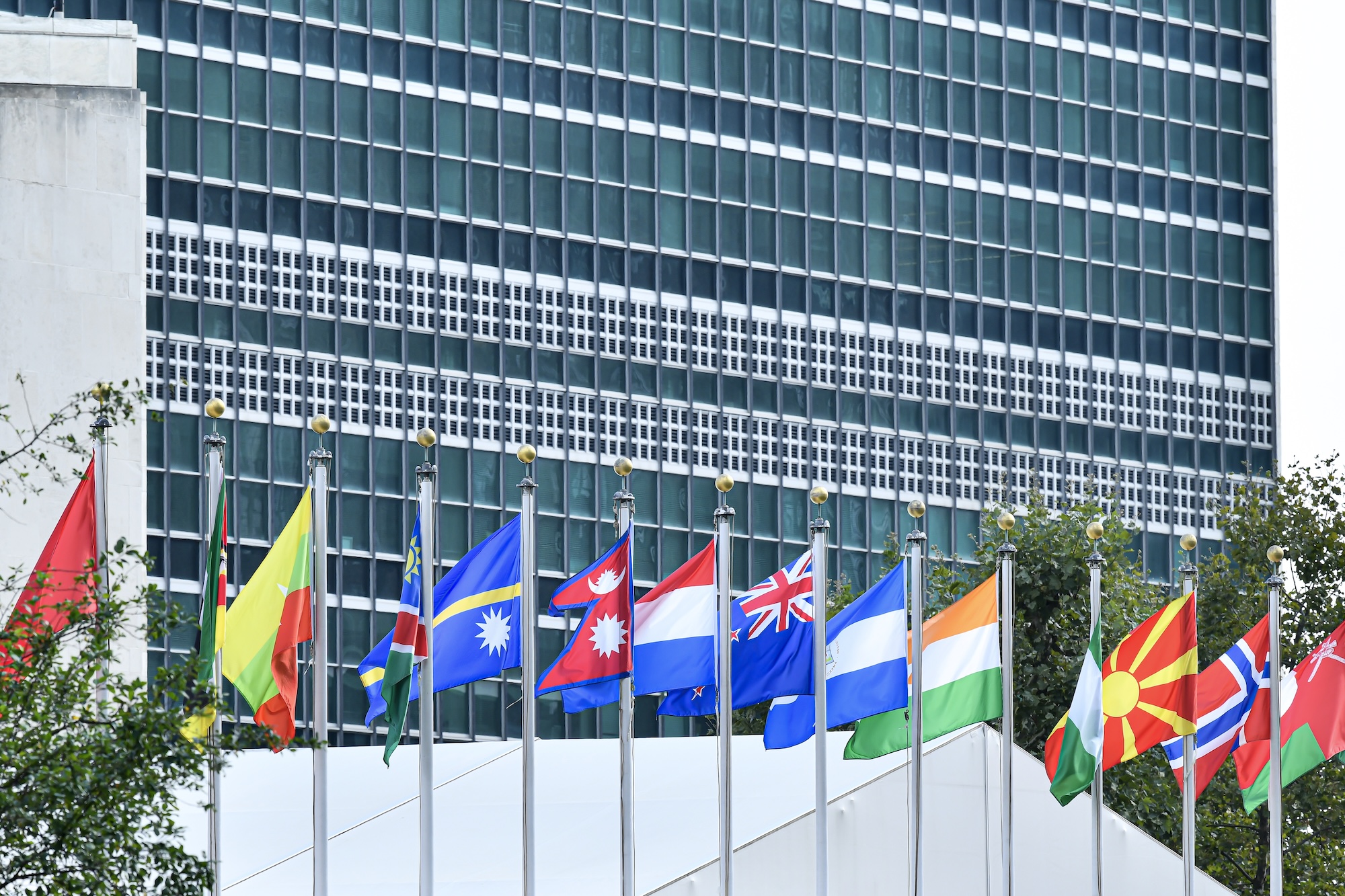
The Nepali flag flies alongside the national flags of other countries at the United Nations headquarters in New York. Photo: Rajan Kafle/Khasokhas.
Nepal is not alone in seeking to place the Himalayan climate crisis on the United Nations’ global agenda. In recent years, several countries have turned issues rooted in their geography and national experience into international priorities and taken leadership roles on the U.N. stage.
Tajikistan’s diplomatic leadership on glacier protection offers a particularly relevant example for Nepal. At Tajikistan’s initiative, the U.N. General Assembly declared 2025 the International Year of Glaciers’ Preservation. It also designated March 21 as World Day for Glaciers each year. The resolution was unanimously adopted in 2022, with Nepal and many other countries serving as co-sponsors.
From May 29 to 31, 2025, a high-level international conference in Dushanbe, Tajikistan, produced the Dushanbe Glacier Declaration. It called for international cooperation on glacier preservation, scientific research, information sharing and climate action. Alongside Tajikistan, France has also played a role in promoting international cooperation on cryosphere science and glacier-related issues.
The lesson for Nepal is significant: Taking international leadership requires more than highlighting a problem linked to a country’s geography. The issue must also be connected to scientific research, policy cooperation, financing and institutional international programs.
Rather than repeatedly focusing on the fact that glaciers are melting, Nepal could develop a new agenda centered on the risks created by that change. The question could be: If glaciers are melting, how can people be protected from the multiple hazards that may follow?
A Potentially Distinctive Role for Nepal in Early Warning Systems
The United Nations has already launched a global initiative on early warning systems. Following a call by U.N. Secretary-General Antonio Guterres, the World Meteorological Organization and the U.N. Office for Disaster Risk Reduction are jointly leading the Early Warnings for All initiative. Its goal is to ensure that everyone on Earth is protected by life-saving early warning systems for weather, water or climate-related hazards by the end of 2027.
The initiative is built around four key areas: disaster risk knowledge; monitoring and forecasting; communication and dissemination of warnings; and preparedness and response capabilities.
In this context, Nepal could propose developing a specialized multi-hazard early warning model for the Himalayan region within the existing Early Warnings for All framework, rather than launching another general global campaign.
Risks in the Himalayas differ from those in many other geographic regions. Glacial lakes, glaciers, avalanches, rockfalls, rainfall, temperature changes, river flows and landslides are interconnected. In a single mountain region, one event can trigger or intensify another hazard.
Nepal could therefore promote an integrated system for Himalayan hazards that links scientific monitoring, forecasting, public warnings and cross-border information sharing.
Where Could Nepal Provide New Leadership?
Three levels could form the core of such an initiative.
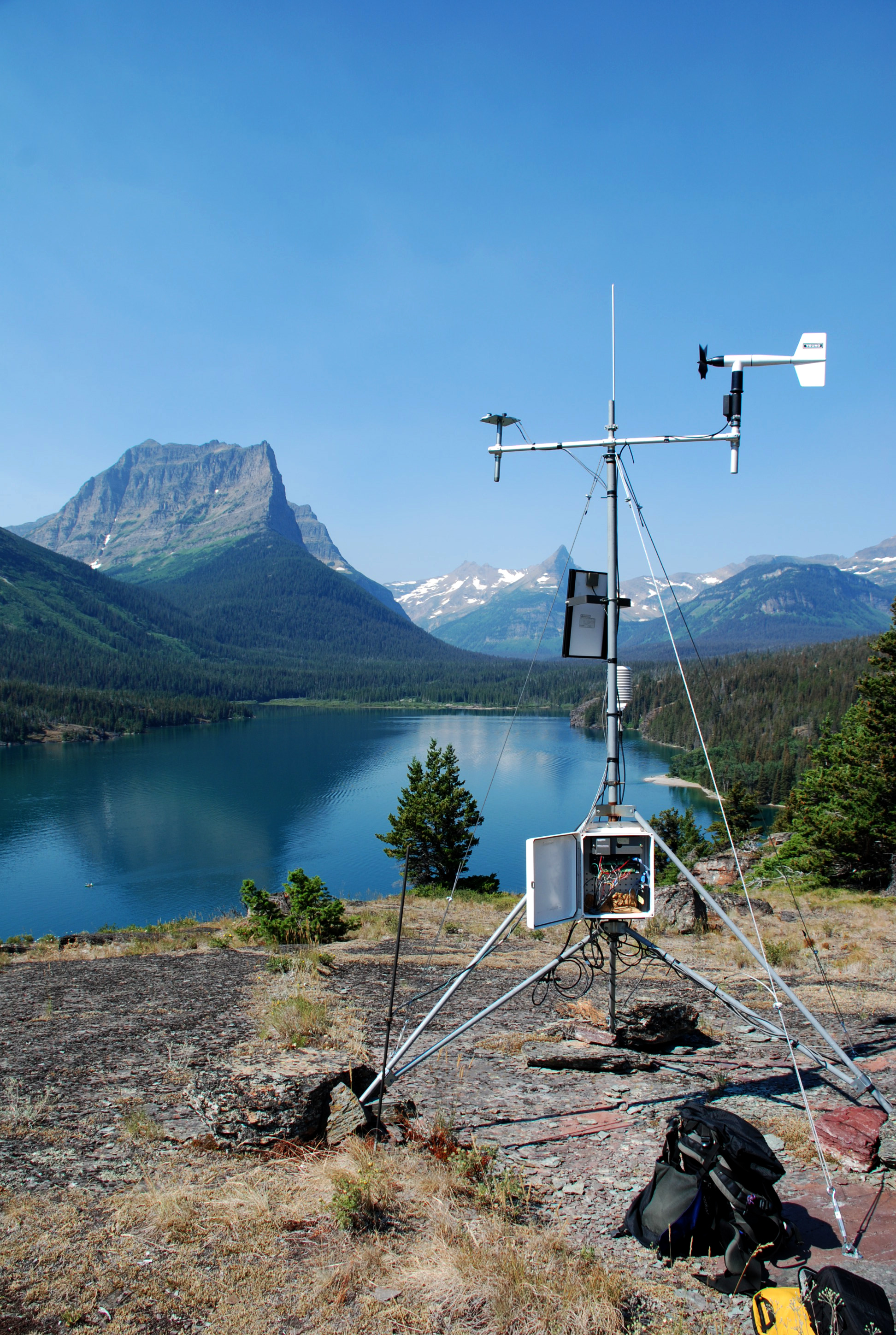
First, scientific monitoring of Himalayan hazards. Satellite data, drones, weather stations, river monitoring stations, regular glacial lake assessments and information on changes in glaciers could be integrated into a common system.
Second, multi-hazard forecasting. Instead of monitoring glacial lakes alone, a forecasting model could combine information on potential glacial lake outburst floods, avalanches, rockfalls, extreme rainfall and river flows to assess the likelihood and potential effects of cascading events.
Third, cross-border early warning. Because hazards originating in high mountain areas can affect downstream river systems, Nepal could work with countries including India, China, Bhutan and Bangladesh to develop mechanisms for sharing risk information in real time.
Such an approach would take early warning systems beyond technology and connect them with climate diplomacy, regional cooperation and human security.
Nepal Already Has a Diplomatic Foundation on Himalayan Issues
This would not be an entirely new diplomatic field for Nepal. In a message for the first Sagarmatha Dialogue in 2025, U.N. Secretary-General Antonio Guterres highlighted Nepal’s role in climate leadership and linked the melting of glaciers to the broader global climate crisis. He noted that Nepal has been losing a significant share of its ice reserves over a period of just more than three decades.
That provides Nepal with a foundation for advancing international dialogue on the Himalayan climate crisis. But with Tajikistan already having established glacier preservation as a major global agenda, Nepal could avoid simply duplicating that effort and instead focus on managing the risks created by a changing cryosphere.
Turning National Experience Into a Global Agenda
Tajikistan’s glacier initiative provides a possible model: A country identifies a problem closely connected to its national circumstances, builds an international issue around scientific and policy evidence, and then works to institutionalize it through a U.N. resolution, international year, conference or multilateral mechanism.
Nepal could follow a similar path by proposing an International Initiative for Himalayan Multi-Hazard Early Warning Systems. Such an initiative could bring glacial lake outburst floods, avalanches, rockfalls, extreme rainfall, floods and landslides under an integrated early warning framework.
By connecting the proposal to the U.N.’s existing Early Warnings for All initiative, Nepal would not necessarily need to create an entirely new global structure. Instead, it could bring the specific needs of Himalayan communities and a practical regional model into an existing international framework.
Nepal’s potential role, therefore, would not have to be limited to a competition over who leads the glacier agenda. With Tajikistan already having advanced glacier preservation as an international priority, Nepal could raise the next practical question: As glaciers change and Himalayan hazards increase, how can people be protected in time?
Nepal could build a distinctive international initiative around that question by linking scientific research, satellite monitoring, forecasting technology, community-level warning systems and cross-border information sharing.
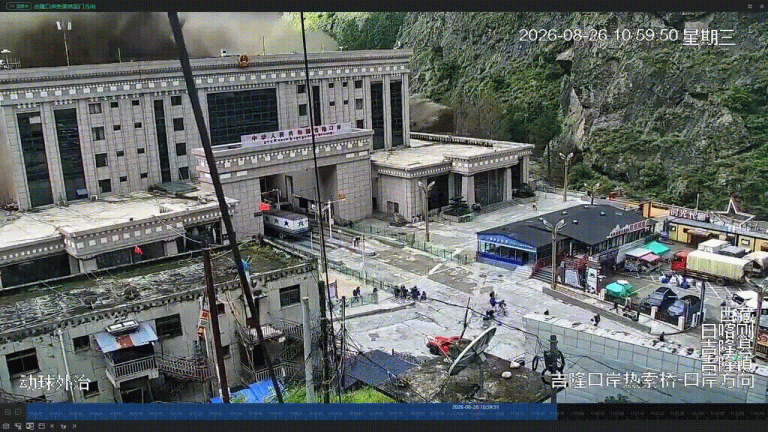
In that sense, the Bhote Koshi disaster can be viewed not only as evidence of loss and damage, but also as a basis for Nepal to advance Himalayan early warning systems as a concrete solution within the international climate agenda.