






Nepal Counts the Cost of the Flood: $4.76 Billion Needed for Recovery, Just $94 Million Raised for Relief

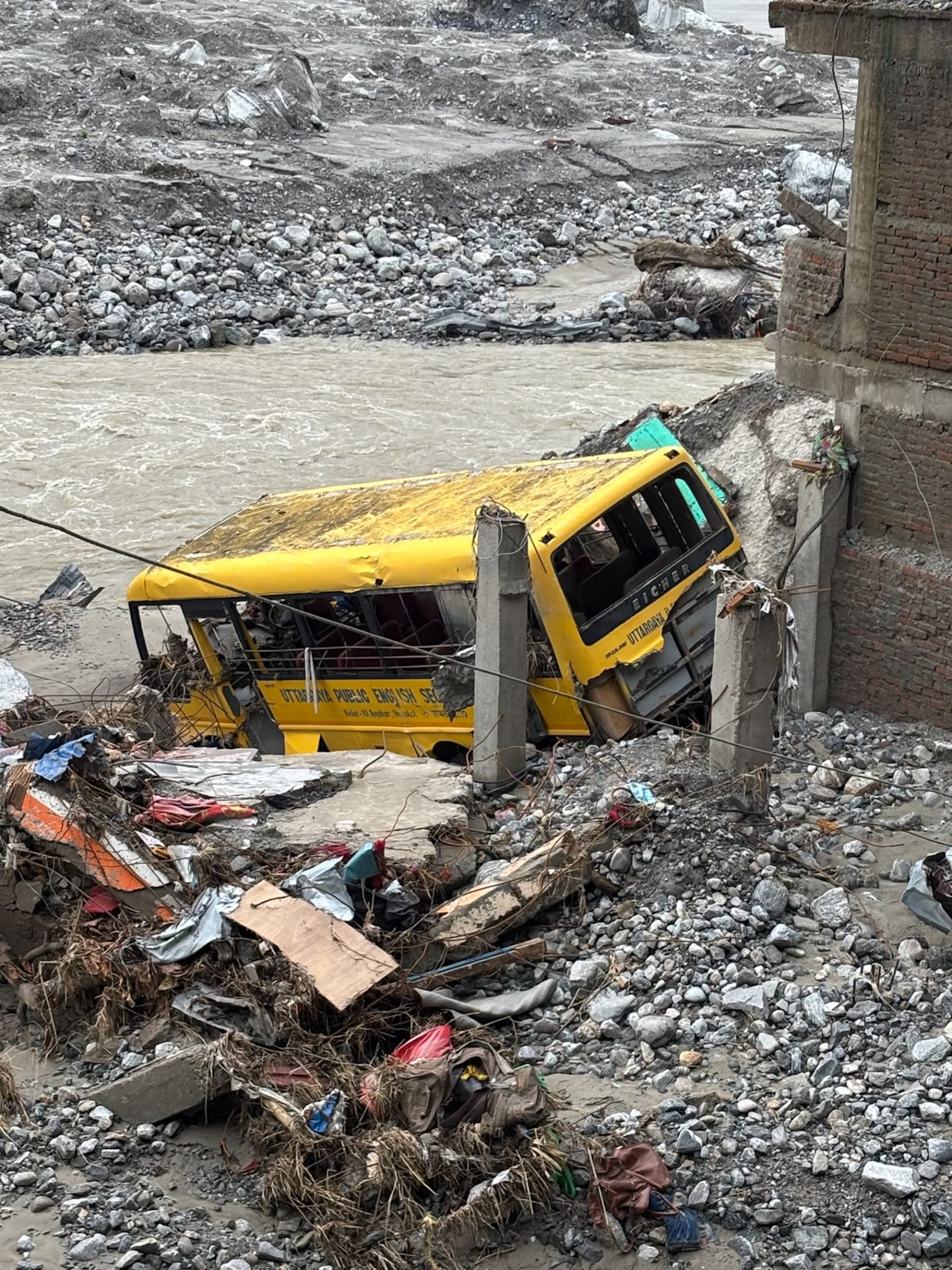
A school bus swept away by the flood in Betrawati, Rasuwa. Schools, roads and other infrastructure have been badly damaged. (Danda Gurung)
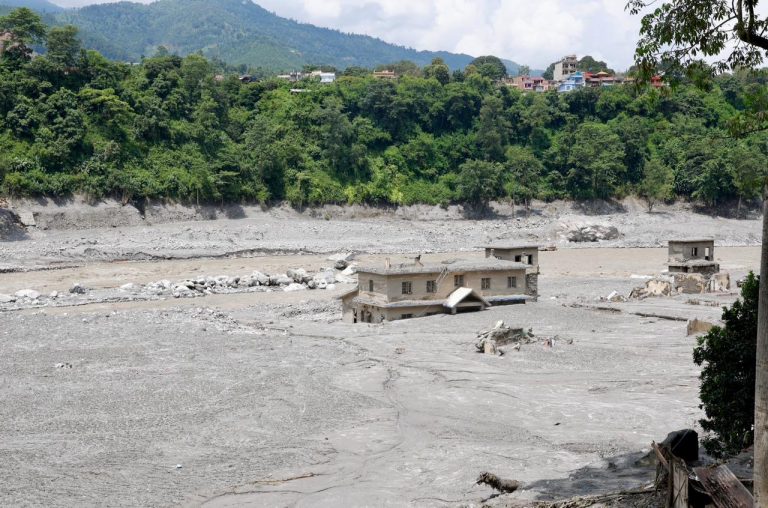
KATHMANDU, Nepal — The devastating Rasuwa-Bhotekoshi flood caused an estimated $2.69 billion in damage and economic losses, while Nepal will need approximately $4.76 billion for recovery and reconstruction, according to a preliminary Rapid Disaster Needs Assessment.
The assessment estimates that $57.47 million will be needed during the first six months for immediate relief and short-term rehabilitation.
The assessment covers the flood that struck Aug. 26 and caused extensive destruction to homes, roads, bridges, hydropower projects, businesses, agricultural land and other infrastructure.
Arjun Bhandari, joint secretary at the National Planning Commission and coordinator of the Rapid Disaster Needs Assessment, said the assessment separately calculated physical damage and economic losses.
“Based on our preliminary assessment, total damage is approximately $1.81 billion and total losses are approximately $880.26 million,” Bhandari said. “Thus, we have identified and assessed total damage and losses of approximately $2.69 billion.”
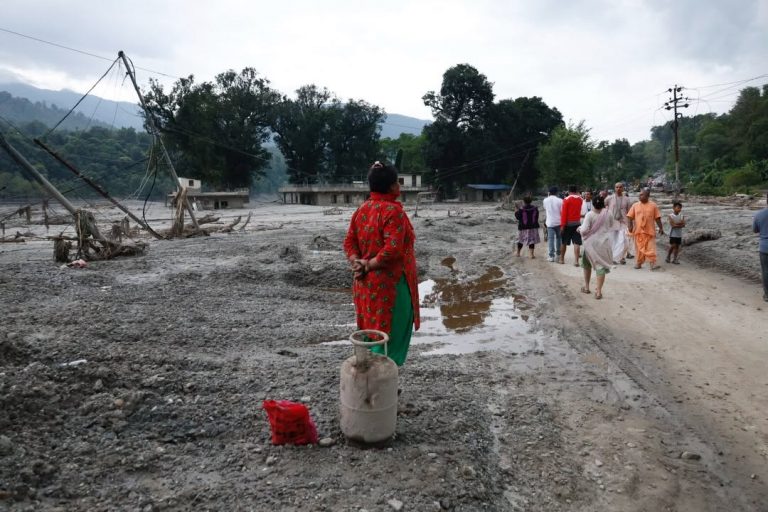
A Disaster on the Scale of the 2015 Earthquake
The financial impact of the 2026 flood is significant when compared with Nepal’s devastating 2015 earthquake.
The 2015 earthquake caused approximately $4.6 billion in damage, while the Rasuwa-Bhotekoshi flood has caused an estimated $2.69 billion in damage and economic losses.
The $2.69 billion figure represents estimated damage and economic losses, while the $4.76 billion figure represents the estimated cost of recovery and reconstruction. The recovery requirement is substantially higher than the currently estimated damage and losses.
The 2015 earthquake affected a much larger portion of Nepal and caused widespread destruction to housing, schools, health facilities, roads and other public infrastructure. The recovery effort became a multiyear national reconstruction program.
The 2026 flood has concentrated much of its impact along river corridors and major transportation and energy infrastructure. Its recovery challenge is particularly tied to restoring roads, bridges, hydropower, electricity systems, telecommunications, water infrastructure and economic connectivity.
Contributions Remain a Small Fraction of the Losses
As of Sept. 14, the Ministry of Finance reported that approximately $94 million had been received in contributions through the Prime Minister’s Disaster Relief Fund. The contributions received represent only about 3.5% of the estimated $2.69 billion in damage and economic losses. Contributions received by Sept. 14 amount to only about 2% of the resources the assessment says will be needed for recovery and reconstruction.
Foreign assistance included $10 million from NVIDIA Corp., $1 million from the Embassy of Sri Lanka and $200,000 from the Embassy of China, among other contributions. The government cautioned that contribution figures and fund balances are subject to reconciliation.
Thousands of Homes Damaged
The flood damaged 7,570 private homes, according to the assessment. In addition, 48 public buildings, 18 schools, seven health facilities and 30 cultural heritage sites were affected. The social sector will require an estimated $681.25 million for rehabilitation and recovery.
The destruction has extended well beyond individual homes. Roads, bridges, dry ports, private property, businesses, cargo containers and vehicles waiting at border points were among the assets swept away or damaged by the flood.
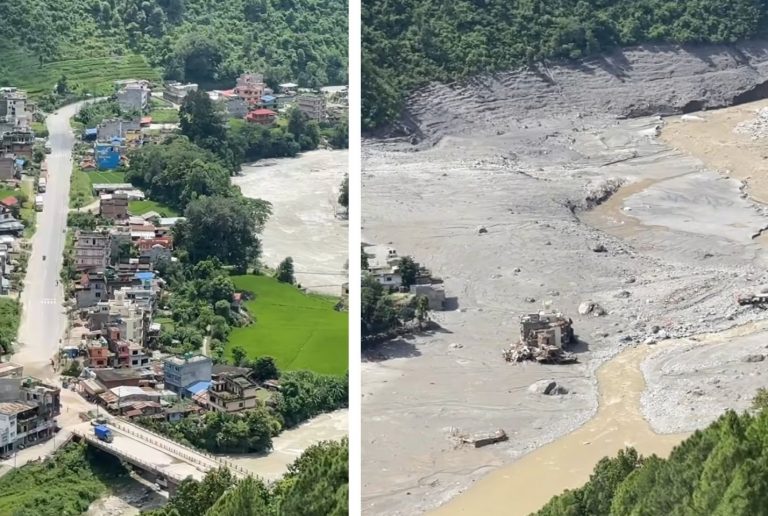
Infrastructure Faces the Largest Recovery Bill
Infrastructure is identified as the sector requiring the greatest amount of recovery funding. The assessment estimates that approximately $3.12 billion will be required to restore the infrastructure sector.
Bhandari said infrastructure accounted for the largest share of the disaster’s impact and will require a major portion of the recovery effort.
“Looking at the infrastructure sector, the greatest damage occurred in the energy sector,” Bhandari said. “When we look at the loss and damage in the infrastructure sector as a whole, it is estimated at around $1.25 billion, while approximately $3.11 billion will be required for recovery.”
Energy and roads suffered particularly extensive damage.
The flood affected 13 hydropower projects with a combined capacity of about 759 megawatts, along with five solar plants with a combined capacity of about 24 megawatts. One substation, three transmission lines and one switchyard were also affected.
The assessment estimates that restoring the energy and grid system alone will require approximately $2.57 billion.
Bhandari said energy and hydropower were the hardest-hit parts of the infrastructure sector and should receive priority during recovery.
“Within the infrastructure sector, the greatest damage appears to have occurred in the energy and hydropower sector,” Bhandari said. “According to our calculations, approximately $2.57 billion will be required for recovery in the energy sector alone. We need to give greater priority to the infrastructure sector.”
The scale of the energy losses makes hydropower one of the most consequential elements of the recovery effort. Seven of the affected hydropower projects, with a combined capacity of 250.4 megawatts, were operating, while six projects totaling 508.625 megawatts were under construction.
Roads and Bridges
The flood damaged approximately 69 kilometers of road. Of 37 motorable bridges affected by the disaster, 33 were washed away. Another 68 suspension bridge spans were damaged. The assessment estimates that restoring the affected transportation infrastructure will require approximately $482.5 million.
The damage includes key sections of the Galchhi-Trishuli-Rasuwagadhi corridor and the strategic route connecting central Nepal with the Chinese border.
The loss of roads and bridges has implications beyond local transportation. The affected corridors are important for access to communities, movement of relief supplies, tourism, commerce and cross-border trade.
Businesses and Production Hit
The flood also caused major disruption in Nepal’s productive sector. Agricultural crops covering approximately 1,806 hectares were affected, along with livestock, poultry and fisheries. The disaster also affected 17 bank branches and approximately 4,800 business establishments.
Hotels and restaurants, wholesale and retail businesses, transportation and other commercial activities were among those affected.
The productive sector will require an estimated $334.05 million for recovery. The assessment estimates that the productive sector suffered damage and losses of approximately $989.3 million.
Agriculture, Livestock and Fisheries
The assessment identifies damage to approximately 1,806 hectares of agricultural land, including paddy and vegetable production.
About 1,669 hectares of paddy and 137 hectares of vegetables were affected, with an estimated production impact of about 7,687 metric tons. Agricultural recovery is estimated at approximately $9.35 million.
Livestock and poultry were also affected. The assessment modeled impacts on approximately 252,445 animals and birds. Livestock recovery is estimated at approximately $11.43 million.
The Trishuli Fisheries Research Centre sustained estimated damage of approximately $4.71 million, with recovery needs of about $7.07 million.
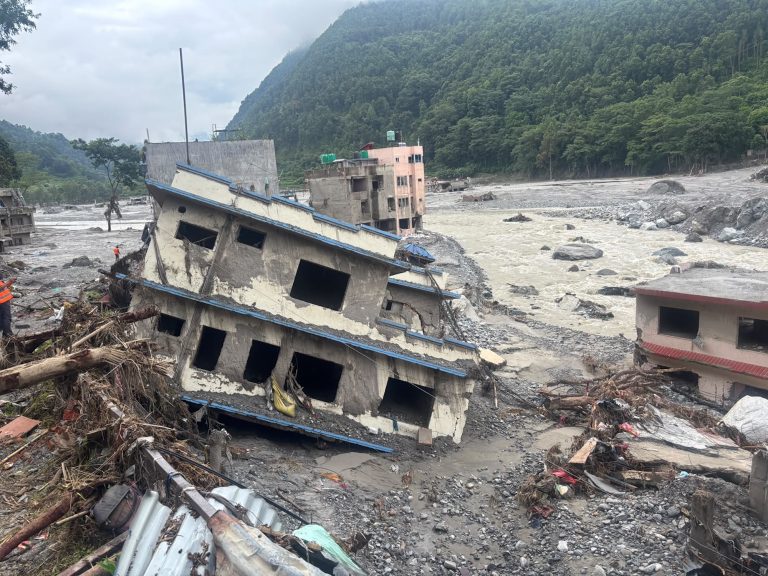
Public Buildings and Essential Services
The 48 damaged public buildings include government offices, customs facilities and police posts. The assessment estimates damage to public buildings at approximately $1.74 million, with recovery needs of about $2.79 million.
Customs facilities accounted for a substantial portion of the damage, highlighting the impact on border and trade infrastructure.
The damage to public buildings is particularly significant in areas where government facilities are needed to coordinate relief, provide public services and manage reconstruction.
Schools and Health Facilities
The flood damaged 18 schools, of which 11 were completely damaged and seven partially damaged. The affected schools included 56 buildings and 308 rooms.
Education infrastructure sustained estimated damage of approximately $6.17 million, with recovery needs of about $15.42 million.
The recovery plan includes temporary learning centers, educational materials, psychosocial counseling and the repair or reconstruction of damaged schools.
Seven health facilities were also affected, including one partially damaged public hospital, four completely damaged health posts and two partially damaged primary health care centers.
The assessment estimates health-sector damage at approximately $1.56 million, with recovery needs of about $5.13 million.
Water, Sanitation and Telecommunications
Water and sanitation infrastructure was also damaged, affecting water intakes, reservoirs, pipelines and other systems.
The assessment estimates damage to the water, sanitation and hygiene sector at approximately $9.09 million, with recovery needs of about $13.63 million.
The flood affected 98 water intakes, 160 reservoir tanks, 16 sump wells, 43 other chambers and about 443.9 kilometers of pipelines. Two wastewater treatment plants were also affected.
Telecommunications infrastructure sustained estimated damage of approximately $4.14 million, with recovery needs of about $6.20 million.
The damage included mobile towers, fiber-optic networks, Nepal Telecom transmission systems and infrastructure operated by internet service providers.
Economic Losses Extend Beyond Physical Destruction
The assessment distinguishes between physical damage and economic losses.
Physical destruction includes homes, roads, bridges, hydropower plants, public facilities, businesses and other assets that were damaged or destroyed.
Economic losses include the value of disrupted production and economic activity resulting from the disaster.
That distinction is important in understanding why the recovery requirement can be much higher than the cost of simply replacing destroyed structures. A damaged road can disrupt businesses, tourism, agriculture, transportation and trade long after the floodwaters have receded.
Bhandari’s explanation highlights the distinction between the two measures: 274.48 billion rupees in physical damage and 133.80 billion rupees in economic losses.
The assessment estimates substantial losses in business activity, agriculture, transportation and other productive sectors.
How the Assessment Was Prepared
The RDNA is a preliminary assessment based on multiple sources of information rather than a completed household-by-household damage survey.
The report was prepared using satellite images, drone surveys and data and information received from relevant ministries, departments and agencies.
The assessment was prepared by a committee that included representatives from the National Planning Commission, National Disaster Risk Reduction and Management Authority, National Statistics Office, Ministry of Agriculture, Ministry of Forests and Environment, Ministry of Energy, Water Resources and Irrigation, Department of Local Infrastructure Development, Department of Urban Development and Building Construction, Department of Water Supply and Sewerage Management, Department of Roads, Department of Tourism, and Ministry of Education and Sports.
Because the assessment remains preliminary, individual figures may change as field verification, engineering inspections and detailed surveys are completed.
The flood has left Nepal with two different but related financial challenges. The first is the immediate cost of relief and short-term rehabilitation, estimated at $57.47 million for the first six months. The second is the much larger long-term reconstruction requirement of $4.76 billion.
Editorial note: The Rapid Disaster Needs Assessment reports all financial figures in Nepali rupees. For consistency, NepYork converted the figures to U.S. dollars using an exchange rate of 152 Nepali rupees to $1. For comparison with the 2015 earthquake, we also converted the earthquake damage estimate using the same 152-to-$1 exchange rate, rather than the exchange rate that prevailed in 2015. Because the original 2015 assessment was reported in Nepali currency, dollar figures published in older news reports and other sources may differ from the figure used in this story. Those differences are due to the exchange rate used for conversion, not necessarily differences in the underlying damage assessment.