



U.S. Congressman Thomas Suozzi Urges DHS to Grant New TPS Designation for Nepal After Devastating Floods

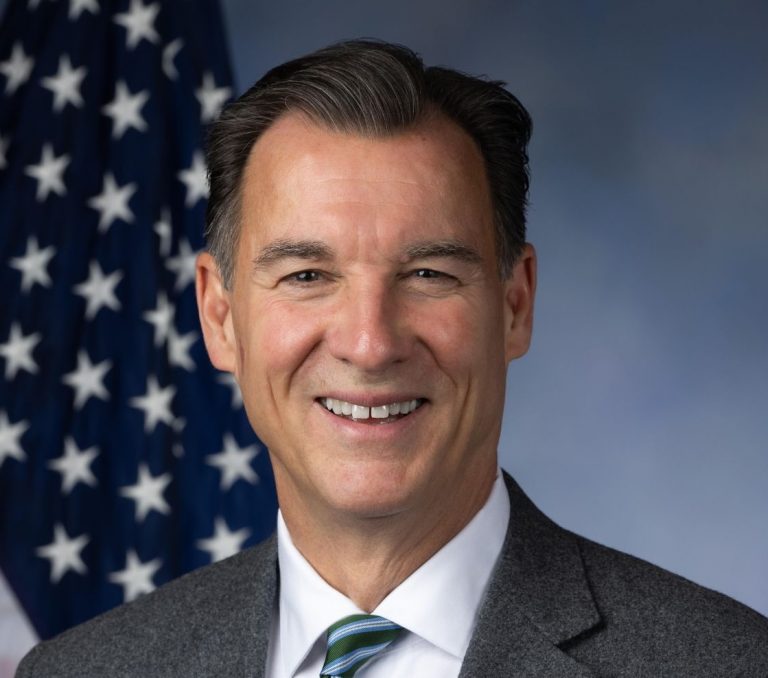
U.S. Rep. Thomas R. Suozzi has asked the Department of Homeland Security to grant Nepal a new Temporary Protected Status designation following catastrophic flooding and debris flows, adding congressional pressure to an advocacy campaign led by New York immigration attorney Keshab Raj Seadie on behalf of the Nepali American community.
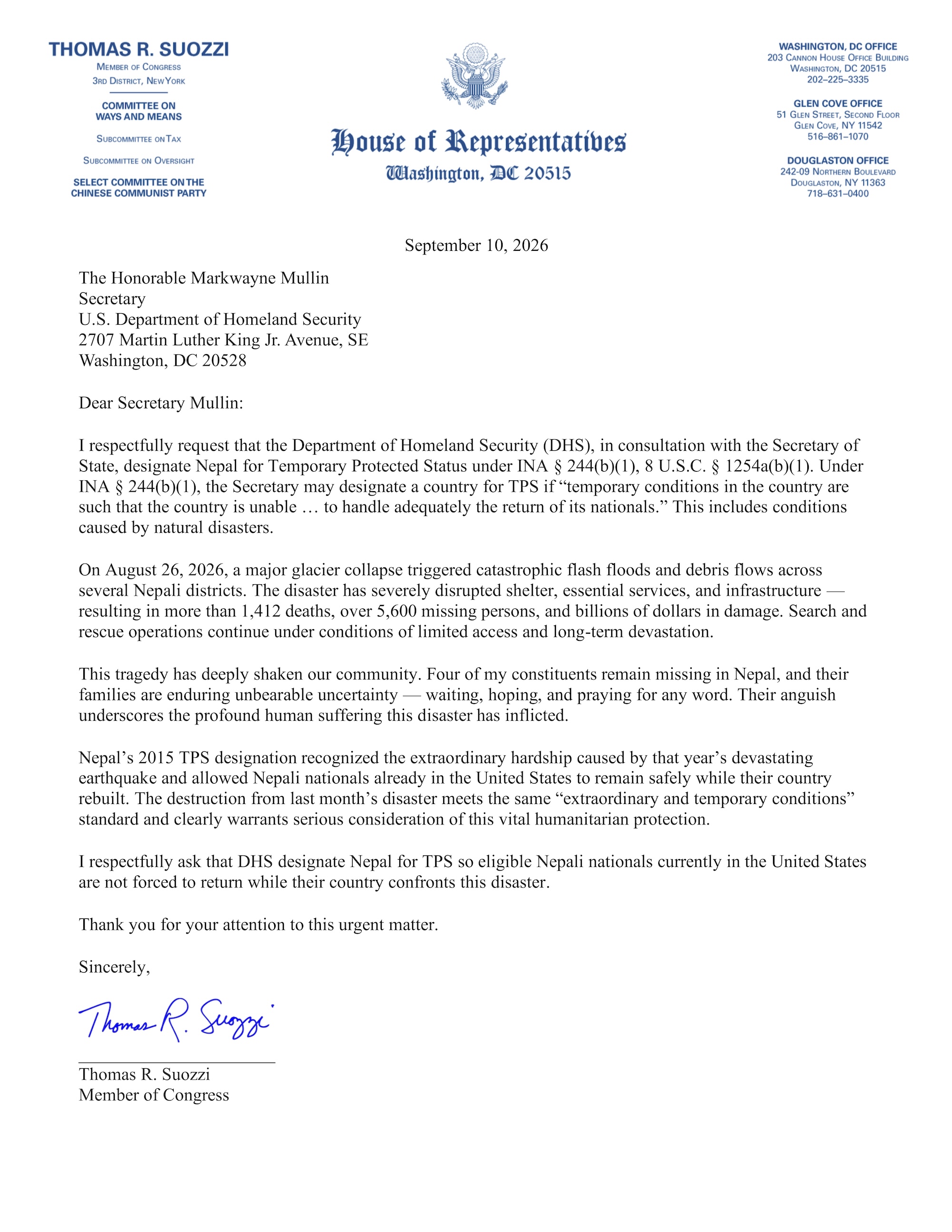
In a Sept. 10 letter to Homeland Security Secretary Markwayne Mullin, Suozzi said the disaster in Nepal had killed more than 1,412 people, left more than 5,600 missing and severely disrupted shelter, essential services and infrastructure.
The appeal comes after DHS told NepYork this week that Nepal’s previous TPS designation had ended on Aug. 5, 2025, and that any future action on TPS would be formally announced in the Federal Register.
“Nepal’s TPS designation and related benefits terminated on Aug. 5, 2025. Nepali citizens without status should have already departed,” a DHS spokesperson said in response to questions from NepYork.
Any potential actions related to the future of Temporary Protected Status will be announced at the appropriate time in a Federal Register notice, according to DHS.
The Push for Emergency Immigration Measures
Seadie, managing attorney at the Law Offices of Keshab Raj Seadie P.C., sent letters dated Aug. 28 to President Donald Trump and Mullin seeking emergency immigration protections, work authorization and travel relief for Nepali nationals in the United States following the flooding in Nepal.
The letters called for either a new TPS designation for Nepal or expedited employment authorization for eligible Nepali nationals already in the United States. Seadie also asked DHS to establish a temporary moratorium of at least six months on Immigration and Customs Enforcement actions involving Nepali nationals who are lawfully present in the country.
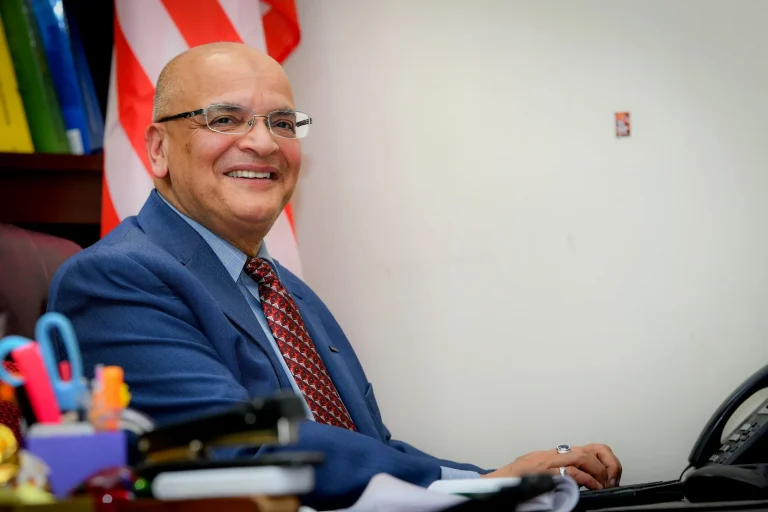
He further sought deferral of removal proceedings and humanitarian travel permission for Nepalis who need to visit family members and communities affected by the disaster without jeopardizing their ability to return to the United States.
The request specifically cited Nepalis on H-1B visas, employment-based immigration pathways, family-sponsored cases and other lawful statuses. Seadie’s office said people in those categories feared that traveling to Nepal could affect their immigration status, their ability to re-enter the United States or their employment.
“Many Nepali nationals currently residing lawfully in the United States on various visa statuses face an agonizing choice: return to their homeland to care for displaced and grieving family members, or remain in the U.S. while their loved ones suffer,” Seadie wrote in his letter to Trump.
Seadie’s office said the flooding had destroyed homes and infrastructure, displaced thousands of families and created significant public health and safety concerns. The attorney described the requested measures as temporary humanitarian protections, rather than “amnesty” or a permanent immigration benefit.
Seadie later asked Suozzi to support the effort, saying a letter or call from the congressman’s office to DHS and the White House could help accelerate a decision.
In his appeal to Suozzi, Seadie said flooding and landslides, particularly in the Rasuwa and Nuwakot districts, had caused severe loss of life, destroyed homes and infrastructure and displaced thousands of people. He said the Nepali American community had raised more than $60,000 for relief efforts.
“Our firm has submitted formal requests to DHS and the White House and has not yet received a response,” Seadie wrote.
The advocacy effort has also expanded to other congressional offices, according to sources familiar with the matter. Sen. Chuck Schumer’s office is considering the request, one source said. Another source said someone involved in the effort has been in contact with the office of Vice President JD Vance. Neither office has publicly confirmed the discussions, and it was not immediately clear what action, if any, either office may take.
Schumer previously supported TPS for Nepali nationals after the 2015 earthquake, when the Obama administration designated Nepal for the program. Nepal’s TPS designation was later extended several times before DHS moved to terminate it in 2025.
Suozzi asked DHS, in consultation with the secretary of state, to designate Nepal for TPS under the Immigration and Nationality Act. The law allows the secretary of homeland security to designate a country for TPS when extraordinary and temporary conditions, including natural disasters, prevent its nationals from safely returning.
Suozzi said an Aug. 26 glacier collapse triggered flash floods and debris flows in several Nepali districts. He said four of his constituents remained missing in Nepal, leaving their families in “unbearable uncertainty.”
The congressman cited Nepal’s TPS designation after the 2015 earthquake, saying the current disaster meets the standard for extraordinary and temporary humanitarian conditions.
“I respectfully ask that DHS designate Nepal for TPS so that eligible Nepali nationals currently in the United States are not forced to return while their country confronts this disaster,” Suozzi wrote.
What a New TPS Designation Would Mean
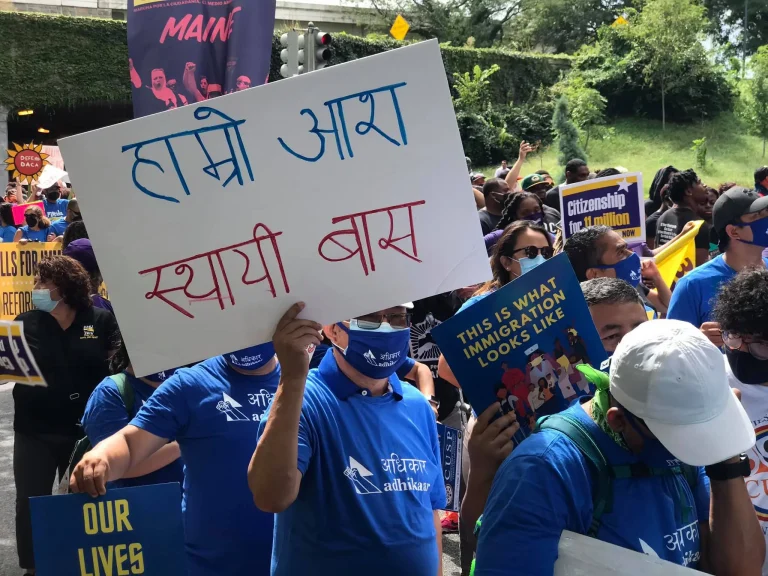
TPS is a temporary immigration status that DHS may grant to eligible nationals of countries affected by armed conflict, environmental disasters or other extraordinary and temporary conditions. People who qualify for TPS may remain temporarily in the United States and apply for employment authorization.
TPS does not, by itself, provide a path to lawful permanent residency or U.S. citizenship. A new TPS designation for Nepal would require formal action by DHS and publication of a notice in the Federal Register.
DHS terminated Nepal’s TPS designation last year. The agency published the termination decision on June 6, 2025, with the designation and related benefits set to end on Aug. 5, 2025.
On Dec. 31, 2025, a federal judge in the Northern District of California issued an order vacating the termination decision in National TPS Alliance et al. v. Noem et al., No. 25-cv-05687-TLT.
The government appealed. On Feb. 9, 2026, the U.S. Court of Appeals for the Ninth Circuit stayed the district court’s order, finding that the government was likely to succeed on its appeal either by showing that the district court lacked jurisdiction or by prevailing on the plaintiffs’ challenge under the Administrative Procedure Act.
As a result, DHS’s termination of Nepal’s previous TPS designation remained in effect. The litigation is separate from the current request for a new TPS designation based on the catastrophic flooding and debris flows in Nepal.