






“We’ve Seen Many Medical Conditions”: Israeli Doctors Find Urgent Medical Needs in Flood-Hit Nepal

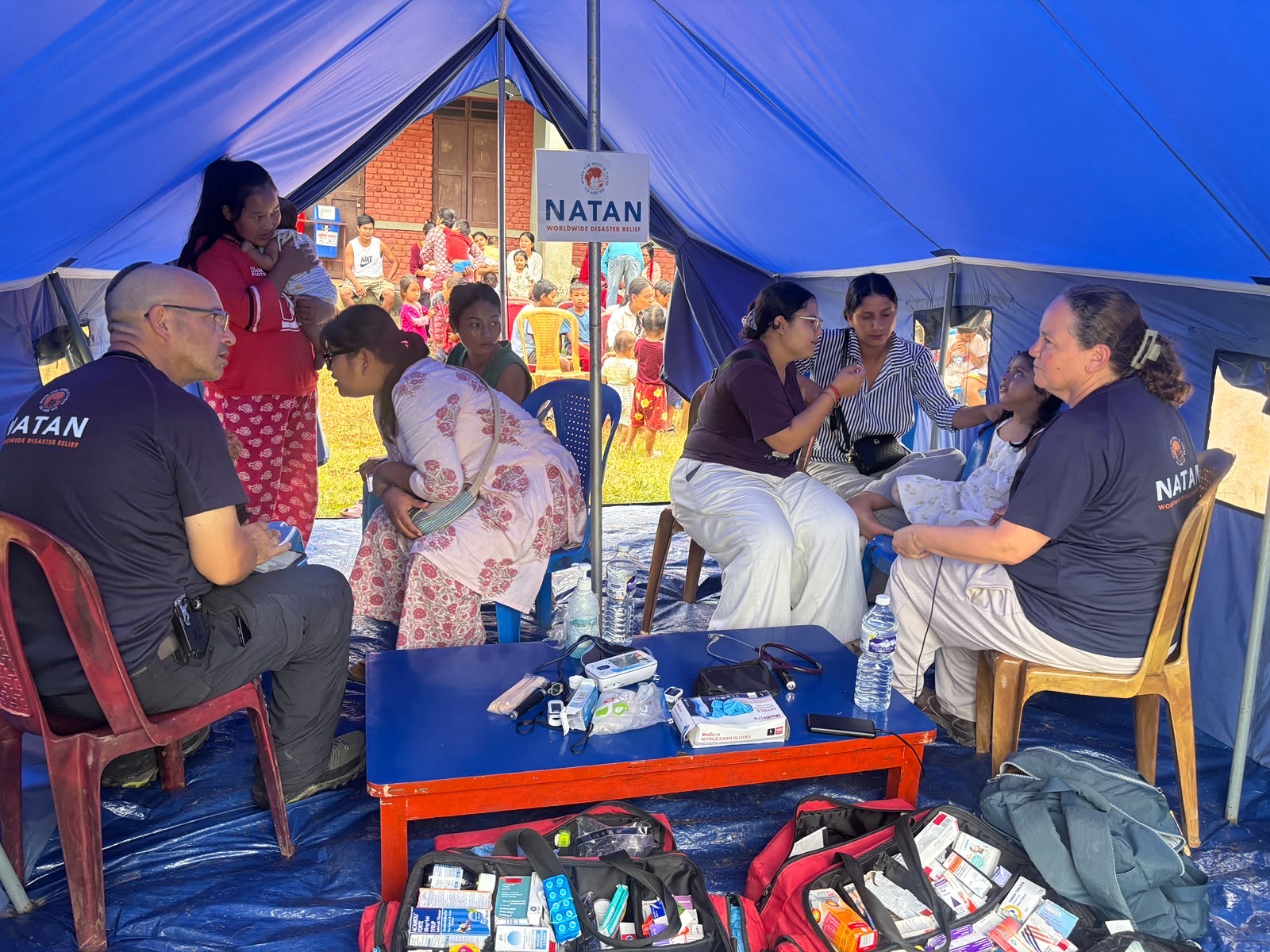
Israeli medical volunteers with Natan Worldwide Disaster Relief provide health assessments for people displaced by Nepal’s Aug. 26 floods. (Danda Gurung)
DEVIGHAT, Nepal — Two Israeli emergency physicians working in displacement centers in Nepal said they have treated children and adults for a range of illnesses and injuries following the devastating floods of Aug. 26, coordinating with Nepali health authorities and local relief workers.
Dr. Chayen Gilad Moshe, a pediatrician and pediatric emergency physician with the Israeli humanitarian organization Natan Worldwide Disaster Relief, said medical teams have been visiting centers housing people displaced by the floods, where anxious parents have brought their children for examinations.
“We’ve seen many medical conditions,” Gilad said, including illnesses, injuries and other health concerns among children displaced by the flooding.
At one center near Devighat, the team evaluated a young man with thalassemia, a blood disorder. He had swollen eyes, rapid breathing and an elevated heart rate — symptoms that raised concern about a potentially serious complication related to his underlying condition.
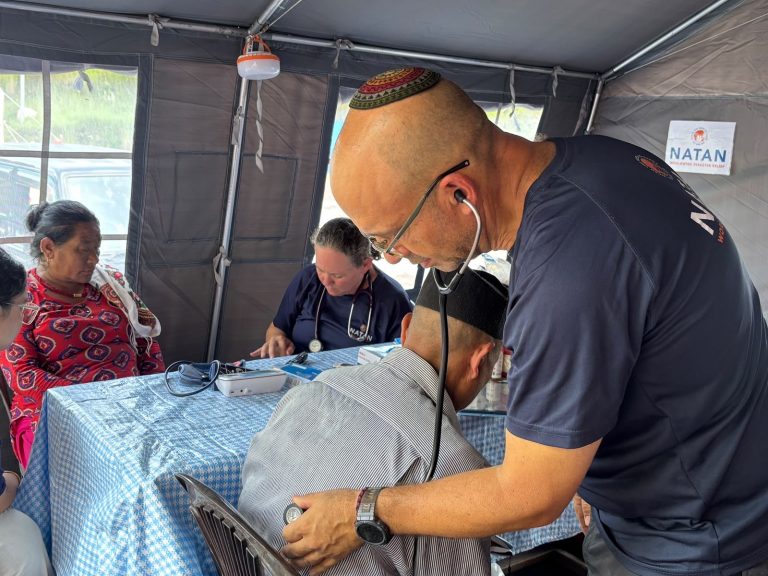
The medical team drove him to a nearby hospital and briefed local doctors on their findings, Gilad said. Hospital staff later told the team that the patient’s hemoglobin level was 4, far below the normal range, and that he needed a blood transfusion before being transferred to Kathmandu for further treatment.
“It was very unexpected, and I’m very happy that we were able to help him,” Gilad said.
The visiting physicians said they are working with local organizations, including Relief Nepal, as well as social workers and other relief workers, to identify displaced communities with urgent medical needs.
Gilad said international medical teams must complete Nepal’s required registration process before providing care. The team traveled to Kathmandu for an interview and approval through the Nepal Medical Council and received authorization within 24 hours to begin working in the displacement centers, he said.
Dr. Sharon Kronfeld-Shaul, a family physician and emergency medicine specialist who leads Natan’s medical field operations, said the organization has worked in disaster zones around the world for more than two decades. She also worked in Nepal after the 2015 earthquake.
The scale of the latest destruction was painful to witness, Kronfeld-Shaul said, but she was encouraged by the resilience and solidarity of affected residents.
“The disaster is really sad, and it’s devastating to see the whole area that we were visiting,” Kronfeld-Shaul said. “But I can see that the people are so optimistic … and they’re really trying to help each other.”
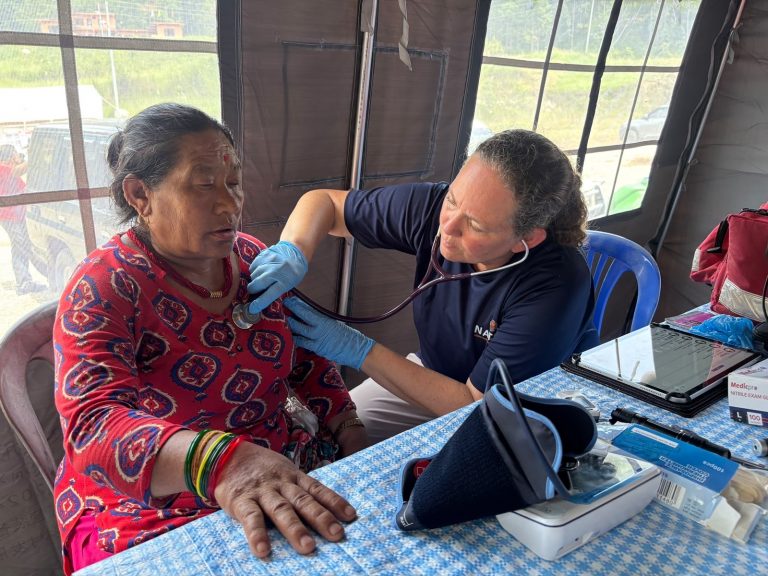
International medical teams depend on local partners to navigate language, culture and health systems, and to identify communities where aid is most urgently needed, Kronfeld-Shaul said.
“When we come to a new country like Nepal, of course we don’t understand the language, we don’t understand the culture and not even the system,” she said. “What helps us is to have a local partner, a real partner that takes us to the right places where the needs are.”
Natan’s team is working with Relief Nepal in displacement centers serving people forced from their homes by the floods. The team is providing medical assessments and helping connect patients who require more advanced care with Nepali health facilities.