Millions Raised Abroad, Including $10 Million on GoFundMe, but Nepal’s Flood Survivors Struggle for Milk and Medicine

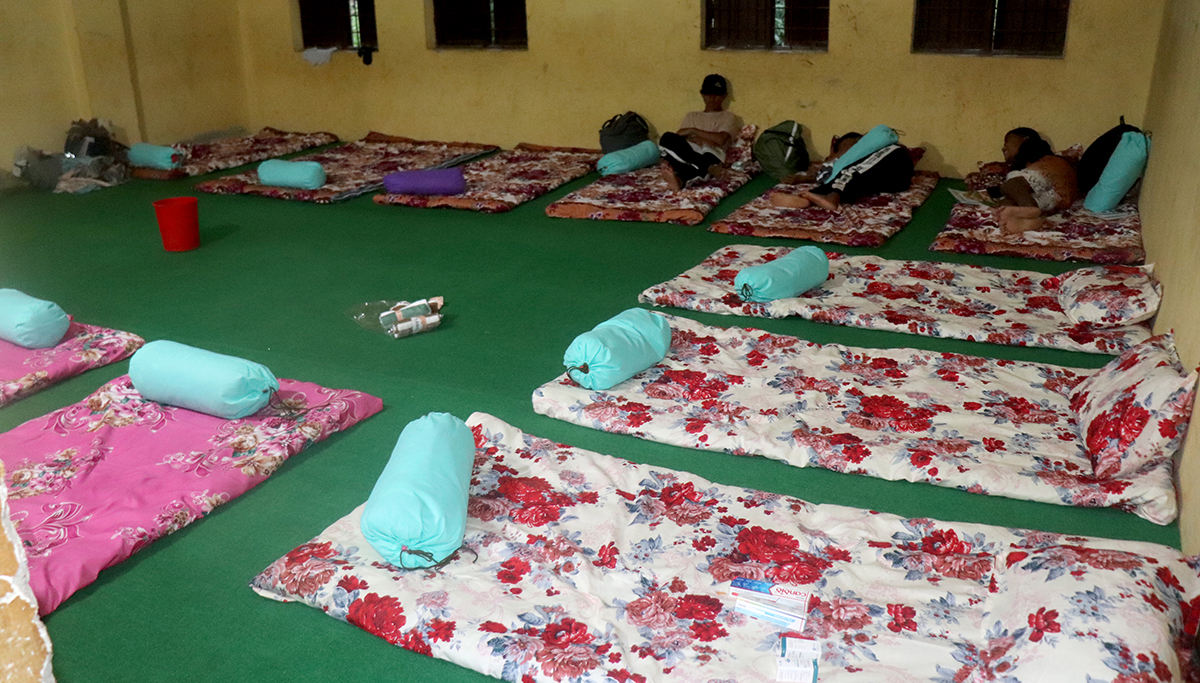
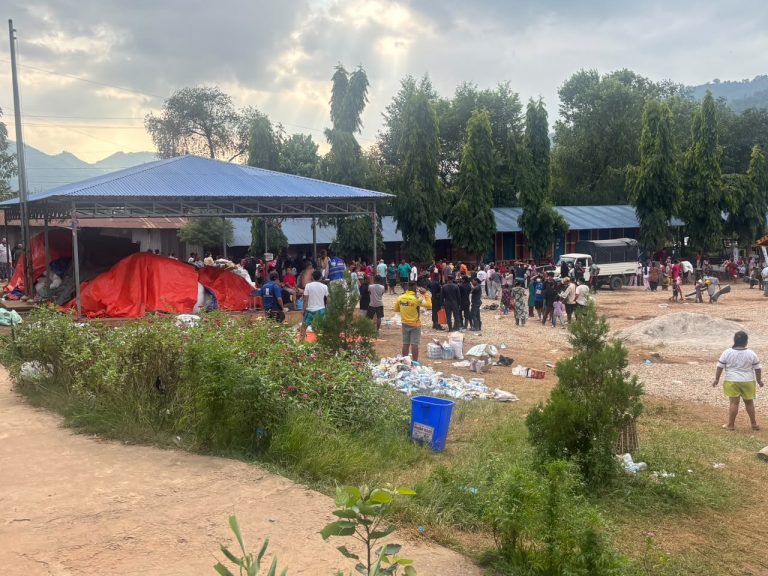
A special holding center at Annapurna Panchakanya Basic School in Bidur, Nuwakot, for children who lost both parents in the Bhote Koshi River floods. Four girls and three boys are currently staying at the center. Photo: Ramhari Neupane/RSS
NEW YORK — (Additional reporting by Danda Gurung in Nuwakot and Rasuwa, Nepal) — Lila Devi Joshi lost her home, businesses and several family members when devastating floods swept through Trisuli Bazar in Nuwakot, Nepal, on Aug. 26. Now, the 60-year-old is struggling to care for her 16-month-old grandson, whose mother was killed in the disaster, as she faces the uncertainty of rebuilding her life with little left.
Joshi’s loss is part of a wider catastrophe in Nepal, where more than 1,300 bodies have been recovered and about 5,000 people remain missing.
“I don’t even have money to buy milk for the child,” Joshi said. “Sometimes they give us one or two bottles, but even getting milk is difficult.”
GoFundMe says more than $10 million has been raised through its platform for people affected by devastating flooding in Nepal and surrounding areas. The money is being raised for emergency relief, temporary shelter, rebuilding and nonprofit organizations providing assistance on the ground.
“Our hearts go out to those impacted by the devastating flooding in Nepal and the surrounding regions,” a GoFundMe spokesperson told NepYork. “We have seen an outpouring of support on GoFundMe from around the globe in response to this natural disaster.”
GoFundMe said its Nepal Flood Relief Hub is updated as fundraisers are reviewed by its Trust & Safety team.
The more than $10 million figure does not represent every fundraising effort for Nepal.
Across the Nepali diaspora, families, community organizations, temples, nonprofit groups, sports clubs and individuals have raised money through GoFundMe, other crowdfunding platforms, direct appeals and local events.
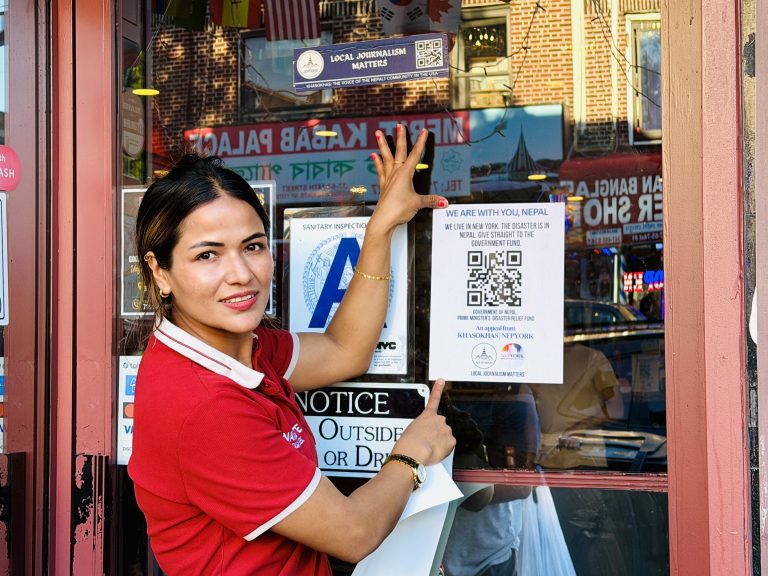
Nepalis living abroad, including in the United States, are also sending donations directly to Nepal’s Prime Minister’s Disaster Relief Fund and Prime Minister’s Relief Fund through official government channels.
For survivors in temporary shelters and holding centers, the needs include food, drinking water, medical treatment, housing and assistance to rebuild livelihoods.
A Closer Look at GoFundMe Campaigns on Nepal’s Flood Relief Hub
NepYork reviewed 111 fundraisers listed through GoFundMe’s Nepal Flood Relief Hub and found that the campaigns had collectively raised about $1.5 million at the time of the review.
The total included about $1.17 million in U.S. dollars, 169,000 British pounds and 37,000 euros, along with smaller amounts in Norwegian kroner. The currencies were converted using prevailing exchange rates at the time of the review.
The $1.5 million is a snapshot of those 111 campaigns. It is not the total raised on GoFundMe for Nepal and is not a component-by-component accounting of GoFundMe’s more than $10 million figure.
The campaigns reviewed by NepYork were organized from the United States, Australia, Britain, Canada and several European countries.
The largest campaign was organized by Bhutanese Americans in Columbus, Ohio, and had raised more than $105,000, surpassing its $100,000 goal.
Other major campaigns included a fundraiser for a family in Waratah, Australia, that had raised about $70,000; a campaign in Edmond, Oklahoma, that had raised about $59,000; and a fundraiser in Lexington, Massachusetts, that had raised about $51,000.
Several campaigns in Australia and the New York area had raised between roughly $37,000 and $43,000. In Providence, Rhode Island, a campaign seeking money for sanitation kits had raised about $42,000 toward a $50,000 goal.
The campaigns varied in size and purpose. Some were created by relatives searching for family members last seen in Rasuwa or along the Trishuli River. Others sought help for families whose homes and businesses were destroyed in Betrawati, Trisuli Bazar, Timure and other flood-hit communities.
There were also community campaigns organized by Nepali associations, student groups and guide and porter networks. Some had raised tens of thousands of dollars, while others had raised a few hundred dollars or several thousand. There is no single public database tracking every dollar raised by Nepalis and their supporters overseas.
Some Donations Reach Nepal
The GoFundMe fundraising response extends beyond the 111 campaigns reviewed through the Nepal Flood Relief Hub.
A New York-based community campaign led by Dari Club USA, NY Nepali Kaam Post and organizer Lelin Kandel raised $6,160 from 93 donors. After GoFundMe fees, organizers said the remaining $5,954 was processed for direct deposit into the government relief account at Global IME Bank under Nepal’s Prime Minister’s Office.
The campaign, titled “Stand With Nepal — Emergency Relief & Recovery,” was created after flooding along the Bhote Koshi and Trishuli rivers devastated communities in Rasuwa, Nuwakot, Dhading and Gorkha districts, displacing families and destroying homes, businesses and infrastructure.
Organizers said they initially created the campaign because many members of the Nepali diaspora faced practical difficulties sending money directly to Nepali bank accounts.
After the Nepal government simplified procedures for international donations, organizers paused the campaign and encouraged future donors to use official government mechanisms.
“Since the Nepal government has now made it easier for those abroad to contribute, we have stopped this GoFundMe campaign,” Kandel said in an earlier announcement.
Another GoFundMe campaign, outside the 111 fundraisers reviewed through the Nepal Flood Relief Hub, was organized by Keshab Raj Seadie under the title “Nepal Flood Disaster Relief: Emergency Help for Victims.”
The campaign had raised more than $64,000 as of Sept. 8, according to the fundraiser.
Seadie said the money would be transferred to a New York-based local nonprofit under a written agreement requiring the full amount to be transferred to Nepal’s Prime Minister’s Disaster Relief Fund.
The fundraiser was established to help families affected by the Aug. 26 disaster, including those needing food, clean water, temporary shelter and medicine, as well as families searching for missing relatives.
Fundraising Beyond GoFundMe
The response also extends beyond GoFundMe.
In Fort Wayne, Indiana, Nepali Samaj Fort Wayne had collected more than $22,000, according to Naresh Khadka, a founding member and the organization’s secretary.
Khadka said several organizations and offices in the area independently raised money and channeled the funds through the group for transfer to Nepal.
Other community members have used crowdfunding platforms such as Zeffy, while temples, nonprofits, community organizations and individuals have organized their own collections and direct transfers.
In Austin, Texas, members of United Nepal FC turned a recreational soccer match into a fundraiser.
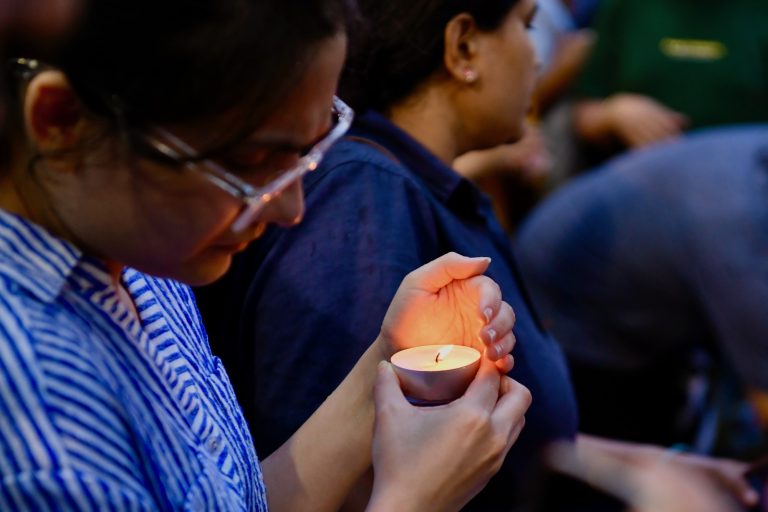
During a friendly match between the Red Lions and Blue Samurai, players stopped midway through the game, walked off the field together and lit candles to honor people who died in the flooding and families still waiting for news of missing relatives.
The club raised $2,000 from 39 members, with donations ranging from $25 to $120, according to organizer Basanta Khanal.
Khanal said the full amount was deposited into Nepal’s Prime Minister’s Disaster Relief Fund and that donor names and donation amounts were publicly disclosed.
Donations to Government Relief Funds
The diaspora response also includes direct contributions to government-designated relief accounts.
The Government of Nepal’s official disaster relief donation portal allows people to contribute to the Prime Minister’s Disaster Relief Fund from anywhere in the world through international banking and payment channels. The government has also published official donation instructions through Nepali diplomatic missions.
As of Sept. 8, about $80 million had been collected through the Prime Minister’s Disaster Relief Fund and the Prime Minister’s Relief Fund, according to government figures. The total includes domestic donations and contributions from Nepalis and others abroad.
The government has released about $6.5 million from the relief funds to the National Disaster Risk Reduction and Management Authority for relief work for flood victims in Rasuwa, according to government officials.
A Grandmother Searching for Milk
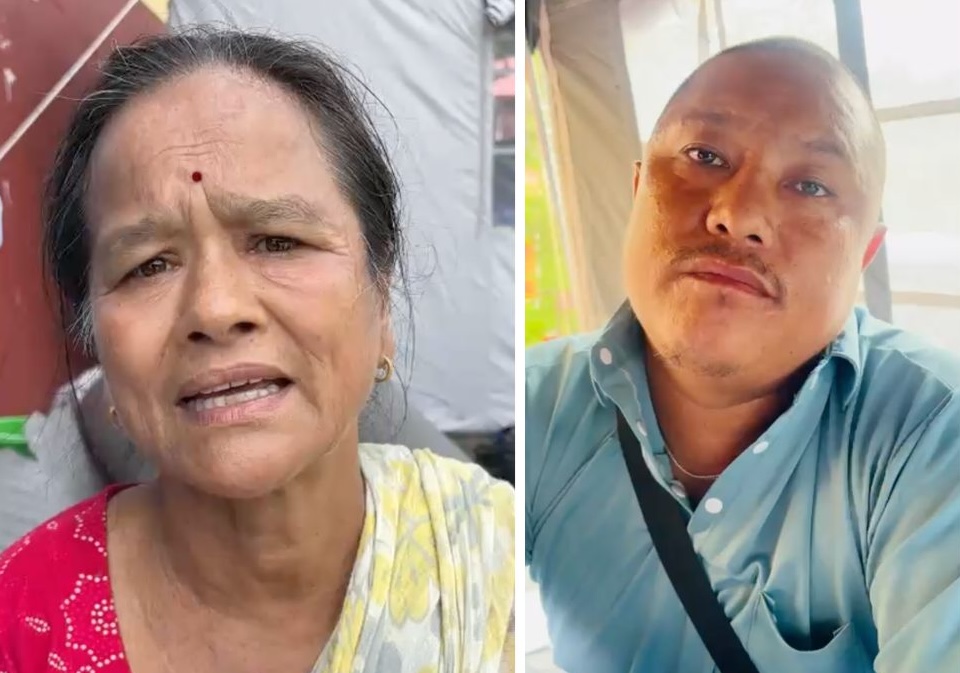
In Trisuli Bazar, Lila Devi Joshi said she is caring for her 16-month-old grandson after losing family members in the disaster. Joshi said she lost two daughters-in-law and two grandchildren. Her grandson survived and is now in her care. The child continues to look for his mother, Joshi said.
“He looks for his mother and cries,” she said. “He tries to breastfeed. He has gone without his mother’s milk since the disaster.”
At night, Joshi wakes to care for him.
“I get up and give him milk,” she said. “What else can I do?”
Joshi said relief centers sometimes provide one or two bottles of milk, but the supply is not dependable. She said she carries water from the relief center to the room where she is staying to prepare milk for the child.
“There is no drinking water here either,” she said. “I carry two bottles of water to the room and make milk for him.”
Before the flood, Joshi said she had a home and businesses in Trisuli Bazar and property worth about $130,000. She said the flood destroyed shops, warehouses and merchandise.
“I had valuable property, but now I don’t even have money to buy milk for the child,” she said.
“Now I have nothing,” she said. “I have no house, no land. I need everything — a place to live, food and money to raise and educate this child.”
A Heart Patient Struggles to Afford Medicine
In Mailung, Utargaya, in Rasuwa district, Inam Tamang said he is struggling to obtain medicine after losing his home and business in the disaster.
Tamang, who is staying at a holding center, said he is a heart patient and has been undergoing treatment for about three years. He said he needs to travel periodically to Kathmandu for medical checkups and takes six types of medicine each month.
“Buying the medicines costs around $15 to $20,” he said. “But I also need about $35 for transportation to Kathmandu and back. It is very difficult now.”
He said traveling to Kathmandu has become especially difficult because roads were damaged and medical appointments require additional time.
The flood destroyed his home and shop, eliminating the income he had relied on to support his family.
“Everything I had — my house, my shop, everything — was swept away,” he said. “There is nothing left.”
His wife also has diabetes and needs medication, he said. Access to Mailung remains extremely difficult because roads and other routes were destroyed, he said.
“There is no road to get there now,” he said. “People can reach only by walking from above.”
Tamang said he also lost official documents and will need to replace them.
Before the disaster, he said, he could work and support his family through his business. Now, he does not know where they will live, how they will earn money or how he will continue receiving medical care.
“We need a safe place to stay,” he said. “The children need to go to school, and we need to work and earn a living.”
He said the government’s immediate priority should be providing survivors with safe housing and support to resume their livelihoods.
“We cannot live by eating relief food alone,” he said. “Tomorrow, the children have to go to school. We have to work and earn for ourselves.”
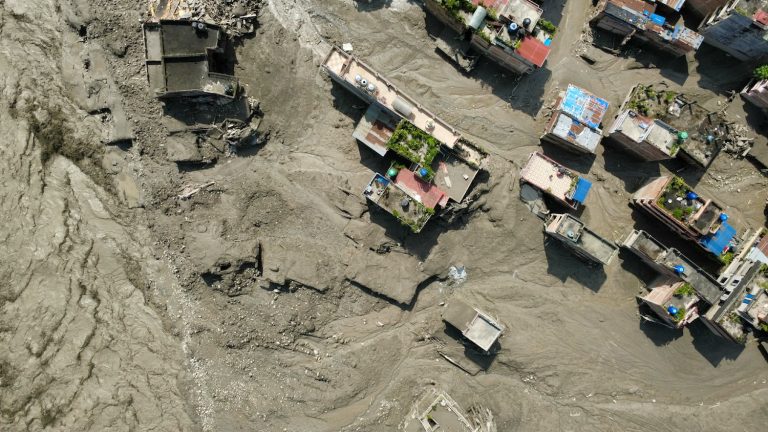
The Aug. 26 disaster struck communities near the Rasuwa-China border and along the Trishuli River system, destroying homes, businesses, bridges and infrastructure and leaving people dead, missing or displaced.
The immediate response centered on search-and-rescue operations and evacuations. Survivors in temporary shelters and holding centers now also face needs for housing, medicine, education and livelihoods.
Food and drinking water remain essential, while families whose homes and businesses were destroyed need assistance to rebuild.
This coverage was made possible by a grant from URL Collective, a nonprofit supporting local, diverse media.