




Justice Department Seeks to Strip Citizenship From 40 Americans, Including One From Nepal

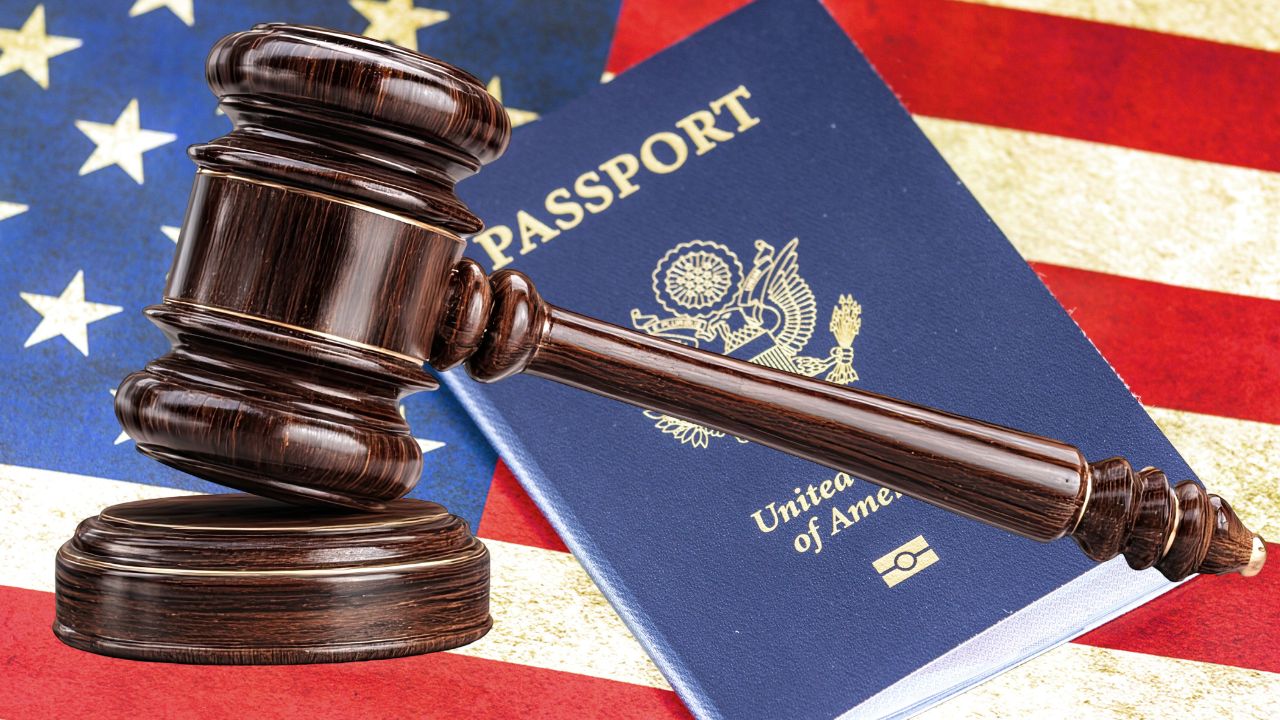
The U.S. Department of Justice has filed denaturalization lawsuits against 40 naturalized Americans, including Dibya Bhattarai, originally from Nepal. The cases allege that the individuals concealed criminal histories, used false identities or committed immigration fraud before obtaining U.S. citizenship. Photo created with Canva.
NEW YORK — The Justice Department has filed lawsuits seeking to revoke the U.S. citizenship of 40 naturalized Americans accused of concealing criminal histories, using false identities or committing immigration fraud before becoming citizens, including one American originally from Nepal.
The cases, filed in federal courts across 19 judicial districts between Aug. 21 and Oct. 2, represent the largest volume of denaturalization complaints filed during a single period under the Trump administration, the department said Monday.
The person from Nepal is Dibya Bhattarai, 40, against whom the Justice Department filed a complaint Sept. 25 in the Northern District of Texas.
According to the complaint, Bhattarai applied for naturalization in 2008 and stated that she had not committed any crime for which she had not been arrested. The government alleges that she repeated that statement under oath during her naturalization interview and became a U.S. citizen in September 2008.
In March 2016, however, Bhattarai pleaded guilty in federal court to conspiracy to commit fraud in connection with immigration documents. The Justice Department alleges that the conspiracy began in June 2007, more than a year before her naturalization interview.
The government is asking a federal judge to revoke Bhattarai’s naturalized U.S. citizenship, arguing that she lacked the required good moral character and willfully concealed or misrepresented criminal conduct during the naturalization process.
The filing does not mean that Bhattarai has lost her U.S. citizenship. The Justice Department must establish its allegations in federal court before a court can revoke her naturalization.
A Broad Push to Revisit Naturalizations
Federal law allows the government to seek revocation of naturalization when citizenship was illegally obtained or was obtained through concealment of a material fact or willful misrepresentation.
The Justice Department said the 40 cases represent the largest volume of denaturalization complaints it has filed in a single period under the Trump administration.
“Today’s announcement marks the largest denaturalization effort in modern history,” Attorney General Todd Blanche said in a statement.
The department’s Civil Division said the cases involve people who, in the government’s view, were not eligible for citizenship when they naturalized.
Denaturalization is not automatic. The Justice Department must establish its claims in federal court, and the allegations contained in the complaints are not findings of wrongdoing.
The cases include allegations involving espionage, sexual offenses, voluntary manslaughter, tax fraud, marriage fraud, identity fraud and other immigration violations.
The Case of the American From Nepal
Bhattarai’s case is the only one among the 40 identified by the Justice Department as involving a person from Nepal.
The government alleges that she concealed criminal conduct connected to immigration-document fraud when she sought U.S. citizenship.
According to the complaint, the alleged conspiracy began in June 2007. Bhattarai applied for naturalization the following year and allegedly told immigration officials that she had not committed any crime for which she had not been arrested.
She became a U.S. citizen in September 2008.
Nearly eight years later, in March 2016, she pleaded guilty in federal court to conspiracy to commit fraud in connection with immigration documents, according to the Justice Department.
The government now argues that the conduct occurred during the period in which Bhattarai was required to establish good moral character for naturalization and that she concealed it from immigration authorities.
The Justice Department is seeking to revoke her naturalization on those grounds.
From Espionage to Identity Fraud
One of the most serious cases involves Jinchao Wei, 26, originally from China, whom the Justice Department accuses of obtaining U.S. citizenship while concealing an espionage conspiracy.
Wei enlisted in the U.S. Navy in 2021 and became a citizen in May 2022 through a provision allowing expedited naturalization for certain members of the armed forces. The department alleges that he had already begun conspiring to provide military secrets to China by February 2022.
Wei was convicted in 2025 of conspiracy to commit espionage, espionage and unlawful export of technical data related to defense articles. He was sentenced to 200 months in prison and discharged from the Navy, according to the department.
Another case involves Ping Li, 61, originally from China, who pleaded guilty in 2024 to acting as an agent of the Chinese government without notifying the attorney general. The Justice Department alleges that Li worked for China’s Ministry of State Security and collected information about Chinese dissidents, pro-democracy advocates and other groups in the United States.
Other complaints accuse naturalized Americans of concealing sexual offenses against minors, voluntary manslaughter, tax crimes and securities fraud.
Allegations Span Decades
Several of the cases involve conduct that allegedly occurred many years before the government filed the denaturalization complaints.
For example, the Justice Department alleges that Gume Roberto Garza, originally from Mexico, used another person’s identity and concealed his criminal history before obtaining U.S. citizenship. Another complaint alleges that Ahmad Bahar Khattak, originally from Pakistan, used multiple identities over decades to avoid immigration enforcement and ultimately became a U.S. citizen in 2008.
The cases also include allegations of fraudulent marriages and false claims about family relationships.
In one case, the government alleges that Ahmed Khan, originally from Pakistan, obtained immigration benefits after falsely claiming that his first wife had died and marrying a U.S. citizen. In another, the department alleges that Sorsamkhan Som, originally from Cambodia, fabricated a divorce while seeking immigration benefits through a marriage to a U.S. citizen.
The department also filed cases involving allegations that applicants concealed previous deportation proceedings, used fraudulent passports or birth certificates, or failed to disclose previous identities.
What Denaturalization Means
A successful denaturalization case does not itself amount to a criminal conviction. Instead, the government is asking a federal court to determine whether citizenship was unlawfully obtained and, if so, revoke the naturalization.
The Justice Department’s complaints generally rely on two related theories: that the person was legally ineligible for naturalization in the first place, or that the person obtained citizenship by concealing material information or making willful misrepresentations.
The government is also alleging in several cases that the defendants failed to meet the requirement that applicants demonstrate good moral character during the statutory period preceding naturalization.
The complaints were filed in federal courts in California, Arizona, Colorado, Connecticut, the District of Columbia, Georgia, Maryland, New York, Pennsylvania, Texas, Virginia and several other states.
The Justice Department said the claims contained in the complaints are allegations only and that there has been no determination of liability.