






52,000 Diversity Visas Were Available. About 11,400 Were Issued. The Clock Is Still Ticking.

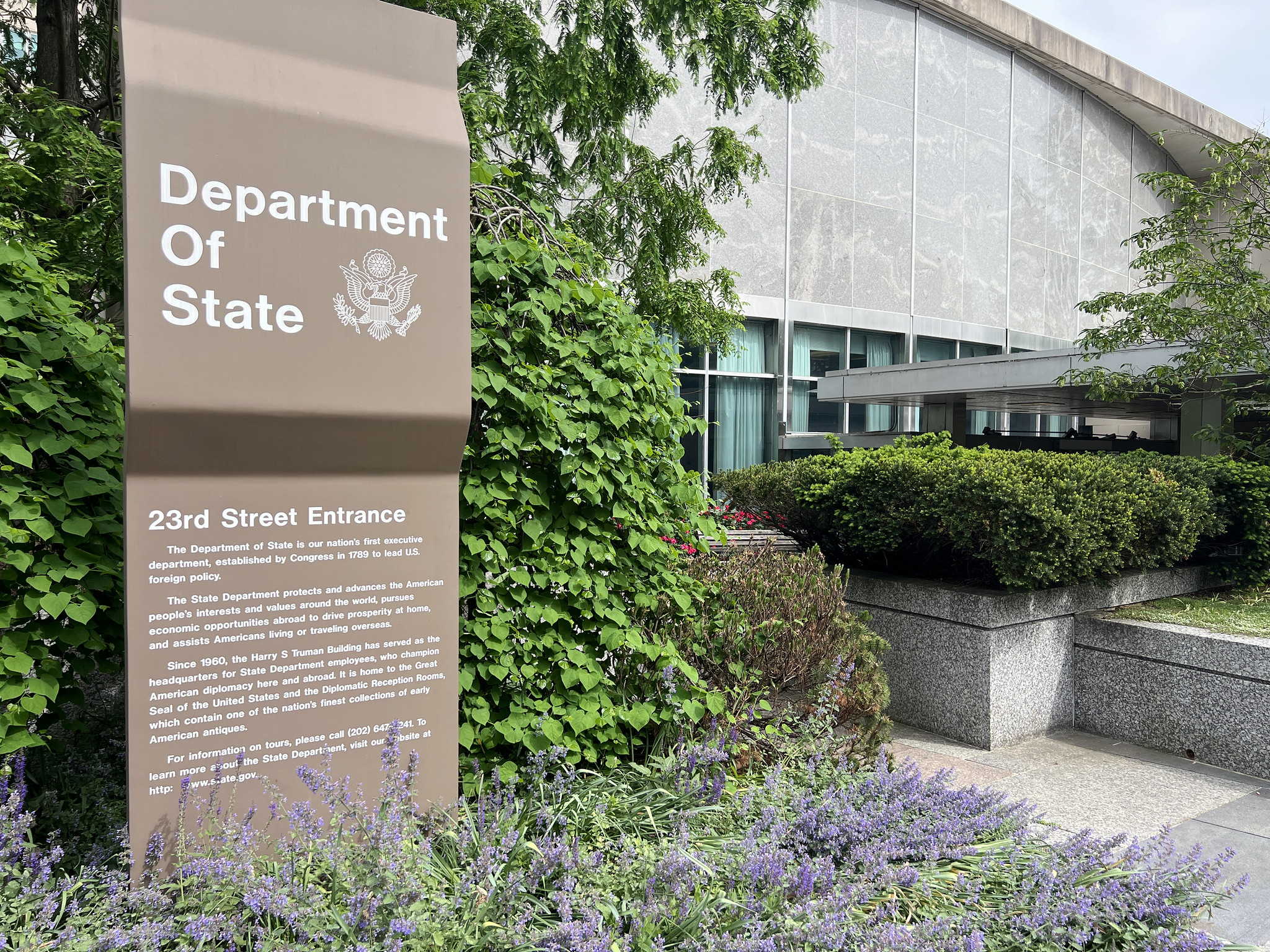
Exterior of the U.S. Department of State Harry S. Truman Building, Washington, D.C. (Official State Department photo by Linda D. Epstein)
NEW YORK — Nearly 52,000 Diversity Visas were available for fiscal year 2026. But as the program’s fiscal year closed Sept. 30, approximately 11,408 visas had been issued based on the State Department’s reported issuance figures before the December pause and the approximately 4,089 visas reported as issued after the court’s Aug. 28 order. Now, the clock is still ticking.
A federal judge has given the State Department an additional 10 days beyond the Sept. 30 deadline to continue certain Diversity Visa adjudications, creating a narrow window for thousands of applicants who had spent months waiting for a visa that, under normal circumstances, had to be issued before the fiscal year ended.
The State Department approved approximately 4,089 Diversity Visa applications for issuance following the court’s Aug. 28 order, according to a status report filed with the court.
From 55,000 to About 52,000
Congress has authorized up to 55,000 Diversity Visas each fiscal year under Section 203(c) of the Immigration and Nationality Act. The program is intended to provide additional immigration opportunities to people from countries with historically low rates of immigration to the United States. But the number available for DV-2026 was lower.
The State Department said the annual limit was first reduced to approximately 54,850 because of the allocation of up to 5,000 visas under the Nicaraguan Adjustment and Central American Relief Act, or NACARA. A provision of the National Defense Authorization Act for Fiscal Year 2024 further reduced the number by requiring visas made available under the law to be deducted from the 55,000 annual DV allocation. That brought the estimated DV-2026 annual limit to approximately 52,000 visas.
The visas are divided among six geographic regions, and no country may receive more than 7% of the available Diversity Visas in a single fiscal year. For DV-2026, the State Department selected approximately 129,516 prospective applicants, including principal selectees and their spouses and children, from more than 20.8 million qualified entries.
Then Came the Pause
The first months of fiscal year 2026 looked relatively normal. The State Department issued 2,386 Diversity Visas in October 2025, 3,000 in November and 1,933 in December, according to its monthly visa issuance data. That amounted to 7,319 visas in the first three months of the fiscal year, before the December issuance pause.
Then, on Dec. 23, the State Department announced a pause in Diversity Visa issuances while it reviewed screening and vetting procedures. Applicants could continue submitting applications and attending interviews, but the department said no Diversity Visas would be issued during the pause.
For applicants, the calendar became the enemy. Unlike many other immigration categories, Diversity Visa eligibility is tied to a fiscal-year deadline. A visa that is not issued by the end of the fiscal year generally cannot simply be carried over to the next year. The pause therefore did more than slow the program. It consumed the time available to applicants.
Nepal was among the countries with significant numbers of DV-2026 selectees. The State Department listed 3,933 prospective applicants chargeable to Nepal, including principal selectees and their spouses and children. Before the pause, 29 Nepali applicants received Diversity Visas in October, 347 in November and 204 in December — 580 in all. Then the issuance pipeline stopped.
Aug. 28 Changed the Course
That changed on Aug. 28, when a federal court issued an order in Medani et al. v. Trump et al. The State Department subsequently acknowledged that, as of Aug. 28, the December 2025 Diversity Visa issuance pause was no longer in effect in accordance with the court’s order. The government resumed processing.
The court later found that the government’s compliance with its preliminary injunction had been “less than substantial.” The department had waited 10 days before instructing posts to comply with the order. Judge Edward J. Davila warned that the delay mattered because “with each day that passes, hundreds of selectees lose their opportunity to receive a Diversity Visa before the end of the fiscal year.”
The 10-Day Lifeline
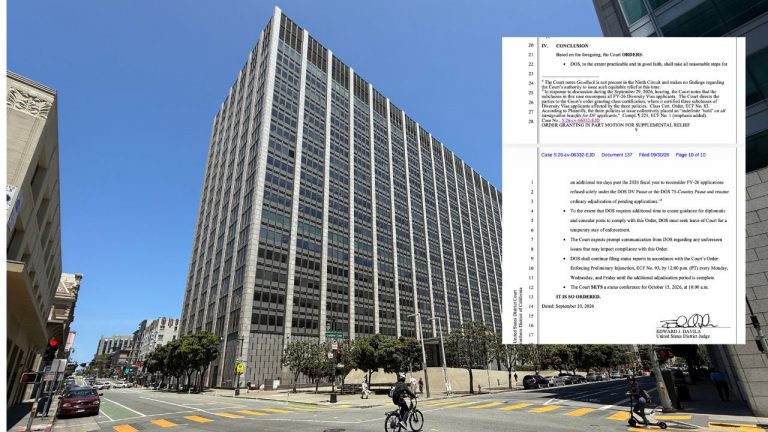
On Sept. 30, the final day of fiscal year 2026, Davila issued another order. Rather than simply allowing the government to walk away from the remaining cases at midnight, the judge ordered a 10-day remedial period.
During that period, the State Department must, “to the extent practicable and in good faith,” take all reasonable steps to reconsider FY2026 applications refused solely because of the Diversity Visa pause or the separate 75-country immigrant visa pause and resume ordinary adjudication of pending applications.
The order was not a blanket extension of the Diversity Visa program. It was a remedy for the government’s delayed compliance with the court’s earlier injunction. The plaintiffs had sought something much broader: preservation of all unused FY2026 Diversity Visa numbers, estimated at roughly 40,000, so they could be issued after the fiscal year.
Davila rejected that request. Instead, he created the limited 10-day remedial window.
The State Department received notice of the Sept. 30 order and filed an administrative motion for a temporary stay on Oct. 1, saying it needed additional time to develop and implement solutions to bypass system safeguards that prevent DV adjudication and issuance after the end of the fiscal year. The department said it was actively working on those solutions, including running system tests, and had transmitted interim guidance to U.S. embassies and consulates on Oct. 1.
What Happens by Oct. 10?
That is now the question hanging over thousands of applicants. The court’s 10-day period ends around Oct. 10, creating a final, extraordinary window for covered cases affected by the government’s earlier pause and delayed compliance.
The State Department has been required to provide continuing status reports to the court, with reports due three times a week during the additional period. A status conference is scheduled for Oct. 15.