






Outside U.N., Nepali Diaspora and Climate Activists Rally for Climate Reparations

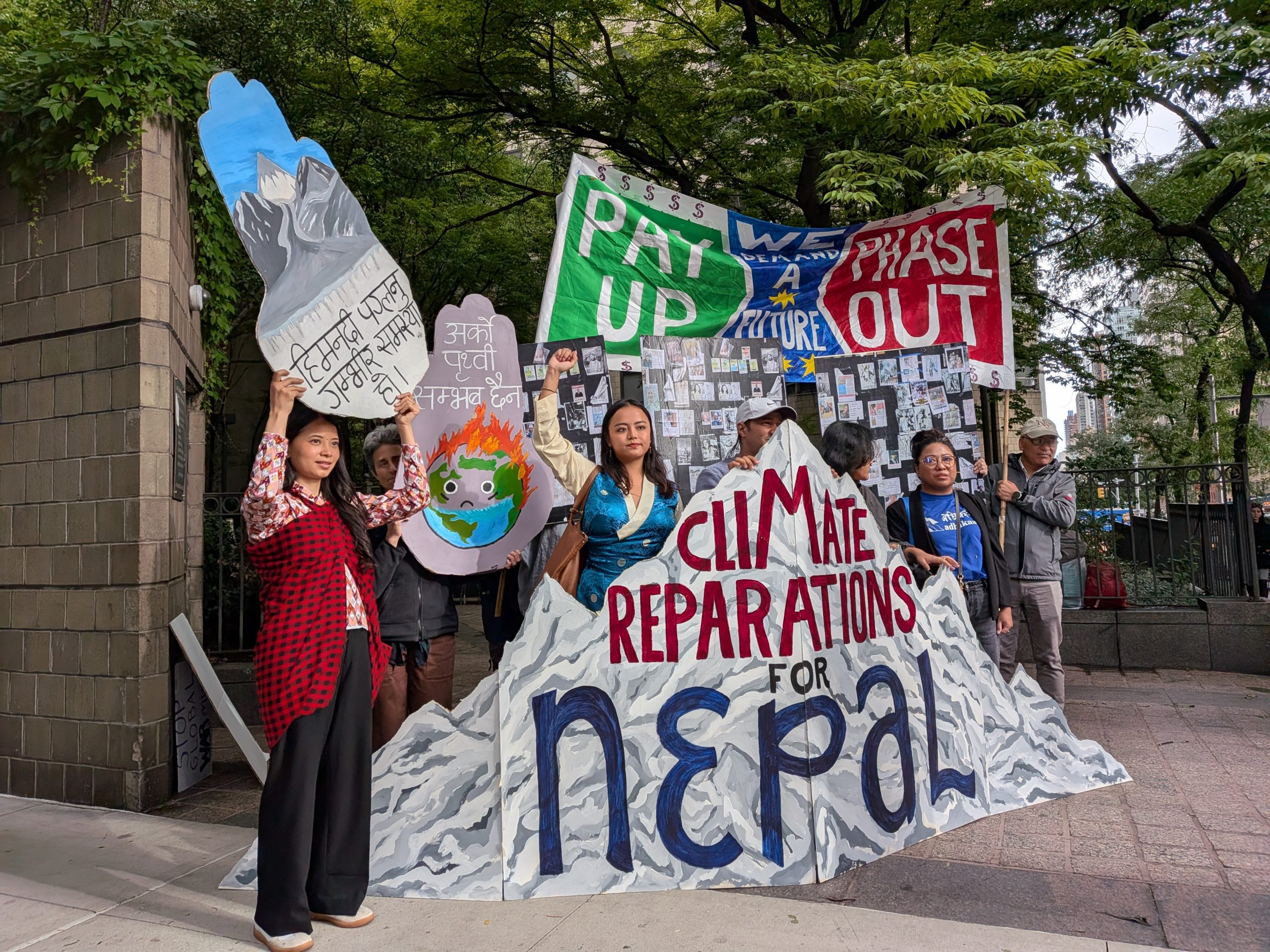
Climate activists and members of New York’s Nepali diaspora rally outside United Nations headquarters in New York, calling for climate reparations and a rapid phaseout of fossil fuels. Photo by Climate Action Network.
NEW YORK — Members of New York’s Nepali diaspora joined frontline communities and climate activists outside United Nations headquarters on Wednesday to call for climate reparations and a rapid, equitable transition away from fossil fuels.
The rally coincided with a U.N. high-level event on climate action and the just transition, as world leaders and diplomats gathered in New York for the annual U.N. General Assembly meetings.
Organizers said the demonstration brought together activists representing communities affected by fossil fuel pollution and extreme weather in the United States, the Philippines, Kenya, Pakistan, Bangladesh, Colombia and Nepal.
Protesters called on wealthy, high-emitting countries to provide financial support to developing nations facing climate-related loss and damage and to help fund adaptation, resilience and a transition to renewable energy.
The organizers also urged the United States and other wealthy countries to move more quickly toward reducing greenhouse gas emissions and phasing out fossil fuels.
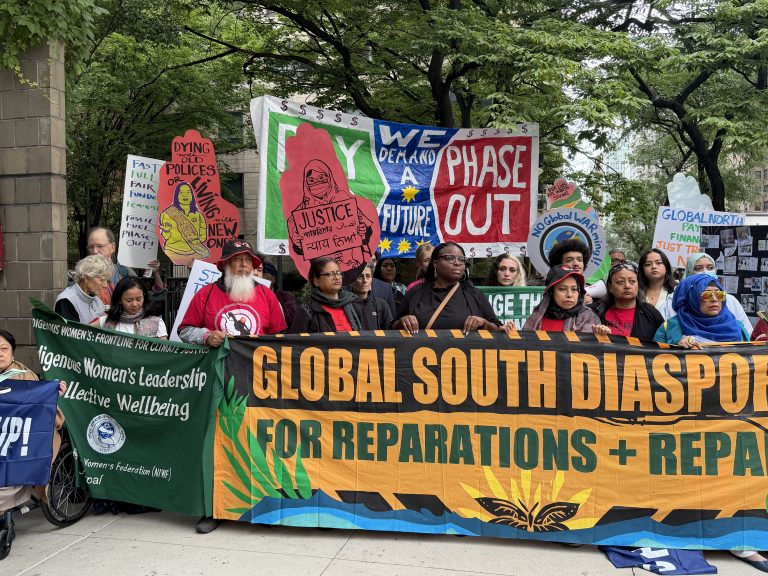
New York state Assemblywoman Sarahana Shrestha, the first state legislator of Nepali origin, joined the demonstrators.
Speakers included Anisha Buda Magar of Nepal’s National Indigenous Women Forum, Alicia Gallegos of the Pueblo Action Alliance, Dr. Roishetta Sibley Ozane of the Vessel Project of Louisiana, Sharif Jamil of Waterkeepers Bangladesh and the Bangladesh Climate Justice Movement, Jose Reyeros, a youth climate activist from Mexico, and representatives of the Asian Peoples’ Movement on Debt and Development.
Lidy Nacpil, coordinator of the Asian Peoples’ Movement on Debt and Development, cited the International Court of Justice’s advisory opinion on climate change and said it supports calls for accountability and reparations by countries most affected by climate change.
“For Global South countries like Nepal, this establishes a clear legal right to demand accountability and reparations,” Nacpil said, calling on the U.N. General Assembly to address the issue.
Anisha Buda, a program officer with the National Indigenous Women Forum in Nepal and a member of the Asia Pacific Network of Environmental Defenders, highlighted the impact of recent flooding on Indigenous communities in Nepal.
“The floods swept away our homes and lands but not our identity as Tamang Indigenous Peoples,” Buda said. She called for greater recognition of Indigenous communities’ role in protecting land and water.
The rally also emphasized the climate concerns of South Asian and Indo-Caribbean communities in New York.
Mohiba Ahmed, an organizer with DRUM–Desis Rising Up and Moving, said working-class immigrant communities face climate-related impacts both in New York and in their countries of origin.
She cited flooding in basement homes, power outages during heat waves and climate disasters affecting families and communities in South Asia.
“Our communities have paid enough,” Ahmed said. “It is time for those responsible to pay up their climate debt to the world and stop stealing our future.”
The organizers said the demonstration was intended to connect the experiences of frontline communities in the Global South with those of immigrant and working-class communities in the United States and to press governments attending the U.N. climate discussions to take stronger action on fossil fuel emissions, climate finance and loss and damage.