

Nepali Diversity Visa Winners Seek Answers as Deadline Nears

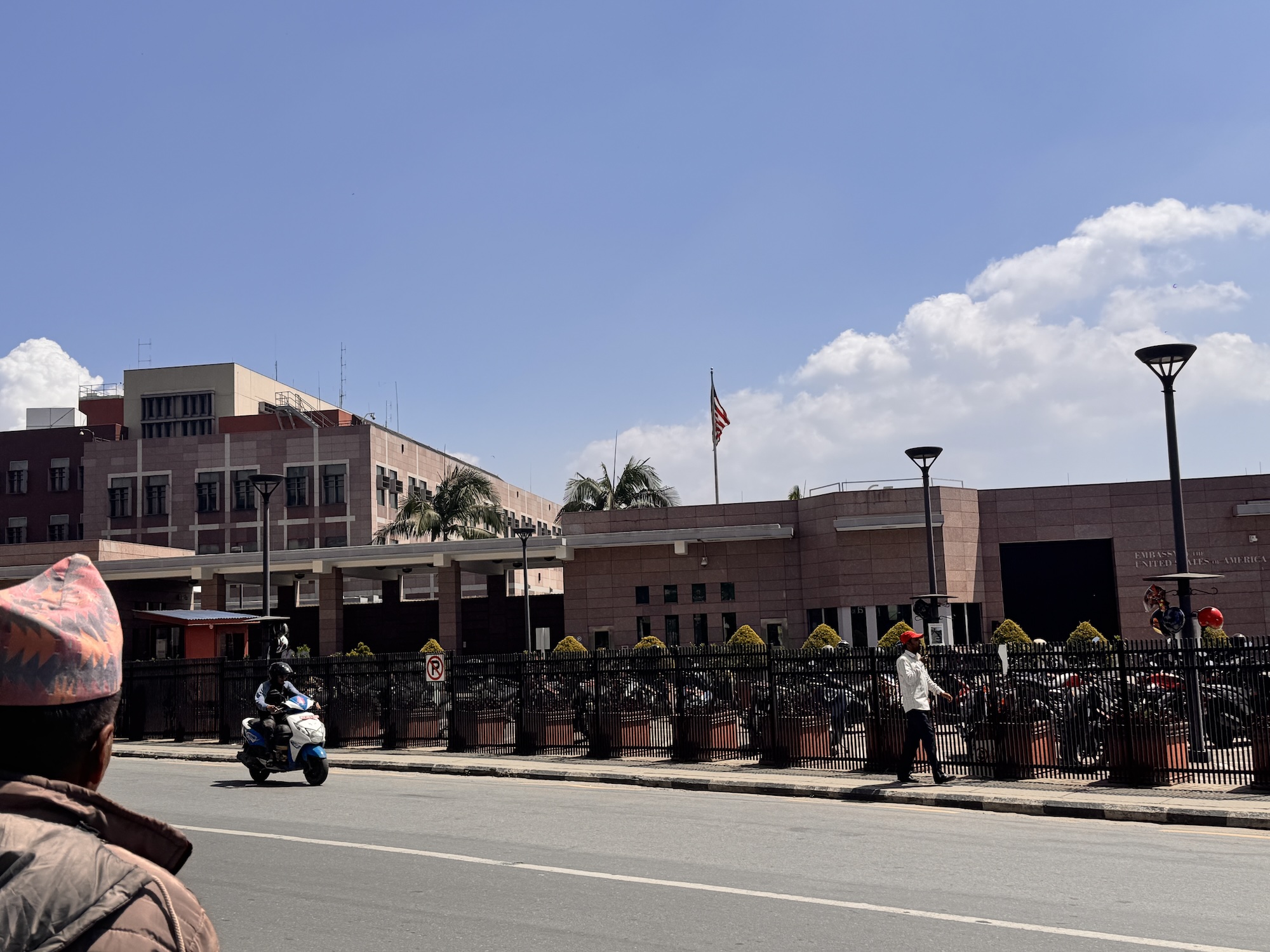
U.S. Embassy Kathmandu building in Nepal. The embassy serves as the official U.S. diplomatic mission in Nepal.
NEW YORK — With less than two weeks remaining before the Diversity Visa program’s annual deadline, Nepali winners of the 2026 U.S. visa lottery say they are still waiting for clear information about the status of their cases.
Several DV-2026 selectees who spoke with NepYork asked that their names not be published because they fear that publicly identifying themselves could affect their immigration cases. They said they have received little or no guidance from the U.S. Embassy in Kathmandu as the Sept. 30 deadline approaches.
“Many Diversity Visa winners in Nepal have spent thousands of dollars on mandatory medical examinations, documents and related fees, yet remain without information about the status of their cases,” one applicant said.
Another applicant said the uncertainty had disrupted plans involving work, education and family.
“Our careers, education and lives are on indefinite hold, causing severe mental distress as deadlines near,” the applicant said.
A Rush to Reopen Cases
In the two days after the government’s first court-ordered status report, U.S. consular posts scheduled about 45 new Diversity Visa interviews and roughly 864 reinterviews for applicants who had previously been interviewed, according to a status report filed Sept. 16 in federal court.
About six of the newly scheduled interviews had taken place by the time of the filing, along with about 85 of the reinterviews. Most of the appointments were scheduled for future dates, the government said.

The figures marked a sharp increase from the government’s earlier report. Through Sept. 13, the State Department had scheduled about 41 initial interviews and 106 reinterviews since late August. Only about 11 of those appointments had taken place by Sept. 14.
The latest report also showed that about 218 Diversity Visa applications had been refused under the Immigration and Nationality Act during the period covered by the filing, while about 28 had been approved for issuance. The government cautioned that some of the reported refusals could involve applicants whose interviews had already taken place but whose refusals had not yet been entered into consular processing systems.
During the earlier reporting period, from Aug. 29 through Sept. 13, about 169 Diversity Visa applications had been refused and one had been approved for issuance.
A refusal under Section 221(g) of the Immigration and Nationality Act does not necessarily represent a final denial. It can mean that a consular officer needs additional documents, administrative processing or other information before making a final decision.
After the Pause, a Narrow Window
The developments follow an Aug. 28 ruling by U.S. District Judge Edward J. Davila in Medani v. Trump. The court certified classes covering affected fiscal year 2026 Diversity Visa selectees and derivative beneficiaries and ordered the State Department to take reasonable steps, to the extent practicable and in good faith, to reconsider applications affected by the Diversity Visa pause and resume ordinary adjudication.
On Sept. 10, Davila ordered the government to provide status reports three times a week through the end of the fiscal year after concerns about the pace of resumed processing.
The State Department subsequently said the Diversity Visa issuance pause was no longer in effect as of Aug. 28, in accordance with the court order.
A separate immigrant-visa pause affecting nationals of 75 countries, including Nepal, had also been vacated by a federal court in New York on Aug. 21. The State Department later formally rescinded its earlier instructions related to both pauses.
The department instructed consular posts to identify cases that had been refused under Section 221(g) solely because of the pauses and review them again. Posts can request updated documents or medical examinations, schedule another interview when necessary, or approve a visa if the applicant otherwise meets the requirements of U.S. immigration law.
The rescission does not guarantee visa issuance. Applicants can still be refused for case-specific reasons, including missing documents, an expired medical examination, unresolved security checks or another legal ground of ineligibility.

The Date Hanging Over Every Case
For DV-2026 selectees, the calendar remains the central concern.
Federal law limits Diversity Visa issuance to the applicable fiscal year, making Sept. 30 the deadline for DV-2026 visas. The Medani court ordered the government to make good-faith efforts to process affected applicants during the remainder of the fiscal year, but it did not establish a general extension of the statutory deadline.
In a Sept. 10 order, Davila noted that federal appellate precedent limits a district court’s authority to require the government to process Diversity Visa applications after the fiscal year has ended, while leaving open a separate question concerning possible sanctions for bad-faith or undue delay in complying with a timely injunction.
That distinction has made the remaining days particularly consequential for applicants whose cases are still pending.
Waiting for a Message From Kathmandu
Nepali applicants whose cases remain unresolved said they want the U.S. Embassy in Kathmandu to clarify whether they will receive interview appointments, requests for updated documents or medical examinations, or decisions on applications for which interviews have already been completed.
The government said consular posts began contacting Diversity Visa applicants after receiving the Sept. 10 guidance. But applicants who spoke with NepYork said they remain uncertain about whether and when their individual cases will move forward.
The State Department has also acknowledged that its interview data are not maintained in a single centralized system that can automatically capture appointment dates and changes. The government said the figures in its court reports are compiled manually from consular posts around the world and remain subject to correction or revision.
For the Nepali applicants who contacted NepYork, the uncertainty is not simply about an appointment date. Some have already paid for medical examinations and document preparation and made decisions about employment, education and family plans based on the possibility of immigrating to the United States.
“Please help us highlight this plight to the concerned authorities,” one applicant said.
With Sept. 30 approaching, the applicants say they are seeking one thing above all: information about what will happen to their cases before the Diversity Visa year comes to an end.