

Nepali American Candidates Win State Legislative Seats in Three States

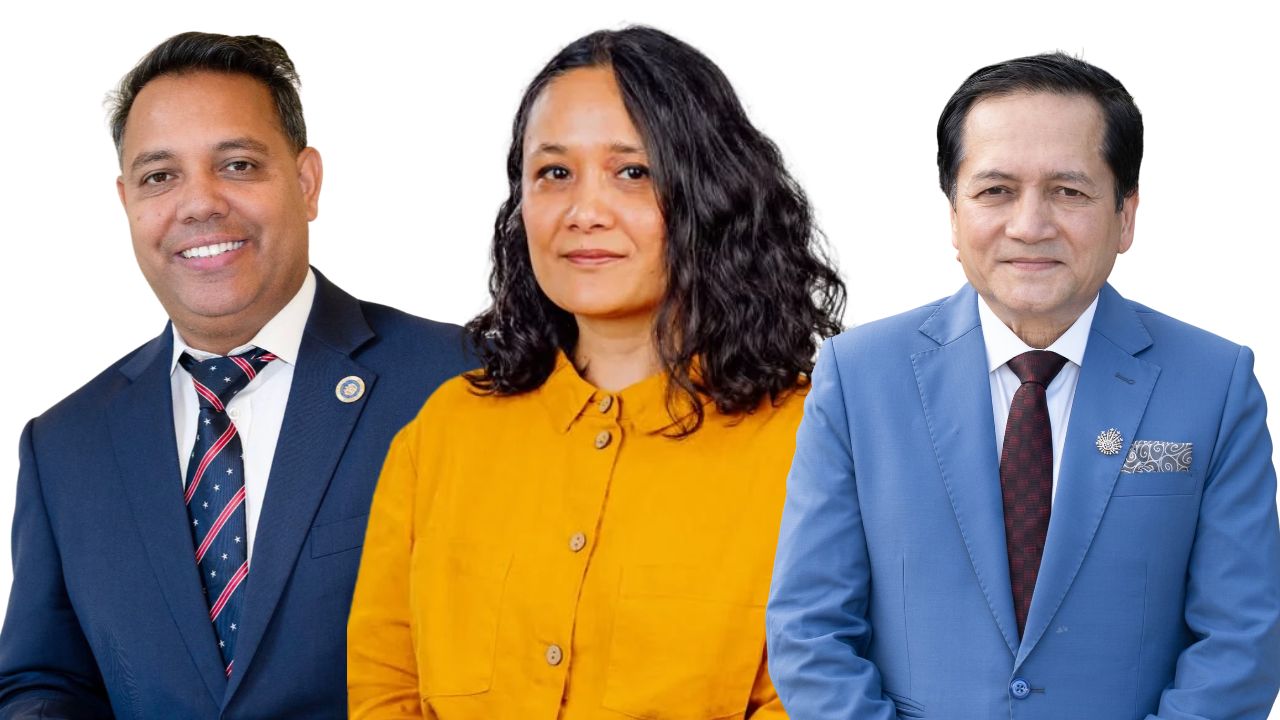
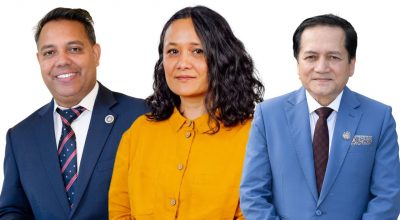
Nepali American lawmakers Harry Bhandari of Maryland, Sarahana Shrestha of New York and newly elected Bishwa Bahadur Shah of New Hampshire, who won seats in their respective state legislatures in the Nov. 3, 2026, general elections.
Nepali American candidates won state legislative seats in Maryland, New York and New Hampshire in Tuesday’s elections, extending the political presence of one of the country’s fastest-growing immigrant communities.
The unofficial results included a third term for Maryland Del. Harry Bhandari, a third term for New York Assemblywoman Sarahana Shrestha and a first electoral victory for Bishwa Bahadur Shah in New Hampshire.
The victories came as the community’s potential electorate has grown substantially. More than 125,000 people of Nepali origin are estimated to be eligible to vote in the United States, based on figures compiled from U.S. citizenship and population data. That estimate includes more than 100,000 naturalized Nepali immigrants and second-generation Nepali Americans born in the country.
A Community’s Growing Political Influence
The Asian American Research Center estimated the Nepali American voting-age population at 91,909 in 2024. Of those, 24,561 lived in the Northeast, 16,645 in the Midwest, 31,953 in the South and 18,750 in the West.
The growth reflects continued immigration and an accelerating pace of naturalization. By 2014, more than 20,000 Nepalis had acquired U.S. citizenship. Between 2015 and 2023, at least 56,000 more became citizens, bringing the cumulative total close to 100,000 when naturalizations from 2024 through 2026 are included.
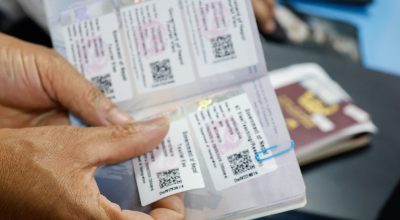
Federal records show that the pace of naturalization has remained substantial. A total of 9,410 Nepalis became U.S. citizens in fiscal year 2022, followed by 9,300 in 2023 and 8,910 in 2024, according to Department of Homeland Security data.
The U.S. Census Bureau estimated that about 225,000 people identified as Nepali in the United States in 2023. The Pew Research Center found that 46 percent had lived in the country for more than a decade and that 47 percent were U.S. citizens, representing roughly 105,000 people.
The 2020 Census found that the Nepali population had grown 269 percent over the previous decade, making it one of the fastest-growing Asian American communities with at least 50,000 members.
Maryland: Harry Bhandari Wins a Third Term
Dr. Harry Bhandari, a Democrat and the first Nepali American elected to a U.S. state legislature, has won a third term in the Maryland House of Delegates, representing District 8 in Baltimore County.
With all 36 Election Day precincts reporting, Bhandari had received 19,530 votes, or 22.34 percent, placing second in the three-seat district. Fellow Democrat Nick Allen led with 19,860 votes, while Democrat Kim L. Ross placed third with 19,348 votes.
The three Democrats outpaced the Republican candidates: Brian A. Campbell, Glen Geelhaar and Steven J. Riemer, who received 11.59 percent, 10.56 percent and 10.52 percent of the vote, respectively.
Bhandari immigrated to the United States from Nepal in 2005. Before entering politics, he worked night shifts at a gas station and later became a college English instructor. He first won the District 8 seat in 2018.
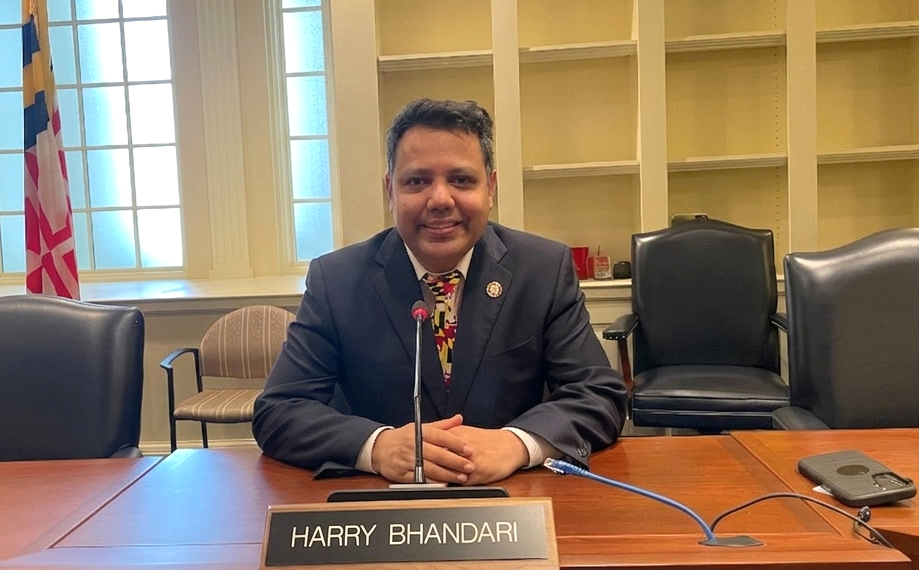
His share of the vote has increased in each general election, rising from 17.7 percent in 2018 to 21.6 percent in 2022 and 22.34 percent in this year’s election.
“This is not only my achievement but proof of the community’s strength, immigrants’ contributions and a commitment to public service,” Bhandari said, crediting volunteers, family members and the Nepali American community for their support.
He said he had helped secure more than $950,000 in state budget funding for Nepali community needs in the Baltimore area and more than $150 million for his district overall.
New York: Sarahana Shrestha Secures Another Term
In New York, Assemblywoman Sarahana Shrestha, a Democrat and democratic socialist from Esopus, won a third term representing the 103rd Assembly District.
She defeated Republican challenger Santos Lopez by 38,606 votes to 16,821, according to unofficial results, capturing about 69 percent of the vote. Her margin was larger than in previous elections: She received 60.7 percent in 2022 and 64.1 percent in 2024.
Shrestha, who moved to the United States from Kathmandu in 2001, became the first Nepali American woman elected to a state legislature. She entered the Assembly in 2022 after defeating longtime incumbent Kevin Cahill in the Democratic primary.
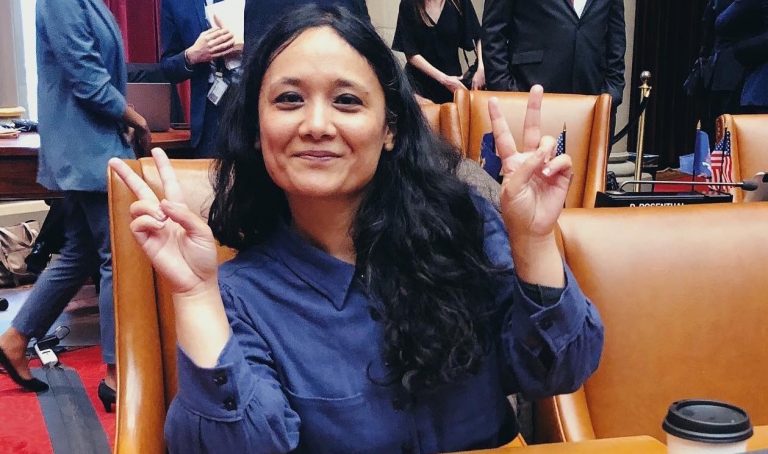
Her political agenda has focused on climate policy, affordable housing, public education, workers’ rights and public ownership of utilities.
Her latest victory reinforces her position in the Hudson Valley, where she has built a political base around progressive economic and environmental priorities.
New Hampshire: Bishwa Bahadur Shah Wins First Term
In Manchester, N.H., Bishwa Bahadur Shah, a first-generation Nepali American and Democrat, won one of three seats in Hillsborough County District 41 in the New Hampshire House of Representatives.
Unofficial results showed Shah receiving 5,726 votes, behind fellow Democrats Lily M. Foss, with 6,316, and Tom Stewart, with 6,241. The closest Republican candidate, Ryan Hebert, received 3,395 votes.
Shah campaigned on addressing the rising cost of living, strengthening public education, expanding access to health care and child care, and supporting older residents.
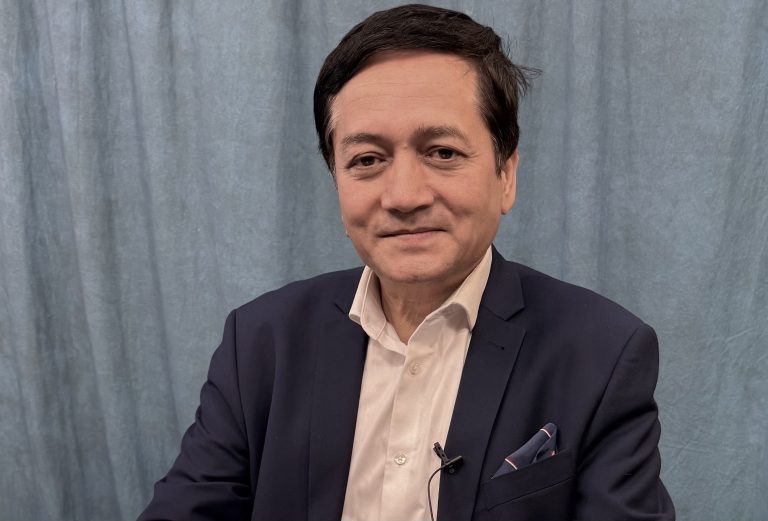
He said he wanted young people in Manchester to have opportunities to find jobs, raise families and buy homes in the city after completing their higher education.
His election marks a new milestone for Nepali Americans in New Hampshire, adding another immigrant voice to state government.
‘Your Voice Matters’
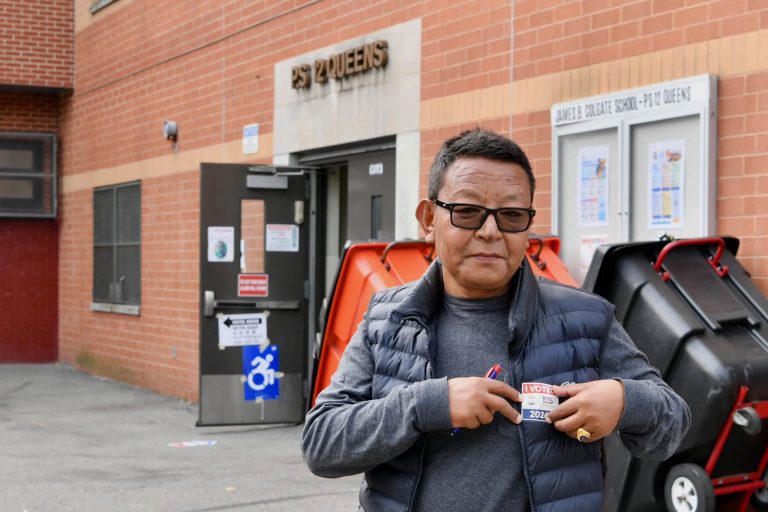
For many naturalized Nepali Americans, Tuesday’s elections carried significance beyond the victories of individual candidates. They represented an opportunity for immigrants to participate more fully in the political system of their adopted country.
Keshab Raj Sedie, a longtime New Jersey resident, said voting was both a right and a responsibility that came with U.S. citizenship, particularly for immigrants who had left countries where electoral opportunities were limited or political dissent carried risks.
“For those who became U.S. citizens after leaving the countries of their birth, the vote is more than a civic duty. It is among the most precious gifts citizenship brings,” Sedie said.
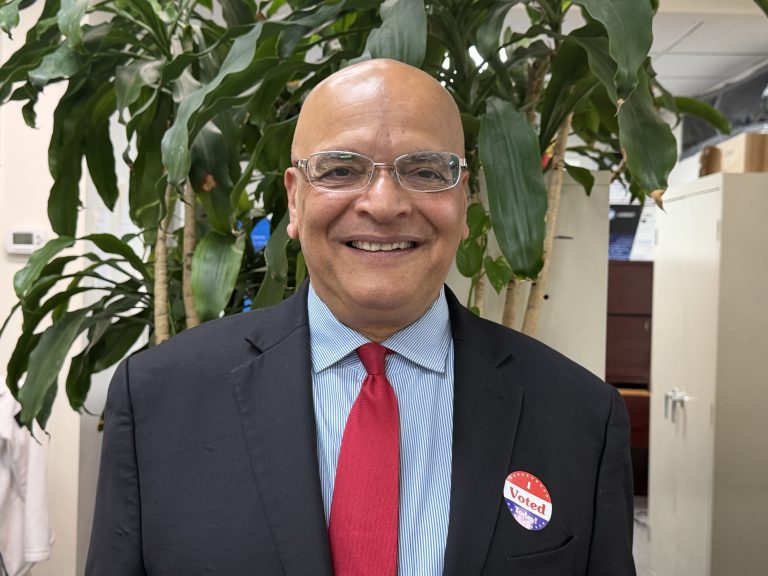
He said that when newly naturalized citizens stayed home, others made decisions affecting school boards, state laws and federal policies on the economy, health care and immigration.
“When they show up, they add their experience and values to the nation’s future and honor those who made this right possible,” he said.
From Community Advocacy to Electoral Politics
The victories in three states illustrate how Nepali Americans are increasingly moving from community advocacy into mainstream electoral politics.
Bhandari’s re-election strengthens his position in Maryland’s state legislature, where he has advocated for his district and the broader Nepali American community. Shrestha’s victory consolidates her standing in New York’s Hudson Valley, while Shah’s election brings a new Nepali American voice to New Hampshire’s legislature.
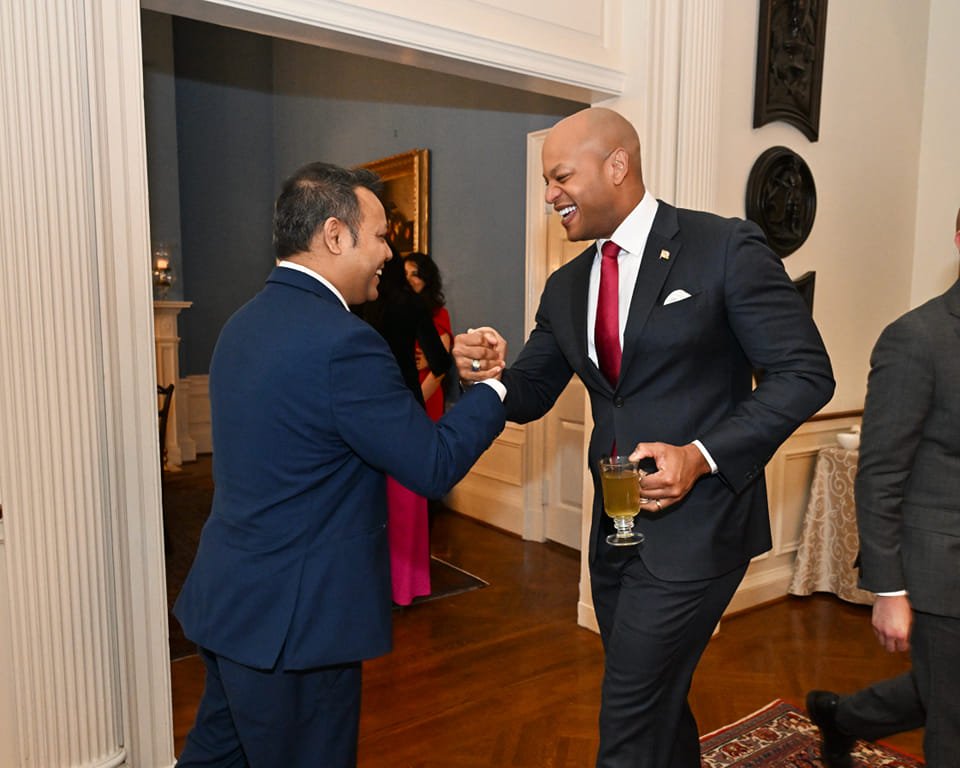
The results also underscore the growing importance of political participation in a community whose numbers and citizenship rates have increased significantly over the past decade.
“When Nepalis vote, organize, volunteer and run for office, only then does our community become visible in society,” Bhandari said.