



New York Book Sale Raises Over $1,500 for Nepal Flood Victims

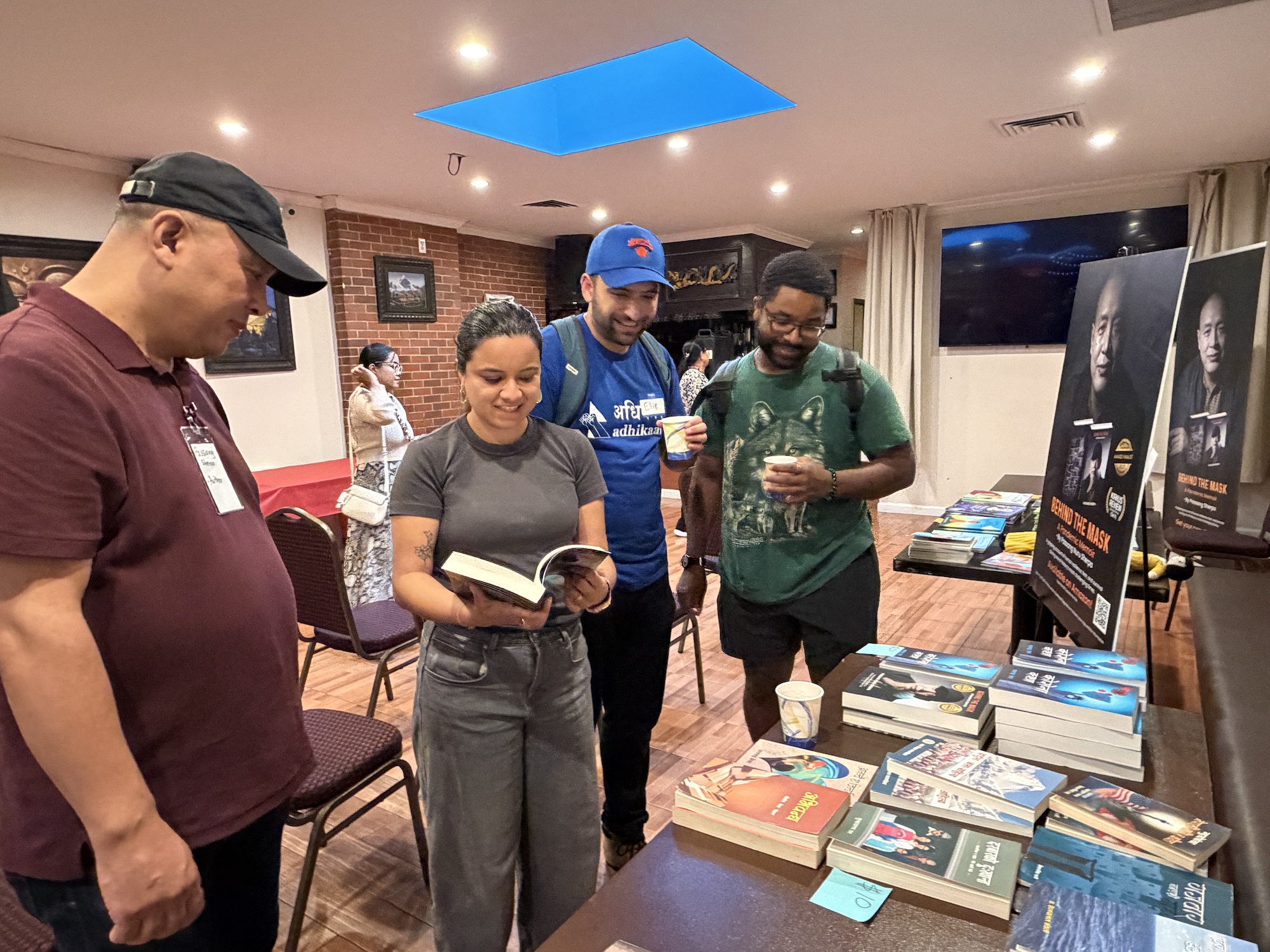
Authors, readers and community members gather at Himalayan Yak Restaurant in Jackson Heights. Photo: NepYork
NEW YORK — A community book sale and literary gathering in Jackson Heights raised $1,520 for families affected by flooding in Nepal, bringing authors, readers, journalists and community members together around books, conversation and disaster relief.
The event, “Books for Flood Victims — Stories That Give Hope,” was held Sept. 13 at Himalayan Yak Restaurant in Jackson Heights. More than 70 people attended, according to organizers.
The money was raised through book sales. Organizers clarified after the event that no cash donations of any kind were accepted and that the entire $1,520 was generated through the sale of books donated by participating authors and literary figures. The $1,520, equivalent to about 231,719 Nepali rupees, will be used to support families affected by the floods, organizers said. The full amount will be deposited into the Nepal government’s Prime Minister’s Disaster Relief Fund, according to the organizers. They said details of the deposit and transfer will be made public to ensure transparency.
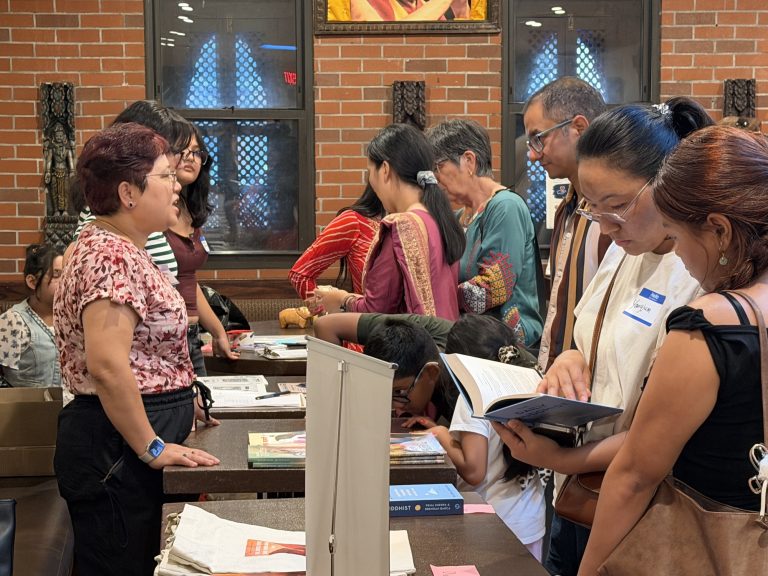
The event was organized by authors Passang Nuru Sherpa and Pratikshya Thakali, in association with Khasokhas, NepYork and the AINAS New York Chapter, which served as co-organizers. Thakali also moderated the evening.
Authors and literary figures from Nepal and the international community participated in the gathering, selling their books in person and speaking with readers. Writers, journalists, representatives of community organizations, social workers and literature enthusiasts were among those attending.
Participants purchased books as a way of expressing solidarity with families affected by the floods, turning the act of buying literature into a form of humanitarian support.
A Community Organizer’s Pandemic Memoir
Passang Nuru Sherpa, one of the event’s organizers, is a Nepali-American author, lyricist and entrepreneur based in Jackson Heights. His experience during the COVID-19 pandemic later became the basis for Behind the Mask: A Pandemic Memoir. Originally written in Nepali under the title Corona Katha, the book was translated into English by Mahesh Paudyal and journalist Peter Gill.
The 449-page memoir chronicles Sherpa’s experience in Jackson Heights during the pandemic, when Queens was among the early epicenters of the outbreak in the United States. Based on diary entries and personal observations, the book follows Sherpa’s transformation from salon owner to community responder.
Through the Coronavirus Awareness and Support Group, he helped deliver food, medicine and other essential supplies to families confined to their homes.
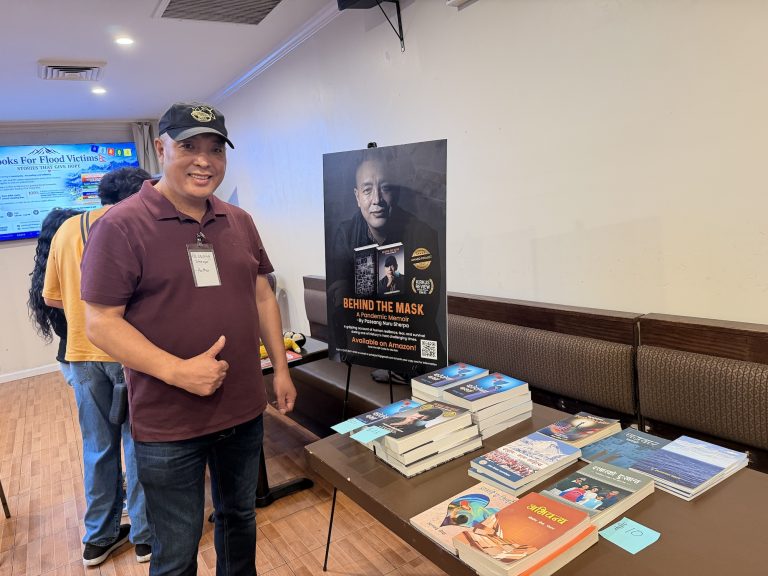
Behind the Mask was among the books available at the fundraiser. Peter Gill spoke about his experience translating the memoir and about the book’s portrayal of the pandemic, Jackson Heights and the resilience of immigrant communities.
The book is divided into sections covering life before the pandemic, lockdown, grassroots relief efforts and the period after restrictions eased. It combines Sherpa’s personal reflections with accounts of his neighbors’ struggles, Nepali cultural traditions and the ways immigrant communities responded to the crisis.
A Story Rooted in Thini
Renée Thakali and Pratikshya Thakali, co-authors of The Joyous Fort, Our Homeland in Thini, also participated in the event and spoke about their book and their connection to Thini, a historic Thakali village in Nepal’s Mustang District.
Renée Thakali first traveled to Nepal in 1977 as a Peace Corps volunteer. What began as an assignment developed into a lifelong connection to Nepal, including her relationship with the people and community of Thini, where she met her future husband and his family.
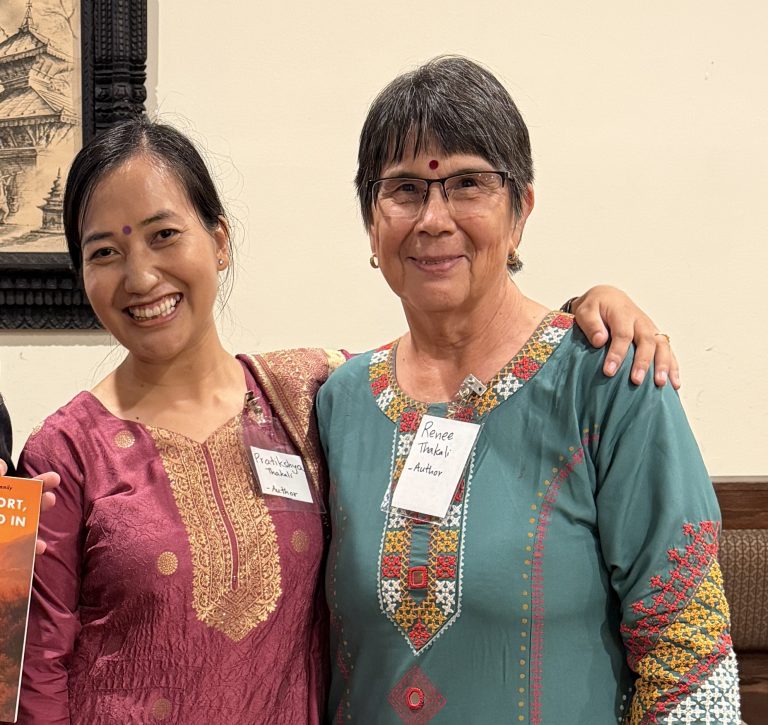
She later spent more than 37 years working as a forester for the U.S. Forest Service and Peace Corps Nepal. Her international forestry assignments also took her to Afghanistan, the Philippines and Saipan, where she worked on forest restoration and trained local forestry workers.
Pratikshya Thakali was born and raised in Nepal and spent her early years in Thini. Growing up in the close-knit community gave her an understanding of Thakali traditions, language and values.
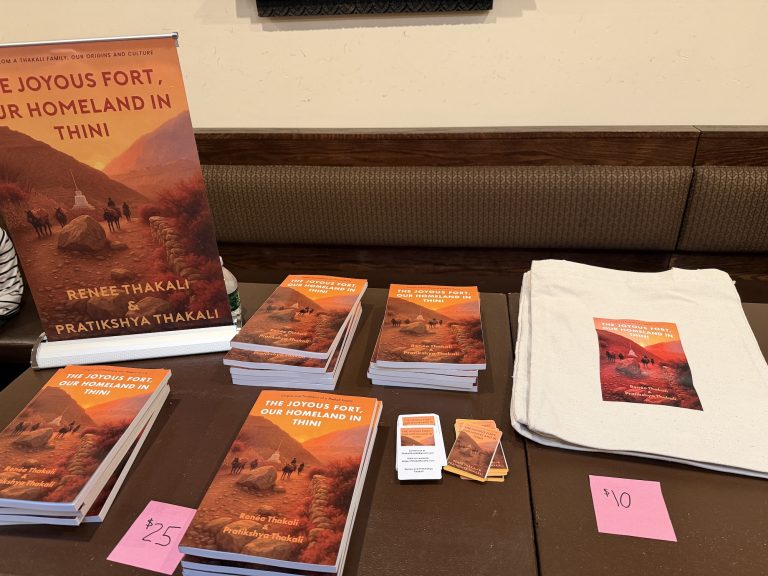
She was particularly influenced by stories from her grandfather about trade journeys across India and Tibet. She later immigrated to the United States amid Nepal’s political turmoil and earned a bachelor’s degree in business administration from Baruch College, City University of New York.
During the program, Renée Thakali also shared her observations about the changing conditions in the Himalayan region and the effects of global warming, drawing on her experiences and connection to Nepal.
A Mountaineer’s Warning About Climate Change
Another featured author was Lakpa Dendi Sherpa, a world-record-holding mountaineer, high-altitude guide and author of Himalayan Maverick.
Copies of the autobiography were available at the fundraiser, with Sherpa saying that proceeds from books sold that evening would go toward disaster relief. He did not speak at the event, but his book was presented as part of the literary and humanitarian effort.
Sherpa’s book and life story also brought a climate-change perspective to the gathering. His experiences in the Himalayas and the Arctic have shaped his observations about the changing environment.
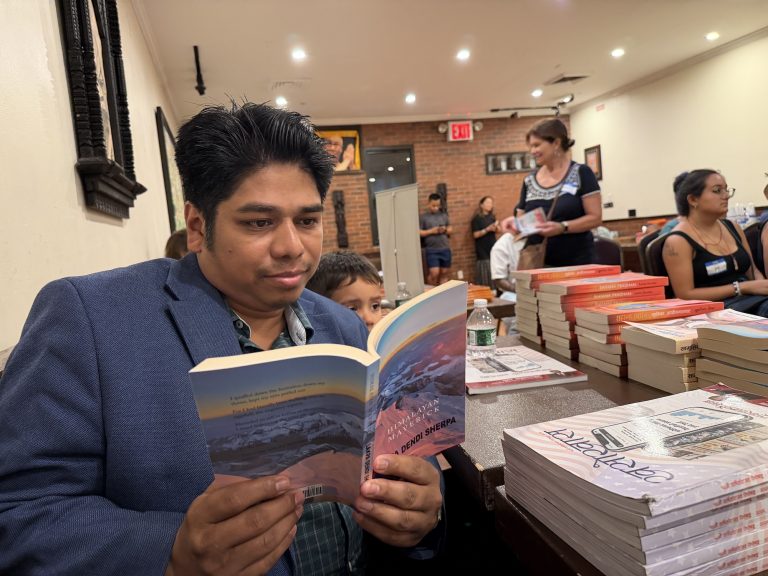
“Years ago, the melting of the Khumbu Glacier on Everest usually began around the end of May. Today, I see it starting weeks earlier, around the middle of May,” he said in remarks prepared for the event.
“For a mountaineer, climate change is not just something we read about. We see it, we walk on it, and we experience it.”
Sherpa has reached the summit of Mount Everest 11 times and completed more than 30 ascents of 8,000-meter peaks, including K2, Lhotse and Manaslu.
In 2018, he set a Guinness World Record for the fastest triple ascent of Mount Everest in a single season, reaching the summit three times in 10 days, 18 hours and 30 minutes. He has also been involved in major Himalayan expeditions, including Nimsdai Purja’s Project Possible 14 Peaks challenge.
He currently serves as a director of Taktok Brothers Treks & Expedition, where he leads technical rope-fixing teams, high-altitude rescues and commercial expeditions in the Himalayas.
Sherpa has said that his experiences in the mountains and the Arctic have shown him that climate change is already reshaping the natural environment.
“The Himalayas and the Arctic may be far apart, but they are connected,” he said. “The Himalayas, known as the ‘Third Pole,’ provide freshwater to millions of people.”
As glaciers retreat, he said, the risks of floods and landslides increase for communities in Nepal.
“Nature has no borders, so we must work together to protect our planet,” Sherpa said.
He ended his message with a call to pay attention to both scientific evidence and the observations of people who live and work in vulnerable environments.
“From the highest mountain on Earth to the Arctic Ocean, the message is clear: Let us listen to the mountains. Let us listen to the Arctic. And most importantly, let us listen to science,” he said. “Protecting our planet means protecting our future.”
Speakers From the Nepali Community
The program also included remarks from Januka Osti Dhakal, Kishor Panthi, Kishan Singh Dhami, Padma Linkha Magar, Laxmi Shrestha and Tsomo Dasel, among others. Literary figures including Kishan Dhami, Laxmi Shrestha and Padma Linkha Magar added a literary dimension to the program through poetry readings.
Dasel, the owner of Himalayan Yak, expressed gratitude to the organizers, authors and community members for coming together to support a humanitarian cause through literature and community engagement. Rajkumar Bista, president of the Himalayan Buddhist Community, also offered remarks and wished the organizers success with the humanitarian initiative.
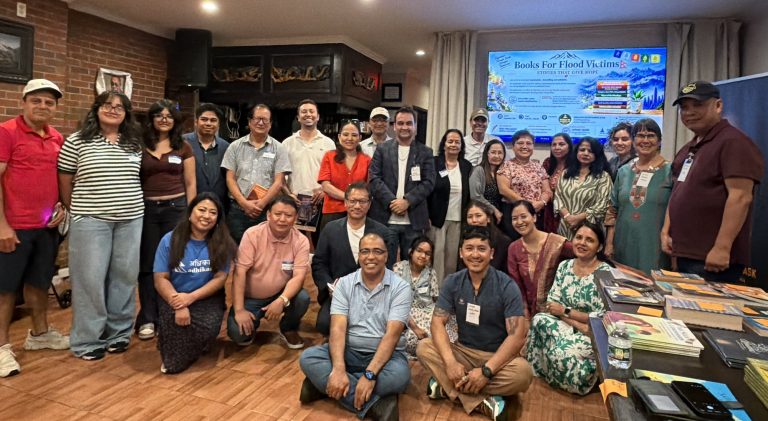
Januka Osti Dhakal, president of the AINAS New York Chapter, delivered a vote of thanks on behalf of the co-organizing organization.
Their participation brought together perspectives from the Nepali diaspora, journalism, literature, community life and local business in New York.
The event was intentionally structured differently from a conventional literary gathering. Organizers kept formalities and lengthy speeches to a minimum, emphasizing direct interaction between authors and readers, introductions to books and the humanitarian purpose of the fundraiser.
Organizers said the format was designed to place direct interaction among authors, readers and community members at the center of the event rather than lengthy formalities and speeches.
Rather than simply presenting books, the gathering sought to turn their sale into a form of community support for people affected by the disaster in Nepal.
“The main objective was not only to sell books, but to use literature and creativity as a means of humanitarian service,” said Passang Nuru Sherpa, one of the organizers.
The organizers said the broader goal was to express the Nepali diaspora’s support, goodwill and solidarity with families affected by the disaster while demonstrating how literature and creative work can contribute to humanitarian service.
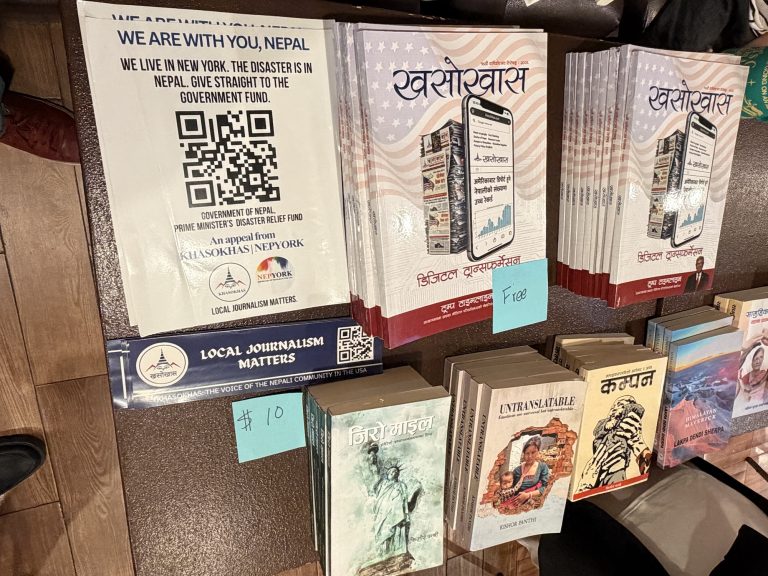
The event also gave members of the Nepali diaspora an opportunity to express solidarity with families affected by the floods.
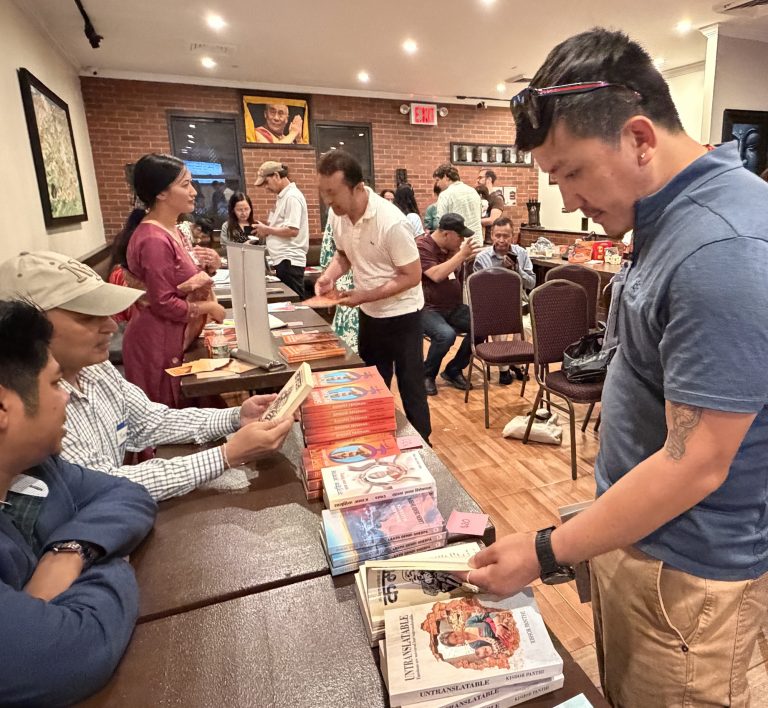
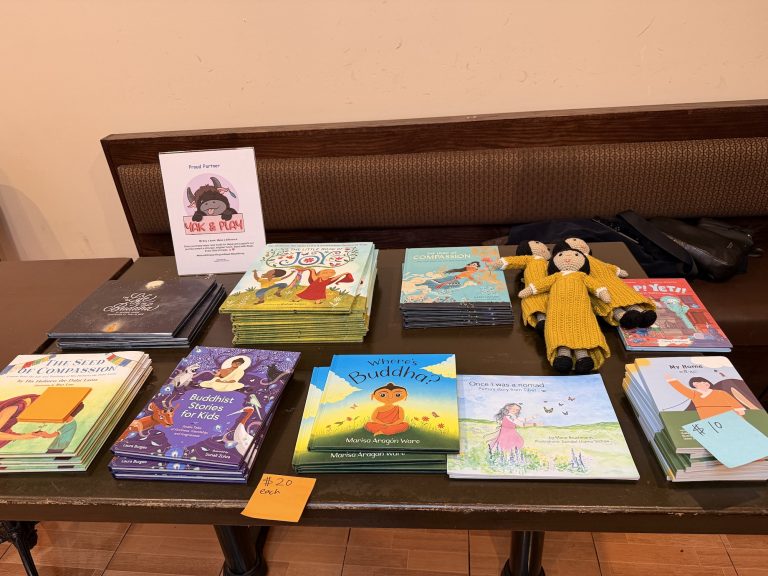
Authors and community members had been invited to donate books or purchase works by participating writers. The books donated by the authors formed the basis of the fundraising effort, with the organizers saying that the proceeds from their sale would be directed entirely to disaster relief. Books in both Nepali and English were available, with authors present to introduce their work and speak with readers.
A Broad Collection of Nepali and Nepal-Connected Books
The fundraiser featured a wide-ranging collection of books by Nepali and Nepal-connected writers, with authors and their works represented throughout the evening.
In addition to the authors profiled above, the collection included books by Lakpa Gurung, Pema Sherpa, Sushila Shrestha, Jyoti Paudyal, Sharda Chhetri, Gita Chhetri, Poonam Kaphle, Bishnu Niraula, Dr. Abhi Subedi, Salil Gyawali, Kiran Dhungana and Radheshyam Lekali.
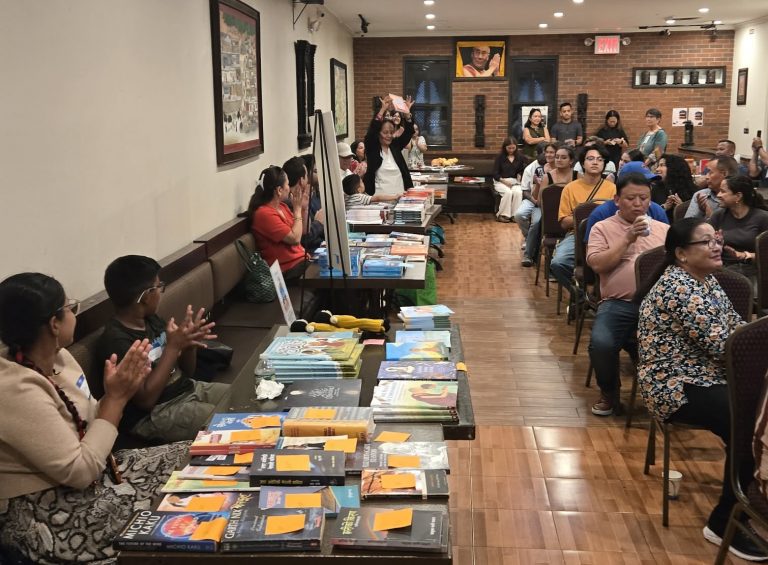
Other featured authors included Dr. Hiranya Gyawali, Shree Om Shrestha, Anand Shrestha, Maheshwar Panta, Govinda Giri “Prerana,” Sundar Pratap Rana, Babita Basnet, Krishna Gautam and Dr. Shashi Thapa Pandit.
The collection also included works by Arjun Prasad Mainali, Dr. Bishwabandhu Sharma and Dirgha Raj Upadhyay. Mahila Suraksha Dababa Samuha was represented as a publishing organization.
Books by Kishan Singh Dhami, Laxmi Shrestha, Kishor Panthi and Januka Osti Dhakal were also among those available at the event, alongside works by the authors featured in the program.
The breadth of the collection reflected the event’s broader effort to connect literature, community and humanitarian support, while giving readers an opportunity to discover works representing Nepali experiences in Nepal and the diaspora.
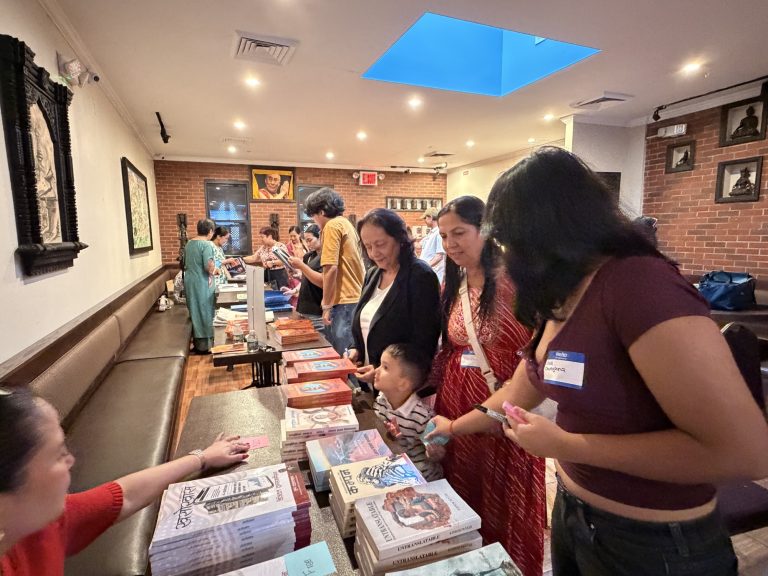
Organizers said the response to the format was positive and that similar events could be held in the future to support other causes.
They said the event’s unconventional format was positively received by participants, who appreciated the emphasis on literature, direct community interaction and humanitarian service.
They thanked the authors and literary figures who made books available, readers who purchased them, guests, community organizations, journalists, volunteers and others who helped organize and support the fundraiser.
The organizers specifically expressed gratitude to the authors and literary figures who donated their books, readers who purchased them, guests, community organizations, journalists and media workers, volunteers and others who supported the campaign directly or indirectly.

For the organizers, the more than 70 people who attended and the $1,520 raised represented only part of the event’s success. They said the positive response to the unconventional format — and the effort to connect literature, community and humanitarian service — was equally important.