
Two Blocks From the Twin Towers: What I Remember Twenty-Five Years Later

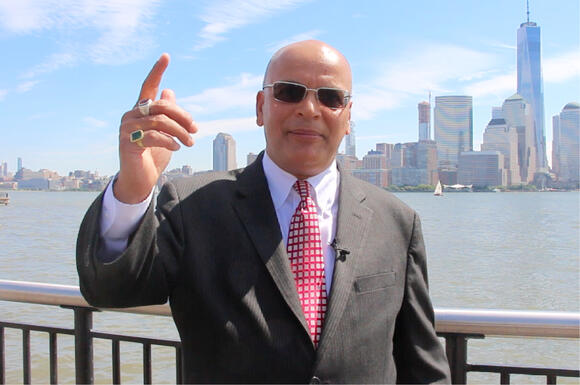
Every September 11, I make myself remember that morning. Not because I enjoy it, but because remembering is how I remind myself what a life is worth.
In 2001, my law office was at 29 John Street, two blocks from the World Trade Center. I usually arrived by 7 a.m. That morning, I got up late.
When I emerged from the PATH train in the basement of the World Trade Center, the first plane had already struck the North Tower, only minutes earlier. Underground, everything was strangely quiet. By the time I reached the ground floor, people had begun to run.
I ran, too, toward Church Street and Century 21. Small pieces of paper were landing in my hair. I looked up and saw smoke pouring from the top of the tower. A man told me that a small plane had hit the building. Fire trucks screamed toward us from every direction.
Believing it had been an accident involving a small plane, I went to my office and started working. We had a client deadline that day.
At some point, I realized I had forgotten my coffee. I went down to Nassau Street to get some and asked my colleagues, Samir and Rowena, if they wanted anything. They said no.
As I walked back through the main entrance with my coffee, I heard a sound like thunder.
It was the second plane.
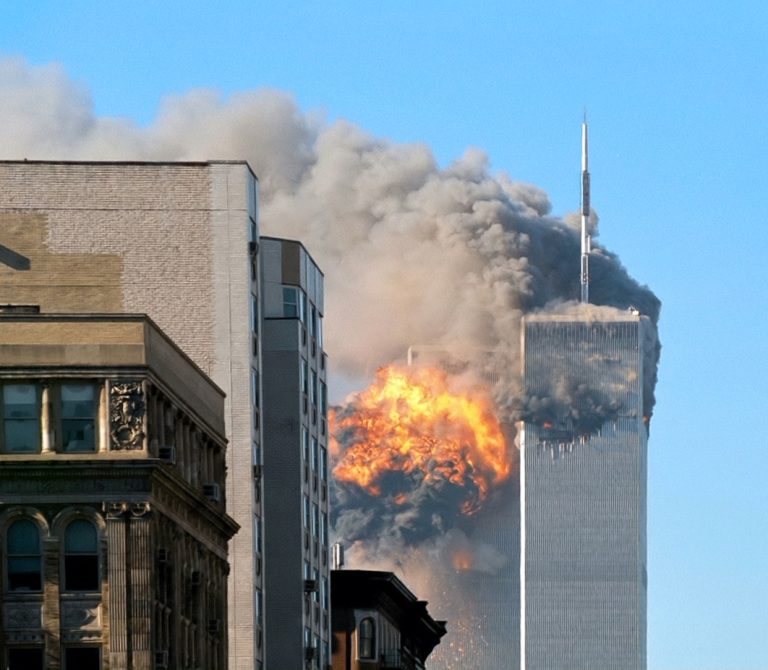
From Broadway, I could see both towers burning. I went back upstairs and told Samir and Rowena that the towers might collapse and fall onto our buildings like dominoes.
“We should leave now,” I told them. “Let’s wait in City Hall Park. If the fire goes out, we can come back and finish the deadline.”
We left.
We were in the park when the first tower fell. A man covered in dust had already warned me: “It is a terrorist attack. What are you hanging around for?”
Then the cloud came.
I ran north toward Chinatown with thousands of other people. I ran for about 20 minutes before stopping to call my wife. The cellphones were not working. I stood in line for another 20 minutes at a shop that had opened its landline to strangers. I reached my mother-in-law and told her I was alive.
Then I walked to 42nd Street and the West Side Highway, where I joined a ferry line. I waited for two and a half hours to get to Hoboken.
My apartment in Newport, directly across the Hudson River from the towers, had been closed off. I took a bus to Newark Penn Station, where my wife picked me up. We drove to Union.
My office was closed for three weeks.
Four days after the attack, I went downtown. Ground Zero was still sealed, and smoke was still rising. Our building was intact, but the smell of burned buildings, chemicals and bodies was overpowering.
As a Nepali, I had only one thing to compare it with: the smell that rises from Arya Ghat at Pashupatinath.
That was when I fully understood what I was standing next to.
There is another memory I carry from those years.
In 1994, I worked at the law firm Thacher Proffitt & Wood, which occupied the 38th, 39th and 40th floors of the South Tower. On September 11, everyone there was safely evacuated.
I thank God for that, too.
I also think about what came after.
America spent enormous sums on security and fought long wars in the hope that such a day would never be repeated. Some of those measures were necessary. But they came at a cost.
Money that might have gone to science, research, education, health and infrastructure was instead directed toward defense and intelligence. Other nations spent those years building their economies while the United States remained entangled with the consequences — and the ghosts — of September 11.
My hope is that we learn the lesson properly: that no country should be allowed to shelter a terrorist such as Osama bin Laden; that nations should work together to deter terrorism; and that trillions of dollars should be used not only to protect what we have, but to build what comes next.

Thousands of my fellow New Yorkers died that morning. That pain does not go away.
But I got up late. I went for coffee. And I told two colleagues to leave the building.
Twenty-five years later, Samir and Rowena still work beside me. And the firm we walked out of that morning has helped tens of thousands of immigrant families build lives of their own in this country.
That is what I remember on September 11.
A life is fragile. Ordinary. Precious.
Do not waste it.